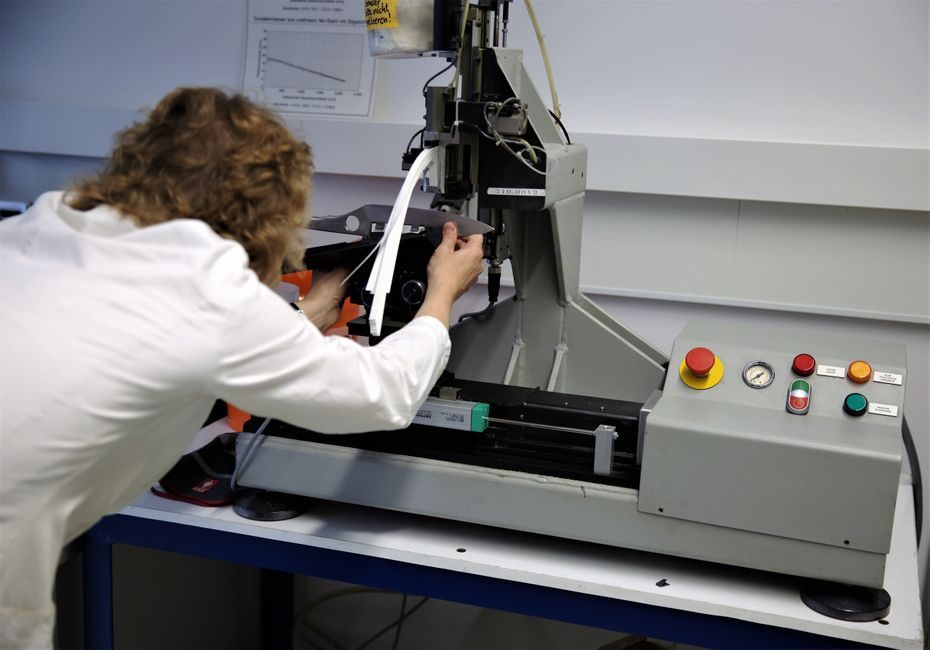
For a machine shop quality lab in 2026, a coordinate measuring machine (CMM) spec typically resolves to four decisions: machine architecture, drive system, software/service, and the tolerance budget the lab can actually hold without paying for capacity it will not use.
The short-list is narrow but unforgiving — pick the wrong architecture (bridge, gantry, cantilever, horizontal arm, portable) and the rest of the budget spends itself compensating for motion errors that a different frame would never have introduced. The research material below, drawn from CMM OEM application notes and metrology trade press, frames the criteria a process engineer should walk into the quote review with.
Five CMM architectures and the part-size envelope that drives the choice
Five CMM architectures are routinely offered for shop-floor and lab use, and the part envelope — not the headline accuracy figure on the brochure — is what usually picks the winner. Bridge CMMs are the most common in quality labs, used for small to medium parts where high accuracy and versatility matter most. Gantry CMMs are the preferred solution for very large and heavy components, such as automotive frames or aerospace structures. Cantilever CMMs offer excellent accessibility for small parts, while horizontal-arm CMMs are often used for inspecting thin-walled components like sheet metal panels. Portable CMMs (articulating arms) bring measurement directly to the workpiece, which trades absolute accuracy for access on large or fixtured parts. [S1]
For a machine shop quality lab handling gearbox housings, turned shafts, and small prismatic parts, a bridge CMM is the default architecture; a gantry unit only pays back when the envelope grows beyond what a bridge frame can be sized for, and a portable arm is reserved for in-process checks where the part cannot come off the fixture. Cantilever and horizontal-arm units fill the niche cases where the part obstructs a bridge's vertical column or where loading access is constrained.
Lab vs shop floor: the 20 °C baseline and what it costs to abandon it
Quality-lab CMMs are sized around a 20 °C (68 °F) controlled environment, which is the reference temperature most dimensional standards use for length measurement, and Hexagon's business integration director Zvonimir Kotnik framed the trade in 2024 trade press as follows: "CMMs have been used traditionally in quality labs because there you have a constant temperature — usually 20°C (68°F). In a qualit[y lab]..." [S3].
The shop-floor variant — such as the air-free TIGO SF referenced in the same source — accepts temperature drift and vibration that would be unacceptable in a metrology room, and that acceptance is paid for in expanded MPE (maximum permissible error) budgets and tighter probe-qualification cycles [S3]. The decision rule for a quality lab, then, is straightforward: if the lab can hold 20 °C and isolate the CMM from direct sunlight and HVAC drafts, a fixed bridge on a granite base remains the most accurate per dollar; if it cannot, budget for a shop-floor-rated machine and a larger uncertainty budget, not for a lab machine that will be operated outside its envelope.
Granite base, air bearings, and the porous-media detail most quotes skip
For quality-lab usage, precision CMM machines feature a granite base for stability and a moving-bridge design that facilitates accurate, repeatable inspection, and the main features to look at are the drive systems and air bearings [S2]. The best quality air bearings are made from porous media rather than aluminum or single-orifice steel, because the porous material offers uniform lift and can be run with tighter gaps to ensure precise bridge motion [S2].
The practical consequence is non-trivial: porous-media bearings let the bridge run with smaller air gaps, which reduces the off-axis moment the drive motors must correct, and that directly shows up as a tighter bidirectional repeatability figure on the acceptance test. The lab spec should explicitly call out "porous-media air bearings on all three axes" rather than accepting the generic "air bearings" line that some vendors use to cover both porous and single-orifice designs.
Software, service, and remote access — the three post-purchase failure modes
Quality Magazine's shop-floor CMM evaluation checklist breaks the post-purchase risk into three buckets, and each maps to a concrete purchase-clause requirement rather than a marketing slide [S4]. On software: operators need specialized software to develop a measurement program that looks at specific dimensions and characteristics of the product, and it is important for this software to be easy to use and user-independent [S4]. On service: vendors need to support the buyer and supply technical service after the equipment purchase, and the ability to access CMMs remotely has become a key aspect of the manufacturing world to maximize uptime [S4].
On hardware: the article's third leg covers the mechanical choices that determine the machine's usable life in a real shop environment, including protection against chip ingress, coolant splash, and the temperature swings that an open factory floor produces [S4]. Translate that into the spec: require a written list of supported CAD import formats on the software side, a contractual remote-diagnostic SLA with a stated response time, and an IP-rated enclosure rating for any CMM the lab expects to live outside a temperature-controlled room. The remote-access point matters more than most buyers realize — it is the difference between a four-hour phone fix and a two-day service-truck visit every time a probe library needs reloading.
Spec'ing the probe, the controller, and how the CMM talks to the rest of the line

The competency model published by the U.S. Department of Labor's Career Connections program in 2025 lists CMM programmer work as encompassing both inspection instrument handling and the ability to "create models via files, drawing, blueprints, etc. to ensure product quality" [S1]. That model treats the CMM as a node in a documentation chain — drawing in, inspection report out — and a modern lab spec should follow the same shape: a probe changer the operator can reconfigure, a controller that exports data in a format the shop's PLC-driven cell can ingest, and a servo-driven axis stack whose feedback loop is documented well enough that the maintenance team can fault-find it [S1].
The links to the wider metrology stack are not decorative. A CMM that drives its axes through servo motors with the same fieldbus the lab's existing pressure sensor network uses for environmental monitoring will share spare encoder cables, share the same diagnostic laptop, and share the same technician training budget. That sounds like a purchasing convenience; in practice, it is what determines whether the lab is back online in four hours or in four days after a controller failure.
Calibration, accreditation, and the documentation that survives an audit
Industry guidance on evaluating a machine shop's quality-control capabilities treats the CMM as one instrument among several — alongside surface profilometers and hardness testers — with the explicit requirement that "these tools must be regularly calibrated and maintained to ensure reliable results". For a CMM, that means a documented calibration cycle against a traceable artefact (typically a calibrated sphere or step gauge), a probe-qualification log per probe/stylus combination, and a temperature map of the lab that is itself re-measured at a defined interval. [S2]
For the buyer, the practical implication is that the spec should reserve budget for the calibration contract in the same line item as the machine itself, and should require the vendor to supply a recommended artefact list, a probe-qualification procedure, and a sample uncertainty budget at the time of quote. A machine with a marginally better MPE figure on paper but a weak calibration story is a worse long-term buy than a slightly looser machine whose vendor can show a multi-year track record of passing ISO 10360 reverification on the first attempt.
Decision rule: the spec for a typical machine shop quality lab
For a typical job shop running small-to-medium prismatic parts in a 20 °C-controlled lab, the highest-yield spec collapses to: bridge CMM with envelope sized to the largest part plus a working clearance on each axis, porous-media air bearings on all three axes, granite base with vibration isolation feet, an automatic probe changer, software that imports the CAD formats the shop already produces, and a remote-diagnostic SLA bundled into the purchase [S2][S4].
Two signal-tracked verifications before signing the PO: ask the vendor for the last two ISO 10360 test reports from that specific machine on that specific shop floor (not the brochure number, the actual measured value), and ask for the mean time between failures on the controller model they are quoting. Both numbers will sort the credible shortlist from the marketing shortlist faster than any spec sheet comparison, and a machine shop that builds the PO around those two figures generally lands closer to the planned spend than a buyer who fixates on the headline accuracy number alone.