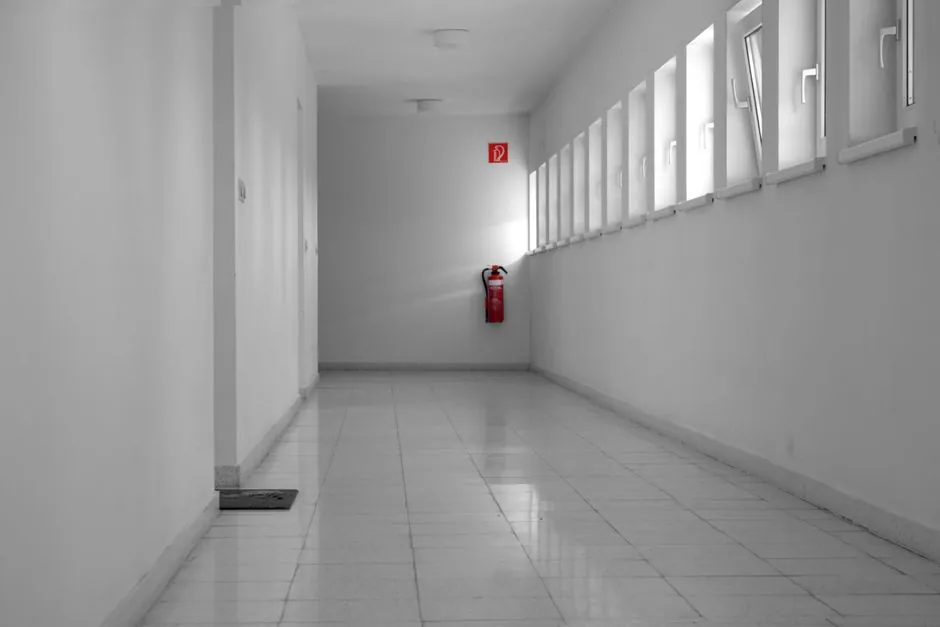
Dry chemical extinguishers generally offer the lower purchase price and broader fire-class coverage, while CO2 units cost more but discharge without powder residue.
For a general office or workshop, ABC dry chemical is the stronger default; CO2 is the better targeted choice for electrical equipment, server rooms, laboratories, and other locations where cleanup damage must be minimized.
Price and fire-class comparison
Dry chemical generally has the lower initial price, whereas CO2 carries a higher purchase cost because it must store and discharge a liquefied gas under pressure [S5]. The best comparison is not unit price alone: agent coverage, discharge impact, inspection service, recharge work, and post-discharge cleanup can reverse the apparent saving.
The comparison becomes a false economy if a low-cost dry unit is installed where its residue can disable a server, control panel or precision machine. CO2 is justified where the protected asset value and cleanup exposure exceed the price difference between the two agents.
Published price points and budget basis
One retailer listed an Amerex 322 5 lb CO2 extinguisher at $298.00, an Amerex 330 10 lb unit at $459.00, and an Amerex 331 15 lb unit at a higher price [S7]. These figures establish a size-related market reference, but they are retailer listings rather than universal price bands and exclude differences in service, quantity discounts and replacement intervals.
A 2013 workshop discussion cited a price of about $250 for a 10 lb CO2 extinguisher, compared with the lower acquisition cost associated with dry chemical [S4]. The dated example should not be used for a current budget, but it shows that the CO2 premium is structural rather than a single retailer anomaly. The reusable public price evidence therefore supports one conclusion: compare agents at equivalent application duties, not by price per pound of agent.
For procurement, request at least 3 comparable quotes for the same capacity, listed service scope, certification requirement and delivery location. Record the unit price, hydrostatic or recharge provisions, inspection frequency, and expected cleanup cost separately. A practical total-cost model is purchase price plus scheduled service plus recharge or replacement plus post-discharge cleanup.
ABC dry chemical for general-purpose coverage
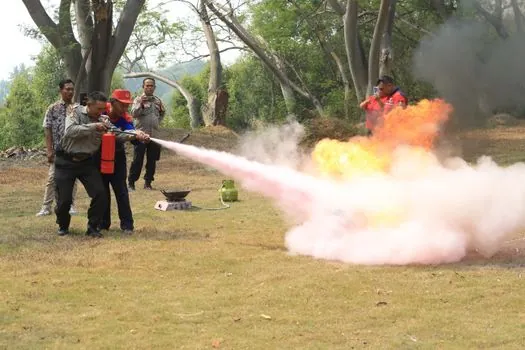
ABC dry chemical covers ordinary combustibles, flammable liquids and energized electrical equipment in one portable unit, making it the default for most commercial and residential hazards [S1][S2]. Dry powder interrupts chemical reactions in the fire triangle by forming a barrier, while CO2 displaces oxygen to suffocate flames and cools the fire through rapid gas expansion [S5].
Use dry chemical in workshops, kitchens, vehicle areas and other rooms where several fuel types may occur [S1][S5].
The penalty is cleanup. Fine powder can enter machinery, clog vents, settle on electronics and require vacuuming or washing [S5]. One comparison describes the residue as corrosive [S2]. For a low-value fabrication area with ordinary combustibles and solvents, that cleanup burden is usually easier to accept than the higher purchase and service cost of CO2.
CO2 for clean, localized suppression
CO2 extinguishes Class B and electrical fires while leaving no visible residue, which reduces damage to computers, servers, control panels and laboratory equipment [S1][S2]. Its cited operating profile includes a 3–8-foot effective range, so the operator must be close to the base of the fire [S5].
CO2 discharges by oxygen displacement and rapid gas expansion, and the operator must ventilate the area after use [S3][S5]. CO2 is commonly used for electrical fires and flammable-liquid fires, whereas dry powder is typically used for broader coverage involving solid combustibles, flammable liquids, and certain gas fires [S1][S2].
CO2 is suitable for laboratories, server rooms, and areas near electrical equipment [S5]. These are targeted applications, not reasons to remove the broader ABC coverage required elsewhere. A mixed installation gives the facility both clean suppression where needed and general coverage where ordinary combustibles are present.
Safety, maintenance and operating constraints
CO2 is non-conductive, but its use still requires an adequate escape route because discharge reduces available oxygen [S3][S6]. Do not treat a CO2 unit as safe in a small garage, shed or vehicle without evaluating ventilation and escape. Dry chemical also has a confined-space disadvantage because discharge powder can obscure visibility [S5].
Both types require regular inspection, maintenance and service consistent with local fire-code requirements [S5]. CO2 extinguishers require cylinder testing, hydrostatic testing, recharge, and refill services, while dry powder leaves a residue that may raise corrosion and cleanup concerns [S2][S4].
CO2 cools the fire through rapid gas expansion [S5]. Training should cover approach distance, stand-up technique, evacuation path, ventilation after discharge and the need to match the agent to the fuel. The extinguisher label and the facility risk assessment should remain the controlling documents for selection.
Application-specific purchase recommendations
For a general commercial facility, buy ABC dry chemical as the baseline and add CO2 where residue-sensitive equipment warrants it [S2]. For an electrical or server room, specify CO2 for the localized hazard while retaining suitable extinguisher coverage for ordinary combustibles outside that room.
For a workshop containing wood, paint, solvents and energized machinery, dry chemical usually offers the stronger economic choice because one ABC unit covers the mixed hazards and costs less initially [S1][S5]. For a laboratory or clean manufacturing room containing electronics and flammable liquids, compare the value of the protected equipment against the CO2 price premium, factoring in the near-zero cleanup benefit [S2].
Do not select CO2 merely to save cleaning work where Class A fires are credible. For kitchens or areas with ordinary combustibles, choose an agent with the required fire-class rating, then assess whether dry-powder residue will damage adjacent assets. If neither portable option meets the required rating or discharge arrangement, evaluate fixed suppression rather than forcing a portable extinguisher beyond its intended duty.
Traceable purchasing should include the model and agent, rated fire classes, listed capacity, price, service interval, recharge basis, warranty and delivery terms. Add location, protected asset and expected cleanup method to the purchase record; those 8 fields expose false price comparisons and make the CO2 versus dry chemical decision auditable.