
The 3-30 kg collaborative robot class carries 126 distinct models in the live 2026 cobot index, with payload and reach forming the single tightest trade-off in the spec sheet [S4]. SMBs now account for over 60% of new cobot installations in 2025-2026, and the median automation budget for a small shop sits at $30,000-$60,000 including gripper, integration, and training [S3].
Across published buyer guides, the 6 kg / 900 mm repeatability-class arm has become the default bench unit, while 3 kg tabletop and 12-30 kg long-reach cells are the two main off-ramps. The selection math reduces to four numbers: payload, reach, repeatability, and ISO/TS 15066 collaboration mode, plus a fifth (TCO over 5 years) that flips the decision more often than the spec sheet does [S1][S2].
Payload and reach: the 3-30 kg envelope
Cobot payload brackets cluster predictably: 3 kg tabletop units pair with 500 mm reach, 6 kg arms with 700-900 mm reach, 12-16 kg arms with 900-1300 mm reach, and 20-30 kg arms with 1500-1800 mm reach [S1][S3]. The Doosan M0609 at 6 kg / 900 mm and the Techman TM5-700 at 6 kg / 700 mm are the two anchor products in the 6 kg tier, priced $22,000-$32,000 [S3].
At the long-reach end, a 20 kg payload arm can typically address a 1.8 m palletizing envelope, but cycle time suffers versus a 6 kg arm running 1 m/s TCP speeds; buyers frequently over-spec payload by 3-5x to chase reach, then pay for it in slower cycles and a heavier base footprint [S1]. A useful rule of thumb: pick the smallest payload that covers the gripped part mass plus 30% margin, then verify reach covers the worst-case Cartesian point plus tool length.
Collaboration modes under ISO/TS 15066
ISO/TS 15066 defines four collaborative operation modes, and the mode you specify dictates the entire safety architecture: safety-rated monitored stop (SMS), hand guiding, speed and separation monitoring (SSM), and power and force limiting (PFL) [S2]. Most 3-16 kg cobots ship PFL-ready with joint torque sensors and a maximum TCP speed capped at 250 mm/s during collaborative segments, with PFL mode also requiring the documented biomechanical force and pressure limits from the technical specification.
Hand guiding (lead-through teaching) is what makes a 6 kg arm teachable in 4-8 hours without a robotics engineer, and is the single biggest reason SMBs can absorb cobots into existing staff [S3]. SSM mode is the practical compromise when a 20-30 kg arm has to enter a shared workspace briefly: the cobot slows as a vision or laser scanner detects approach distance, rather than relying on intrinsic contact-force limiting alone.
Selection criteria: payload, reach, repeatability, and cycle time
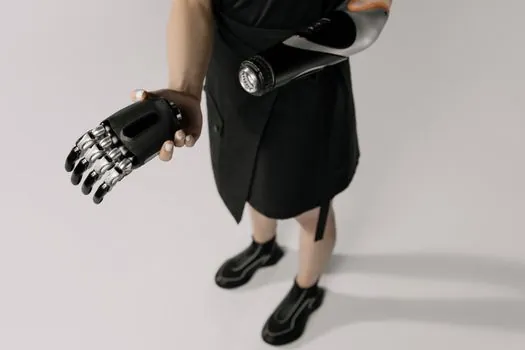
Repeatability on the 3-30 kg class sits at ±0.03 mm to ±0.05 mm for most 6-axis arms, with the Doosan M0609 at ±0.03 mm and the Techman TM5-700 at ±0.05 mm [S3]. For assembly and screw-driving, ±0.05 mm is the practical floor; for pick-and-place, ±0.1 mm is acceptable if vision corrects the pick.
Cycle time is dominated by TCP speed and acceleration, not by axis count, and a 6 kg arm at 1 m/s will out-cycle a 16 kg arm at 0.5 m/s on identical pick-and-place paths. The compact selection table below aligns the four mainstream payload classes to the four buyer decision criteria:
Class A: 3 kg / 500 mm tabletop, best for electronics benchtop, screw-driving, small parts test, repeatability ±0.05 mm, typical price band $18,000-$25,000. Class B: 6 kg / 700-900 mm general assembly, the 2026 default, repeatability ±0.03-0.05 mm, price band $22,000-$32,000. Class C: 12-16 kg / 900-1300 mm, CNC tending and palletizing, repeatability ±0.05 mm, price band $35,000-$55,000. Class D: 20-30 kg / 1500-1800 mm, palletizing and welding, repeatability ±0.05-0.1 mm, price band $50,000-$80,000 [S1][S3].
Who the 6 kg default fits, and who should skip it
The 6 kg / 700-900 mm arm is the right call for assembly, light machine tending, quality inspection, and lab handling in cells up to roughly 1 m reach, which covers the majority of SMB shop layouts [S2][S3]. It is the wrong call when the part mass plus gripper exceeds 5 kg, when the workstation footprint exceeds 1.2 m in any axis, when cycle time must drop below 4 s on a 200 mm pick-and-place, or when the process requires washdown or food-grade lubrication.
For washdown and pharma duty, the 3-30 kg cobot catalog is thin: only 11 of 72 pharma-rated robots indexed in 2026 are washdown-rated, and cobots are a small subset of that population [S4]. Buyers needing IP65/IP67 should plan for a stainless variant, accept a 15-25% cost premium, and verify that the gripper and force-torque sensor carry matching ingress ratings.
Application-to-payload mapping
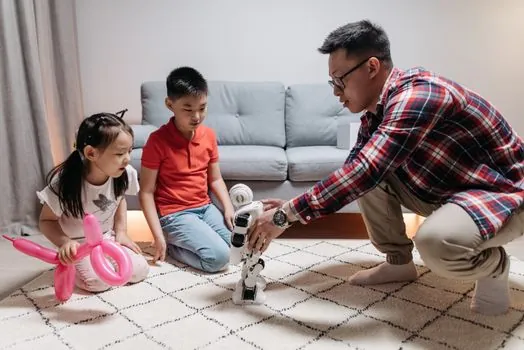
Machine tending is the highest-volume cobot duty in 2026, with 256 indexed applications across all robot types, and a 12-16 kg arm with 1.3 m reach is the realistic minimum for a CNC door-swing tending cell [S2][S4]. Pick-and-place ranks fourth by application count at 186 and is the duty that fits 6 kg arms best, while material handling at 231 applications is broad enough to span 3-30 kg depending on tote mass [S4].
Welding is the duty where cobot economics are weakest, because collaborative welding cells still need extraction and arc-flash PPE, eroding the main cobot advantage (no cage). Assembly at 271 indexed applications is the strongest 2026 fit for 6 kg arms, and the linear guide supply chain around cobot gantries and 7th-axis rails is increasingly being sourced as part of the same automation PO.
Total cost of ownership and ROI window
Stated cobot payback windows cluster at 6-18 months for high-run pick-and-place and machine tending, and 12-24 months for low-volume assembly cells [S2][S3]. The 5-year TCO calculation should include arm, controller, end-effector, integration labor, training, and a planned 10-15% annual spend on gripper wear and vision re-calibration, not just the headline arm price.
For a $22,000-$32,000 6 kg arm integrated into a $30,000-$60,000 cell, the 5-year TCO typically lands at $80,000-$120,000, of which the arm is roughly 30-35% and integration roughly 25-30% [S3]. Robotics-as-a-Service is a 2026 trend to watch, but published 2026 buyer guides still treat RaaS as a financing alternative rather than a lower TCO, and most small manufacturers still default to capital purchase [S2].
Market backdrop and what to track next
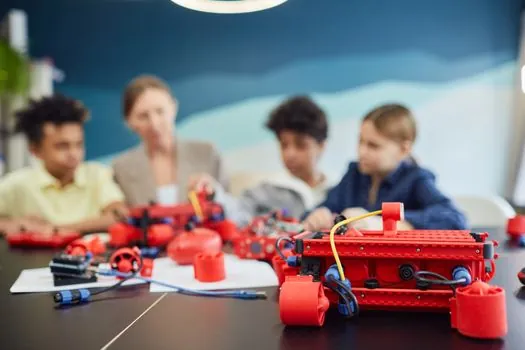
SMB-led Asia-Pacific demand is the single largest regional growth vector, with China-country growth cited at a 28.8% CAGR through 2035 in the same source.
Two signals worth tracking into Q4 2026: the AI-powered adaptive cobot and mobile-cobot (cobot-on-AMR) categories, which both shift selection criteria from raw specs to fleet-level software; and the crossed roller guide and 7th-axis track ecosystem, which is where 6 kg arms are being extended past their 900 mm native reach on long machine-tending cells. The current 126-model cobot index is a reasonable universe to shortlist from, and the collaborative robot category page is the right starting node for first-pass spec filtering [S4].
Related analysis: Urban Concrete Mixer Truck Selection: 4x2 vs 6x4, 3-12 m³ Spec Map.