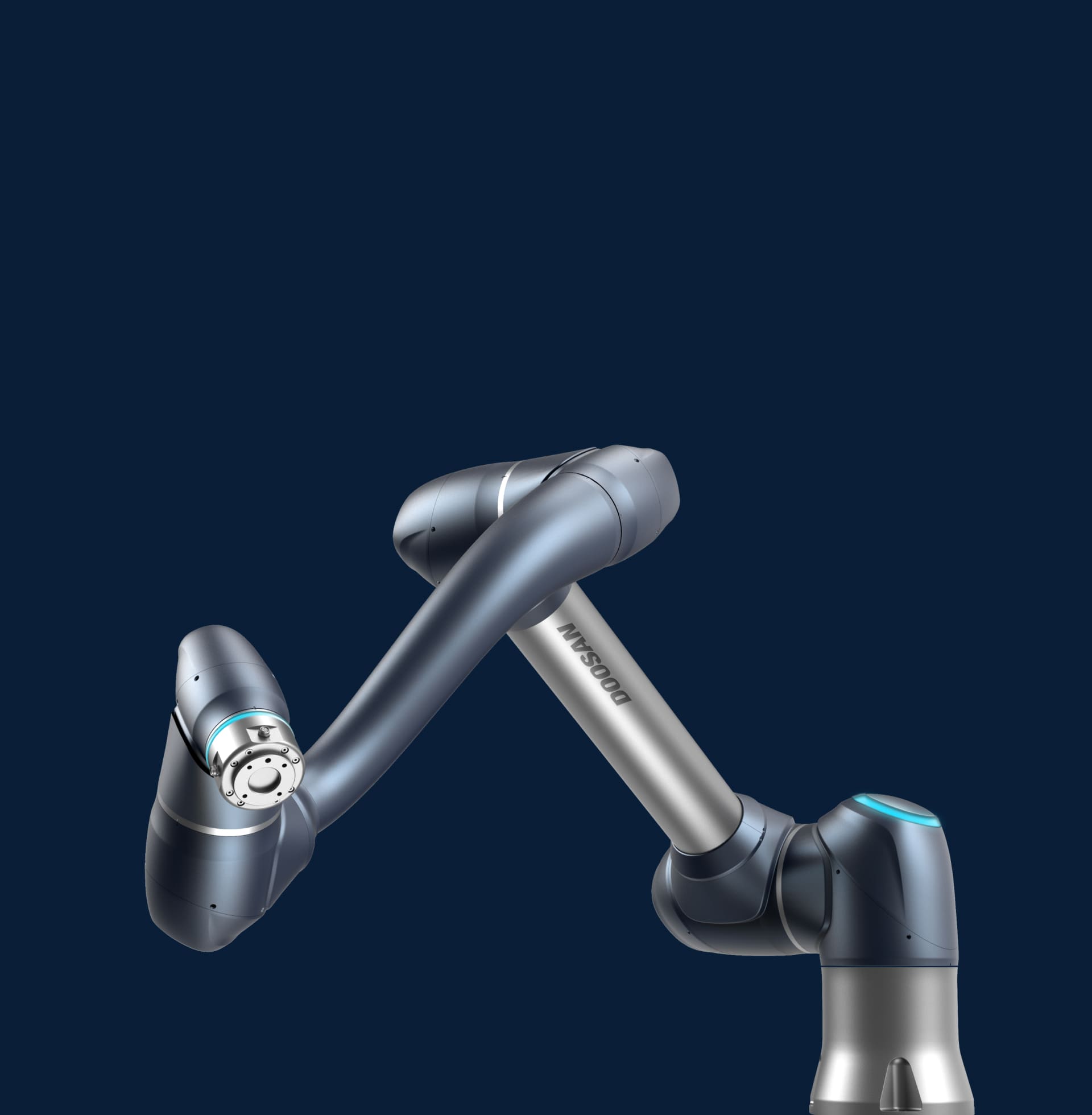
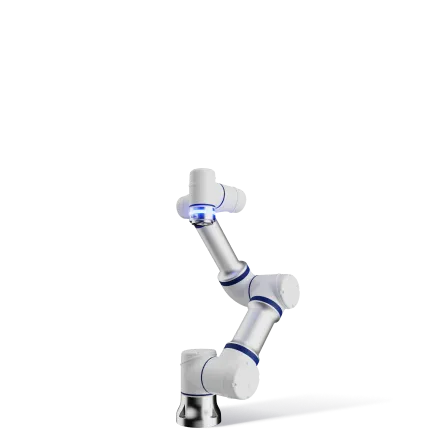
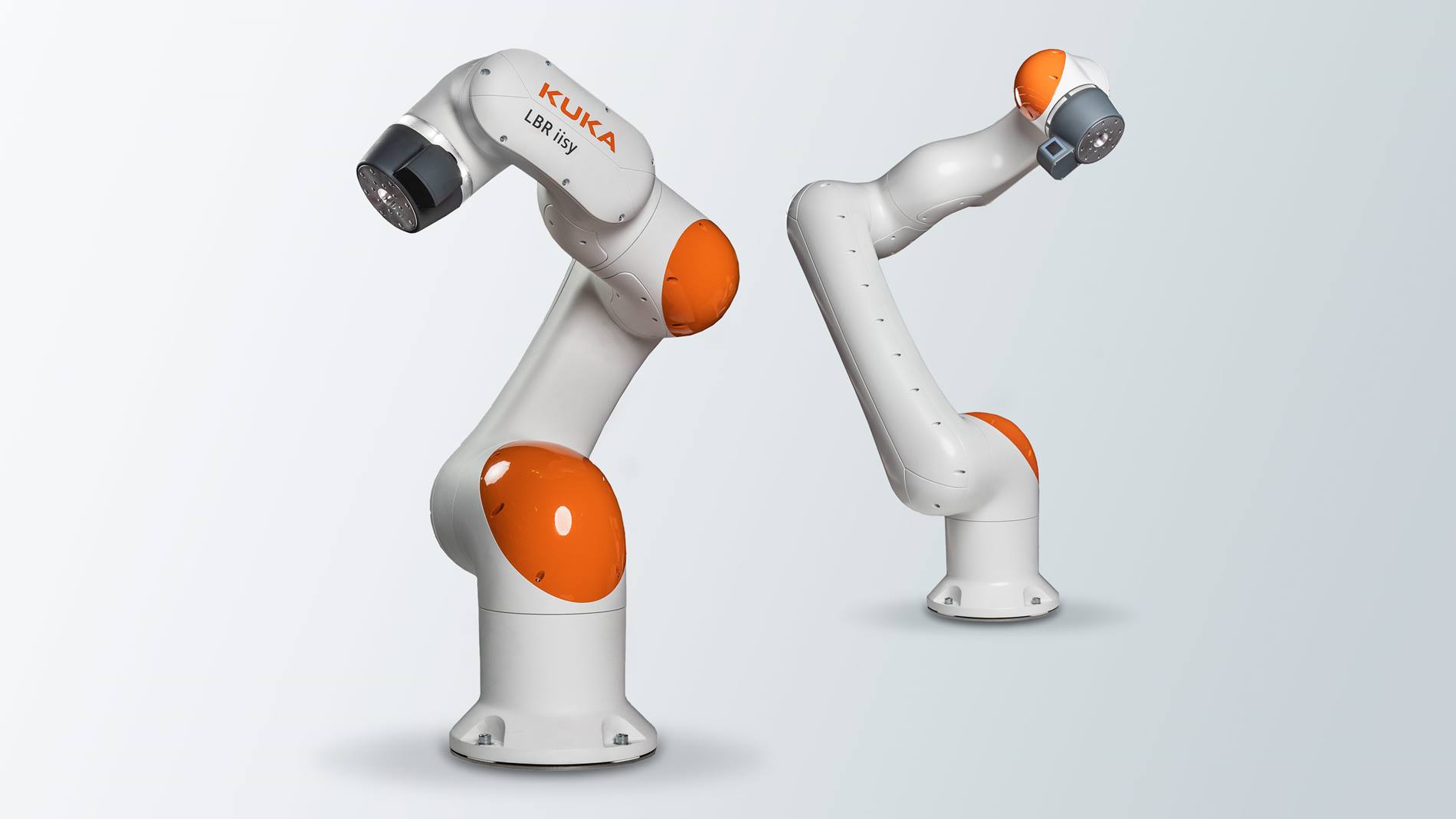
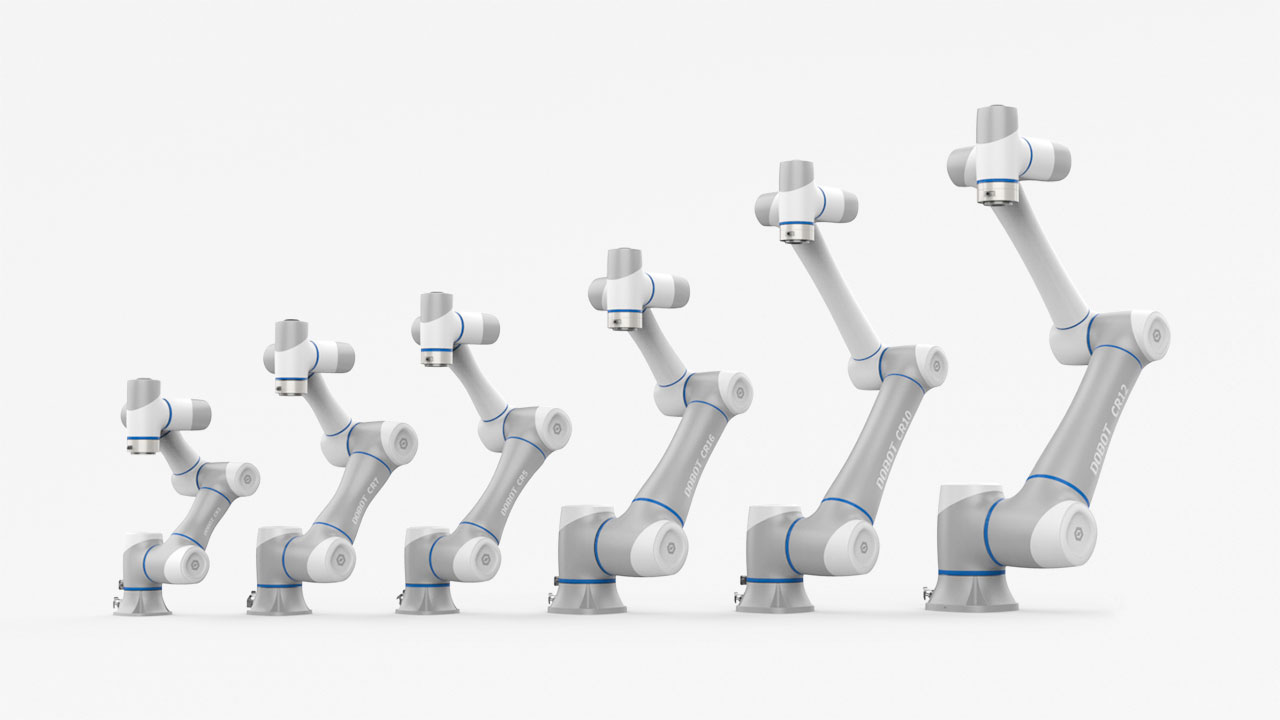
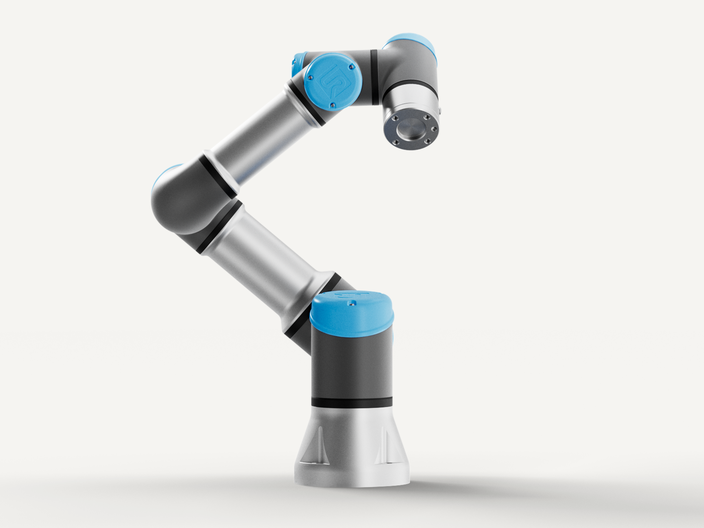
A collaborative robot, or cobot, is an industrial robot arm designed to operate in a shared workspace alongside human workers without traditional safety fencing. Built-in safety functions such as force/torque sensing, speed limiting, and separation monitoring make this possible. The defining principle, reinforced in ISO 10218:2025, is that the "collaborative" property belongs to the entire application (robot + end-effector + task + workcell), not the robot hardware alone. Cobots trade peak speed and payload for inherent safety, fast deployment, and easy reprogramming.
Photo: Auledas, CC BY-SA 4.0, via Wikimedia Commons
This guide is aimed at industrial purchasing engineers and design engineers. It covers 6 chapters from what a cobot is, types and variants, safety and force-limiting technologies, materials and end-effectors, spec-sheet decoding, to selection decisions, with 7 selection FAQs and manufacturer comparisons, helping you build a complete collaborative-robotics knowledge framework in 30 minutes. All parameters reference ISO 10218-1:2025, ISO 10218-2:2025, ISO/TS 15066, ISO 9283, ISO 13849-1, and IEC 62061 public standards.
Chapter 1 / 06
What is a Collaborative Robot
A collaborative robot (cobot) is an industrial robot arm engineered to work in a shared workspace alongside human operators without the traditional safety cage that surrounds conventional industrial robots. It achieves this through built-in safety functions: joint-level force and torque sensing, speed limiting, and separation monitoring that together keep contact energy below human injury limits. Within the SpecForge taxonomy, cobots sit under Electrical & Automation › Industrial Robots, alongside articulated and SCARA robots, but they are differentiated by inherent safety rather than by raw speed or payload.
The single most important conceptual point, reinforced in the ISO 10218:2025 revision, is that "collaborative" is a property of the application, not of the robot hardware in isolation. A collaborative application is the complete system of robot plus end-effector plus task plus workcell. The same arm can behave collaboratively in one cell and require fencing in another, depending on what tool it carries and what it does. This is why a cobot that ships safety-rated still demands a full risk assessment of the finished cell before it can run fenceless.
Cobots make a deliberate engineering trade. They give up the peak speed and high payload of caged industrial robots in exchange for three commercial advantages: inherent safety that removes guarding cost and floor space, fast deployment measured in hours rather than weeks, and easy reprogramming so a single arm can be redeployed across multiple tasks. For low-mix high-mix factories, short production runs, and operations that cannot justify dedicated automation cells, this flexibility is often worth more than peak throughput.
Typical cobots have a reach of 500 to 1,800 mm, a payload of 3 to 35 kg, 6 axes (sometimes 7), and pose repeatability between ±0.02 and ±0.1 mm. These figures place them firmly between desktop pick-and-place units and heavy six-axis welding or palletizing robots. The 6-axis articulated form dominates the market because it delivers full six-degree-of-freedom dexterity in a compact, relocatable package that can be floor, ceiling, wall, or mobile-base mounted.
Commercially, the cobot category has grown into a distinct market. The global cobot market was approximately USD 1.42 billion in 2025 and is projected to reach about USD 3.38 billion by 2030, a compound annual growth rate of roughly 18.9 percent. The sub-5 kg payload class is the largest single segment at about 52 percent of 2025 share, while the heavier 10 to 20 kg class is the fastest-growing at roughly 23 percent CAGR. Primary applications include machine tending, pick-and-place, packaging and palletizing, assembly, screwdriving, welding, dispensing, quality inspection, and lab automation.
Chapter 2 / 06
Cobot Types and Variants
Cobots can be classified three ways: by kinematic structure, by the safety implementation method (the collaborative operation mode), and by payload class. These three lenses are independent, so a real product is described by a combination of all three, for example a 6-axis articulated PFL cobot in the light payload class. The table below summarizes the kinematic families and their representative products.
Kinematic structure
Axes
Best for
Representative models
6-axis articulated
6
General-purpose, full 6-DOF dexterity
Universal Robots UR series, FANUC CRX, ABB GoFa
7-axis (redundant)
7
Obstacle avoidance, posture optimization in clutter
KUKA LBR iiwa
Dual-arm
2 × 7
Coordinated assembly and handling
ABB YuMi (IRB 14000)
SCARA-type / desktop
4 to 6
Lighter, planar-biased benchtop pick-and-place
Desktop cobots
By kinematic structure. The 6-axis articulated cobot is the dominant form because its six joints give full six-degree-of-freedom dexterity for general-purpose tasks; Universal Robots UR, FANUC CRX, and ABB GoFa all use this configuration. The 7-axis redundant cobot adds an extra joint so the arm can reach a target pose through multiple elbow configurations, which is valuable for obstacle avoidance and posture optimization in cluttered cells; the KUKA LBR iiwa is the canonical example. The dual-arm cobot, such as the ABB YuMi (IRB 14000), coordinates two arms for assembly and handling tasks that mimic a human at a bench. SCARA-type and desktop cobots are lighter and planar-biased for benchtop pick-and-place.
By safety implementation method. ISO 10218-2:2025 defines three collaborative techniques, and a single robot can support several at once depending on configuration. Power and Force Limiting (PFL) is the most common cobot technique: contact forces are kept below biomechanical injury limits so the robot can touch a person without harm. Speed and Separation Monitoring (SSM) slows or stops the robot as a human approaches, sensed by vision or scanners. Hand-Guided Controls (HGC), the 2025 name for hand guiding, lets the operator physically grasp and move the arm to teach paths. The fourth method of the 2011-era framework, Safety-Rated Monitored Stop, was renamed monitored standstill in the 2025 revision and reclassified as a general safety function rather than a collaborative technique: it halts the robot when a human enters the zone and resumes automatically when the zone is clear.
By payload class. The market splits into three payload tiers. The light class (≤5 kg) accounted for roughly 52 percent of the 2025 market and dominates electronics, lab automation, and light assembly. The medium class (5 to 10 kg) covers general machine tending and packaging. The heavy collaborative class (10 to 35 kg) is the fastest-growing segment, driven by palletizing and heavier machine tending where a cobot replaces a caged robot to save floor space and integration cost.
Choosing among these variants begins with the task, not the brand. If the cell is open and a human works elbow-to-elbow with the arm, a PFL cobot in the appropriate payload class is the natural starting point. If throughput requires full speed and a human is only occasionally present, an SSM setup with safety scanners (or an industrial-speed cobot) is more appropriate. If the cell is geometrically cramped, the extra joint of a 7-axis arm earns its keep.
Chapter 3 / 06
Safety and Force-Limiting Technologies
The technology that separates a cobot from a conventional robot is its safety architecture. Four building blocks make collaborative operation possible: joint torque/force sensing, power and force limiting, speed and separation monitoring, and lightweight low-energy construction. Together they allow a robot to operate near or in contact with people while keeping collision energy and contact pressure within human tolerance.
Torque/force sensing. Each joint contains a servo motor, a harmonic-drive (strain-wave) gearbox, and one or more encoders. To detect contact, the robot either measures joint torque directly with dedicated joint torque sensors (as in the KUKA LBR iiwa) or estimates torque from motor current (as in Universal Robots). When the measured or estimated torque deviates from the expected value, the controller infers an unexpected contact and triggers a protective stop within milliseconds. This fast, sensitive stop is the foundation of power and force limiting.
Power and Force Limiting (PFL). PFL combines sensing with software that caps the force and pressure the arm can apply on contact, holding it under the ISO/TS 15066 biomechanical thresholds. The design must satisfy these limits for every reachable body location, because the human body region that could be struck is not known in advance. PFL is what makes a true fenceless application possible, and it is the most widely deployed collaborative mode.
Speed and Separation Monitoring (SSM). Where throughput matters, SSM lets the robot run faster while a human is far away and slow down only as the person approaches. External safety-rated devices such as laser scanners, safety cameras, light curtains, and pressure mats continuously compute a minimum protective separation distance; the controller scales robot speed with measured proximity, stopping before the separation distance is violated. SSM needs more peripheral hardware than PFL but recovers much of the speed a 250 mm/s collaborative cap would otherwise cost.
Lightweight construction. The mechanical design itself reduces hazard. Aluminum-alloy links, rounded and padded surfaces, the absence of pinch points, and low moving mass all reduce the kinetic energy available in a collision. Less mass moving at a given speed means less impact force, which directly eases compliance with the biomechanical limits.
Programming and deployment. Cobots are designed to be set up by line engineers, not robotics specialists. Three programming approaches make this possible: hand-guiding (lead-through teaching, where the operator physically moves the arm and records waypoints), graphical flowchart programming on a tablet or teach pendant, and offline simulation. This is what enables deployment in hours rather than weeks, one of the cobot's central commercial advantages.
The governing standards tie these technologies together. ISO 10218-1:2025 covers the robot itself (design and construction) and supersedes the 2011 edition. ISO 10218-2:2025 covers robot systems, integration, and collaborative applications; crucially, this revision absorbs the content of the former ISO/TS 15066:2016, retaining three collaborative techniques (HGC, SSM, PFL) while reclassifying the former safety-rated monitored stop as the general monitored standstill safety function, and the 29-body-region biomechanical pain-threshold table from TS 15066 Annex A now appears as Annex M (informative). ISO 13849-1 and IEC 62061 govern the safety-related control functions, which on cobots are commonly rated to PL d / Category 3 or SIL 2. ISO 12100 is the mandatory risk-assessment starting point for any collaborative cell.
Chapter 4 / 06
Materials, Construction, and End-Effectors
Cobot construction is optimized for two competing goals: high stiffness for precision, and low mass plus rounded geometry for collision safety. The materials and the end-effector choice together determine whether an application remains inherently safe or needs added guarding, so they belong to the safety conversation as much as to the mechanical one.
Structure. The links and housings are typically aluminum alloy, chosen for a high stiffness-to-weight ratio that delivers precision without adding collision energy. For ultra-light arms, some manufacturers use carbon-fiber or magnesium to reduce mass further. Lower moving mass is not just a weight specification; it directly lowers the kinetic energy in any contact, which is what allows the arm to meet the biomechanical limits.
Surfaces. Cobot surfaces are smooth and rounded with no pinch points. Some models add soft or compliant skins or padding, which spread the contact area on impact. Spreading contact lowers pressure (force per unit area), and because ISO/TS 15066 sets a pressure ceiling as well as a force ceiling for each body region, padding is a direct compliance tool, not mere cosmetics.
Drivetrain. The motion comes from brushless servo motors paired with harmonic (strain-wave) reducers. Harmonic drives provide near-zero backlash and high precision in a compact package, which is essential for the repeatability cobots are expected to deliver and for the smooth low-mass motion that keeps collisions gentle.
Ingress protection. The body is typically IP54, adequate for general factory environments. Wrist sections are often IP65 or IP67, and washdown or food-grade variants are available for hygienic, wet, or dusty environments where the arm must be hosed down or operate in food production.
The end-effector is matched to the task and the workpiece, and it is the component most likely to change the safety picture. The table below summarizes the common end-effector families.
End-effector selection depends on part weight, surface, and cycle time, but the overriding safety question is whether the tool itself introduces a hazard. A sharp deburring tool, a hot welding torch, or a gripper with shear points can negate the arm's inherent collaborative safety regardless of how well the robot is force-limited. When that happens, the risk assessment will require added guarding or a switch to a monitored mode, even though the arm itself is a cobot. This is the practical face of the principle that "collaborative" is a property of the whole application.
Chapter 5 / 06
Key Specification Parameters
Reading a cobot datasheet is a core skill for purchasing engineers. Different manufacturers list parameters in different orders, but a consistent set of figures drives the selection decision: payload, reach, axes, repeatability, speed, joint ranges, mass, footprint, power, temperature, safety rating, and protection class. The table below consolidates the typical ranges and the engineering notes that matter for each.
Parameter
Typical range
Notes for selection
Payload
3 to 35 kg
Mainstream 5 to 20 kg; rated at the wrist; add gripper mass + dynamic/inertial loads
Reach
500 to 1,800 mm
Sphere radius from the base
Degrees of freedom (axes)
6, 7, or 2×7
6 most common; 7 for redundancy; dual-arm = 2×7
Pose repeatability
±0.02 to ±0.1 mm
Tested per ISO 9283; repeatability is not absolute accuracy
Max TCP speed
~1 to 2.5 m/s
Capped at ≤250 mm/s in PFL/collaborative mode per ISO/TS 15066 unless a risk assessment permits more
Payload is rated at the wrist, so the usable figure is always less than the headline once the gripper and any dynamic or inertial loads are subtracted. Mainstream cobots fall in the 5 to 20 kg band; the full market spans 3 to 35 kg. Always read payload together with reach, because payload drops at full extension along the payload-versus-reach curve.
Reach is the radius of the sphere the wrist can sweep from the base, typically 500 to 1,800 mm. It must be matched to where parts are presented, where machine doors and conveyors sit, and whether the arm must reach into a fixture. Degrees of freedom is usually 6; a 7-axis redundant arm trades simplicity for the ability to avoid obstacles, and a dual-arm cobot offers 2×7 for coordinated work.
Pose repeatability ranges from ±0.02 to ±0.1 mm and is measured per ISO 9283. It describes how closely the arm returns to the same commanded point, and it is not the same as absolute accuracy, which describes how close the arm gets to a point in real-world coordinates. Assembly and electronics need the tight end of the range; palletizing tolerates the loose end.
Max TCP speed is the headline rated speed, roughly 1 to 2.5 m/s, but in collaborative or PFL operation it is commonly capped at ≤250 mm/s (0.25 m/s) per ISO/TS 15066 guidance unless a documented risk assessment permits more. This is the single specification most likely to surprise buyers, because it can cut effective throughput dramatically. Safety functions are rated to PL d / Category 3 per ISO 13849-1 or SIL 2 per IEC 62061, and the number of configurable safety I/O determines how flexibly the cell can be zoned.
Chapter 6 / 06
Selection Decision Factors
To turn the preceding chapters into a specific model choice, follow the decision sequence below. As with most automation purchases, the costly mistakes come not from a single wrong step but from deciding the wrong thing first. These eight steps can serve as a fixed RFQ template.
Define the application and required mode first: decide between PFL (true fenceless), SSM (faster but needs scanners), hand-guided controls (teaching), or a monitored-standstill cell. Remember that the end-effector and workpiece, including sharp edges, hot parts, or sharp tools, can void inherent collaborative safety and force added guarding.
Payload margin: sum the part weight plus gripper plus dynamic and inertial loads, then leave roughly 20 to 30 percent headroom, and check the payload-versus-reach curve because payload drops at full extension.
Reach and workspace geometry: match reach to part presentation, machine doors, and conveyor positions. Consider a 7-axis arm if obstacle avoidance or posture optimization is needed in a cluttered cell.
Repeatability and accuracy: assembly and electronics need ±0.02 to ±0.03 mm, while palletizing tolerates ±0.1 mm. Specify per ISO 9283 and remember repeatability is not absolute accuracy.
Cycle time and speed: the collaborative-mode 250 mm/s cap may dictate using SSM with scanners or fencing to hit throughput. Some industrial-speed cobots, such as ABB SWIFTI, run fast and slow only on human approach.
Safety rating and risk assessment: confirm PL d / Category 3 or SIL 2, but understand that a full ISO 12100 risk assessment of the complete cell is mandatory regardless of the robot rating.
Environment: verify IP rating, ambient temperature, and any cleanroom, food-grade, or washdown requirements that point to an IP65/IP67 or hygienic variant.
Ecosystem and total cost of ownership: weigh pre-certified gripper ecosystems (UR+-style), programming ease (no-code flowcharts), software licensing, service and support footprint, and mounting flexibility (floor, ceiling, or AMR).
The market context helps frame the shortlist. Universal Robots (Denmark) is the long-standing market leader and passed 100,000 cobots sold in early 2025; its e-Series spans the UR3e (3 kg / 500 mm / ±0.03 mm), UR5e (5 kg / 850 mm / ±0.03 mm), UR10e (12.5 kg / 1,300 mm / ±0.05 mm), UR20 (20 kg / 1,750 mm), and UR30 (30 kg). FANUC (Japan) offers the CRX line from CRX-5iA (5 kg / 994 mm) through CRX-10iA/L (10 kg / 1,418 mm) and CRX-20iA/L (20 kg / 1,418 mm) up to the CRX-25iA (25 kg / 1,889 mm) and CRX-30iA (30 kg / 1,756 mm), plus the green-bodied CR series.
KUKA (Germany) builds the 7-axis LBR iiwa with joint torque sensors, including the LBR iiwa 7 R800 (7 kg / 800 mm) and LBR iiwa 14 R820 (14 kg / 820 mm), plus the newer LBR iisy line. ABB (Switzerland/Sweden) offers the GoFa CRB 15000 family (GoFa 5 at 5 kg / 950 mm, GoFa 10, and GoFa 12), the industrial-speed SWIFTI, and the dual-arm YuMi (IRB 14000, about 0.5 kg per arm). Techman Robot (Taiwan) integrates built-in vision in its TM series with payloads to about 25 kg, and Doosan Robotics (South Korea) offers A/M/H series up to about 25 kg.
A growing field of additional suppliers rounds out the market: AUBO Robotics (China), JAKA (China), Elite Robots (China), and Denso Wave (Japan), whose COBOTTA and COBOTTA PRO reach TCP speeds up to 2,500 mm/s. One last dimension that buyers often overlook is regulatory: CE marking now falls under the EU Machinery Regulation 2023/1230, which replaces Machinery Directive 2006/42/EC by January 2027, while ANSI/A3 R15.06-2025 (formerly ANSI/RIA R15.06) is the aligned US adoption, and ISO/TR 20218-1 covers end-effector safety with ISO/TR 20218-2 covering manual load/unload stations. Confirming the right certifications for the destination market belongs in the RFQ from the start.
FAQ
What is the difference between a collaborative robot and a traditional industrial robot?
A traditional industrial robot is built for peak speed and payload and is normally enclosed in a safety fence, with humans excluded during operation. A collaborative robot (cobot) is designed to share a workspace with people without traditional fencing, using built-in safety functions such as joint force/torque sensing, speed limiting, and separation monitoring to keep contact energy below injury limits. The key principle, reinforced in ISO 10218:2025, is that 'collaborative' belongs to the whole application (robot + end-effector + task + workcell), not the robot hardware alone. Cobots trade peak speed and payload for inherent safety, fast deployment, and easy reprogramming.
What are the collaborative operation techniques in ISO 10218-2:2025?
ISO 10218-2:2025 (which absorbed the former ISO/TS 15066:2016) defines three collaborative techniques, and a single robot can support several. (1) Power and Force Limiting (PFL) keeps contact forces below biomechanical injury limits and is the most common cobot technique for true fenceless operation. (2) Speed and Separation Monitoring (SSM) uses scanners or vision to slow or stop the robot as a human approaches. (3) Hand-Guided Controls (HGC), the 2025 name for hand guiding, lets an operator physically move the arm to teach paths. The fourth method of the older framework, Safety-Rated Monitored Stop, was renamed 'monitored standstill' and reclassified as a general safety function rather than a collaborative technique, because monitoring absence of motion with drive power applied is used well beyond collaborative cells.
What is the 250 mm/s speed limit and where does it come from?
Although cobots can reach roughly 1 to 2.5 m/s rated maximum tool-center-point (TCP) speed, in collaborative or power-and-force-limiting operation the TCP speed is commonly capped at 250 mm/s (0.25 m/s) per ISO/TS 15066 guidance unless a documented risk assessment permits more. This limit exists to keep collision energy and contact forces within the biomechanical thresholds for human contact. Because it can throttle throughput, engineers who need full speed often switch to Speed and Separation Monitoring with safety scanners, or use 'industrial-speed' cobots (such as ABB SWIFTI) that run fast and slow only on human approach.
How do cobots sense contact to keep forces safe?
Each joint contains a servo motor, a harmonic-drive (strain-wave) gearbox, and encoders, plus a means of detecting abnormal torque. Some designs use dedicated joint torque sensors (for example the KUKA LBR iiwa), while others estimate torque from motor current (for example Universal Robots). When measured torque exceeds the expected value, the controller triggers a protective stop within milliseconds. This is the basis of Power and Force Limiting (PFL). Software plus sensing caps the force and pressure the arm can apply on contact so it stays under the ISO/TS 15066 biomechanical thresholds for every reachable body region.
What are the ISO/TS 15066 biomechanical force and pressure limits?
ISO/TS 15066 tabulates pain-onset force and pressure ceilings for 29 body regions, each with its own value, and a PFL design must keep contact below the relevant limit for every reachable body location. For the palm of the hand, the quasi-static contact limit is 140 N maximum force and 260 N/cm2 maximum pressure. Transient (impact) limits are higher, roughly twice the quasi-static force in the first 0.5 s after contact (about 280 N transient versus 140 N quasi-static for that region). In ISO 10218-2:2025 this 29-region table appears as Annex M (informative).
How do I size payload and reach when selecting a cobot?
For payload, sum the part weight plus the gripper or tool mass plus dynamic and inertial loads, then leave roughly 20 to 30 percent headroom; payload is rated at the wrist and drops at full extension, so always check the payload-versus-reach curve. For reach (the sphere radius from the base, typically 500 to 1,800 mm), match it to part presentation, machine doors, and conveyor positions. If the cell is cluttered and needs obstacle avoidance or posture optimization, consider a 7-axis redundant cobot such as the KUKA LBR iiwa. Mainstream cobots run 3 to 35 kg payload, with 5 to 20 kg most common.
Do I still need a risk assessment if the cobot is safety-rated to PL d / SIL 2?
Yes. Cobot safety functions are commonly rated to Performance Level d, Category 3 per ISO 13849-1 or SIL 2 per IEC 62061, but a robot rating alone does not make an application safe. A full ISO 12100 risk assessment of the complete cell is mandatory regardless of the robot rating, because the end-effector and workpiece can void inherent collaborative safety. Sharp tools, hot parts, or sharp edges introduce hazards that may force added guarding. CE marking now follows the EU Machinery Regulation 2023/1230, which replaces Machinery Directive 2006/42/EC by January 2027; ANSI/A3 R15.06-2025 (formerly ANSI/RIA R15.06) is the aligned US adoption of the 2025 editions.
Collaborative Robot Manufacturers
Source-backed product routes. Open a company dossier for procurement scope and cited evidence.
On the SpecForge collaborative robot channel, browse specification sheets for cobots under Electrical & Automation › Industrial Robots, covering 6-axis articulated, 7-axis redundant, dual-arm, and SCARA-type structures with payloads from 3 to 35 kg and reach from 500 to 1,800 mm. This channel catalogs models from Universal Robots, FANUC, KUKA, ABB, Techman, Doosan, AUBO, JAKA, Elite Robots, and Denso Wave, with multi-dimensional filtering by payload class (light / medium / heavy collaborative), collaborative mode (PFL / SSM / hand guiding / monitored standstill), repeatability (±0.02 to ±0.1 mm per ISO 9283), and safety rating (PL d / Category 3 per ISO 13849-1 or SIL 2 per IEC 62061). Each model page provides complete specifications, typical applications, datasheet references, and one-click RFQ comparison, helping buyers and design engineers complete selection decisions within 30 minutes.