
A collaborative robot (cobot) is a force- and speed-limited arm that shares workspace with a human operator under ISO/TS 15066, distinguishing it from a fenced industrial robot. According to MarketsandMarkets as cited by EVS International, the global collaborative robot market is on track to grow from about USD 1.4 billion in 2025 to USD 3.38 billion by 2030 at a compound annual growth rate near 18.9 percent, and roughly three-quarters of the market sits with the top ten brands [S4].
Buyers in 2026 are picking from a market where Universal Robots (Denmark) sits near 14.8% global share, with China's Dobot (~13%), AUBO (~11.2%), and JAKA (about 21.9% of China's domestic market) holding three of the top four positions; FANUC, ABB, KUKA, Doosan, Techman, and Yaskawa round out the leaderboard [S4]. Chinese export reach, UR's UR+ ecosystem (more than 300 certified add-ons, over 100,000 arms deployed), and built-in vision on the Techman TM series are the main axes of differentiation [S4].
Start with Application, Not Brand
Cobots fit a defined cluster of tasks: machine tending, material handling, palletizing, light assembly (part insertion, screwdriving, press fitting), pick/place/packing, vision-guided inspection, surface finishing (grinding, deburring, sanding, polishing), and MIG/TIG welding of repetitive seams [S3]. High-mix, low-volume shops with frequent changeovers are the canonical buyer; a fully fenced cell running a million-cycles-a-year weld is still a job for a traditional articulated robot [S3][S4].
For a SCARA-style pick/place cell, a SCARA robot is usually the better answer than a cobot, so define the dominant motion pattern before sizing payload. A buyer that needs autonomous mobile transport between cells is looking at an AMR robot or AGV robot, not a stationary cobot. Once the application family is fixed, the four numbers that drive the shortlist are payload, reach, repeatability, and cycle time.
Payload, Reach, Repeatability: The Three Hard Numbers
Payload covers the end-effector plus the part, not just the part; a 5 kg gripper on a 3 kg part is an 8 kg job, and most cobots derate above 50% of their nominal payload when run at maximum speed [S6]. Reach is the second gating spec: Universal Robots' UR20 and UR30 extended the company's reach into heavier palletizing, while Doosan has pushed above 20 kg payload for heavy-payload cobot duties [S4]. Repeatability for cobots typically lands in the ±0.02-0.1 mm range, which is fine for machine tending and assembly but not for tight-tolerance semiconductor backend work, where a dedicated SCARA robot is the more honest answer (see the SCARA robot spec map for 2026).
A practical 5-step checklist: (1) define the application, (2) select payload with gripper weight included, (3) verify reach against the largest part plus fixturing, (4) check repeatability against the tolerance stack-up, and (5) confirm cycle time against takt time with a 20% margin [S7]. Skipping step 2 is the single most common way a cobot cell gets specced wrong.
Safety Modes Under ISO/TS 15066

ISO/TS 15066 defines four collaborative operation modes that govern how a cobot can share space with a person: safety-rated monitored stop, hand guiding, speed and separation monitoring, and power and force limiting [S2]. Each mode sets distinct sensor, control, and risk-assessment requirements; power and force limiting is the default for most tabletop cobot cells, while speed and separation monitoring is the right pick for larger workspaces with light curtains or area scanners. ISO 10218-1 and ISO 10218-2 set the baseline industrial-robot safety requirements that the collaborative spec then extends [S2].
Compliance on paper is not the same as a safe cell. A working implementation runs through six steps: hazard identification in the workspace (robot speed, applied force, adjacent human tasks), mode selection from the risk assessment, installation of presence-detection devices (light curtains, pressure mats, proximity sensors), programming of speed/force/workspace limits to the chosen mode, operator and maintenance training, and a recurring inspection cadence to keep the safety case current [S2]. Buying the cobot is roughly the third item on that list, not the first.
Programming and Integration Cost
Lower integration cost versus a traditional industrial robot is one of the four recurring value claims in cobot marketing, alongside safe human collaboration, redeployment flexibility, and easy programming [S3]. The programming claim is real but conditional: intuitive software, hand guiding, and teach-pendant workflows let an operator without a robotics background pick up the basics, yet cell-level integration (vision, conveyors, safety scanners, PLC handshakes) still wants a controls engineer. A reasonable pre-purchase step is to build a representative program in a simulator using the candidate vendor's offline tool, and to clarify the team's programming experience before committing [S1].
Sim-first vendor evaluation saves money. Buyers who skip a simulator trial and discover on day three of integration that the pendant flow does not match their team's mental model are the ones who label the cobot "hard to use." RoboDK, the vendor's own URCap or RT-Vis, and the FANUC CRX tablet flow are common offline sandboxes to test against the actual part and fixture geometry [S1][S5].
Mainstream vs Heavy-Payload vs Vision-Native Cobots
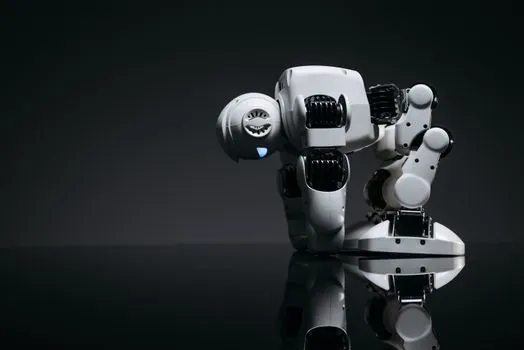
Mainstream 5-16 kg cobots from Universal Robots, FANUC's CRX line, and ABB's YuMi cover the bulk of machine tending, light assembly, and lab automation. Heavy-payload cobots above 20 kg from Doosan and the UR20/UR30 reach into palletizing and longer-reach machine tending without giving up the collaborative safety case [S4]. Vision-native designs, led by Techman's built-in vision system, collapse the integration cost for inspection, pick-from-bin, and presence/absence checks because the camera ships calibrated with the arm [S4].
Chinese suppliers deserve a separate mention: JAKA leads China's domestic cobot market at roughly 21.9% share, AUBO reports more than 90% in-house parts across its full payload range, and Dobot exports to 80+ countries as an HK-listed company [S4]. For buyers who already run a Chinese supplier ecosystem, lead time, service coverage, and local spare-parts stocking are often the deciding factors over a Danish or German alternative.
Who Should NOT Pick a Mainstream Cobot
A mainstream collaborative robot is the wrong answer in four common cases. First, fully fenced, high-volume automotive body-in-white or heavy-payload welding, where a traditional articulated robot earns its keep on speed and repeatability. Second, cleanroom or semiconductor backend processes with sub-0.02 mm tolerance, where a SCARA robot (see the semiconductor backend spec map) is the more honest fit. Third, autonomous transport between cells, which is an AMR robot or AGV robot problem. Fourth, hazardous-area work involving dust, flammable vapour, or washdown without an IP-rated variant, where a standard desktop cobot is simply not the right machine. [S3]
Within the cobot family, a power-and-force-limited 6-axis arm is the wrong pick if the application genuinely needs speed-and-separation monitoring across a wide workspace, or if a SCARA's vertical-pick motion would cut cycle time in half. Picking by brand familiarity rather than by the ISO/TS 15066 mode that matches the cell is the most expensive version of this mistake.
Shortlist Logic for 2026

Rank candidates against five criteria: documented ISO/TS 15066 mode support with the safety case you intend to run, payload-after-gripper mass, reach against the largest part, repeatability against the worst tolerance in the stack-up, and local service footprint with spare-parts lead time [S2][S7]. Require a simulator trial of the exact part, gripper, and fixture before PO; require a documented risk-assessment deliverable from the integrator; and require a stated inspection cadence to keep the safety case valid past commissioning [S2].
Trackable signals to watch: the next revision of ISO/TS 15066 and its alignment with ISO 10218-1/-2, any new heavy-payload (>25 kg) cobot launches, and the gap between Chinese-domestic cobot pricing and Western-brand list pricing. For adjacent specifications on a related packaging line, the strapping machine spec map for food and beverage is a useful cross-reference for end-of-line integration.