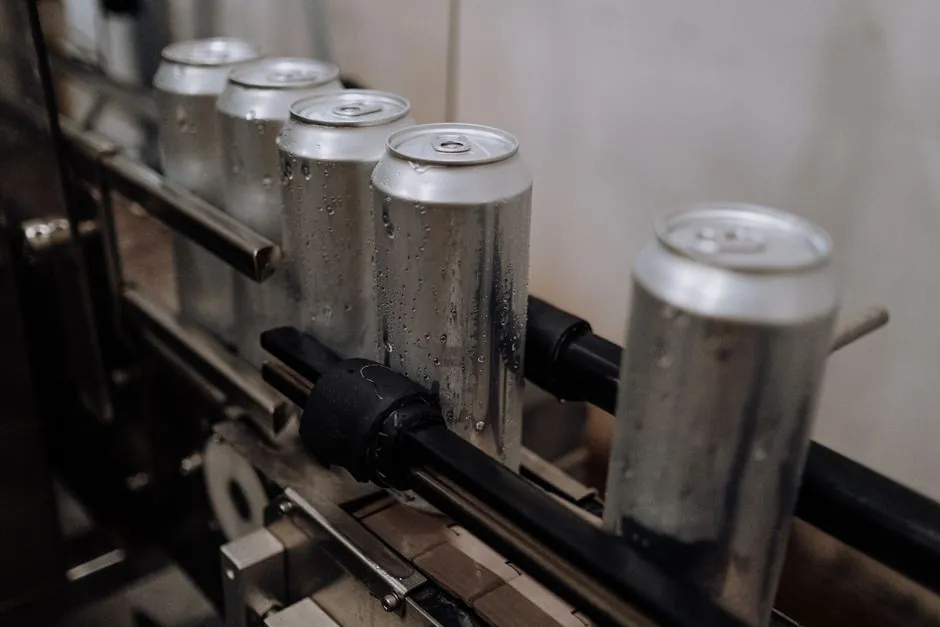
Install the coding machine before the vacuum packager when the date must be printed on an open pouch, because the coder can apply batch numbers and expiry dates before the film is sealed.
Install the coder after the vacuum packager when the code must stay clear of seals, folds, trapped oil, and condensation, or when a machine integrates coding directly into the sealing cycle.
Pre-seal or post-seal coding decision
Pre-seal coding is the preferred arrangement for flexible pouches, bags, and film that will be evacuated or heat-sealed, because the printing surface is open, flat, and accessible before the package geometry changes. A typical pre-seal code contains a production date, expiry date, batch number, and lot identifier, while 1 or 2 lines are common requirements for packaged products [S4].
Post-seal coding is preferable when the date must not interfere with the vacuum seal or appear on a seal, fold, or trapped-product area. The coding machine must then print onto a stable section of the finished pouch, with enough clearance for the nozzle or print head and sufficient substrate contact for the ink to remain legible [S6].
The practical decision is not coding machine versus vacuum packaging machine. It is whether the required code must be printed before sealing, after sealing, or on both sides of the process. A vacuum packaging machine can accept integrated coding equipment, but the placement decision is governed by film handling, code durability, line speed, and inspection requirements.
Side-by-side placement comparison
For a high-speed line using flexible barrier film, pre-seal coding gives the printer direct access to the open film before evacuation and heat sealing. Integrating coding and labeling equipment into vacuum packaging machines applies batch numbers, expiration dates, barcodes, and lot codes in real time during the packaging process [S1].
For a pouch with a wide sealing band, condensation risk, or product residue near the seal, post-seal coding is more defensible because the code can be placed on a clean, dry panel. RN Mark industrial inkjet coding systems support vacuum packaging and provide high-resolution, smudge-free, and permanent coding on flexible and non-porous films for high-speed production environments [S2].
For a conventional thermal-transfer or roll-coding approach, a pre-seal station can print before the film enters the vacuum chamber, but the ribbon, print head, film tension, and registration must remain stable. Thermal-transfer machines are not interchangeable with continuous inkjet systems, so the comparison should use the actual marking technology rather than a generic equipment label [S3].
For manual or low-volume preparation, a hand date coder such as the UH-8DA/B is listed for frozen food, meat, seafood, vegetables, herbs, and spices [S7]. This approach reduces machine integration effort but provides less automatic association between code and package, so batch segregation and record control depend more heavily on operator discipline.
What the code must survive

The printing location must survive the downstream process, and smooth, non-porous films require a validated ink or print method. Vacuum-pack coding systems are specified for sharp, high-contrast, smudge-resistant printing on plastic films, flexible barrier films, shrink wrap, vacuum pouches, and sealed food packs [S2].
A pre-seal code is exposed to vacuum pull, heat, possible condensation, and contact with the product; a post-seal code avoids the vacuum and sealing heat but may be exposed to handling and surface contamination.
Test samples should reproduce the production film, surface color, print position, line speed, seal temperature, and product condition.
Line layout and integration details
A pre-seal layout should provide a flat or supported print zone, stable web or pouch tension, readable clearance between printed characters, and a sensor or operator control that prevents printing before the package is correctly positioned. The code must remain inside the intended pouch area and must not land across a fold, pull seal, or other region where it will be obscured [S4][S6].
A post-seal layout needs a dwell section long enough for the pouch to stabilize after sealing, a defined support surface, and enough distance from the vacuum chamber for heat, condensate, and mechanical movement not to interfere with the print head. The printer should also be positioned where downstream rollers, case loading, and compression do not abrade the code.
Integrated coding reduces manual handling and supports real-time application of batch numbers, expiration dates, barcodes, and lot codes, but it increases commissioning work. The control system must define what happens when the coder, vacuum station, or inspection sensor stops, and the line should prevent an unmarked or incorrectly marked pouch from advancing into the next stage [S1].
Failures that appear after installation
Code loss at the seal commonly results from placing the code across a seal, fold, or contaminated area rather than selecting a usable panel [S6]. Poor contrast on clear or dark packaging, insufficient drying, and condensation can make a technically successful print unreadable, so sample tests must include the finished package rather than isolated film coupons [S2][S4].
Print-to-code mismatch can arise when a batch identifier, production date, or expiry date changes between systems without a shared source of truth. Continuous inkjet supports variable data for dates, batch numbers, and barcodes [S1], but variable-data capability does not remove the need to validate database logic and reject incorrect codes.
Post-seal placement introduces a secondary failure mode: the code may be applied correctly but damaged during stacking, bagging, case packing, or transport. If code legibility is required after secondary packaging, specify the inspection point after the last handling operation that can contact the printed surface.
Use-case recommendations
Choose pre-seal coding for open flexible pouches, automatic vacuum-and-seal lines, and applications where the date must be embedded in the package before closure. Choose post-seal coding for rigid containers, narrow sealing zones, wet products, and packages where the printed surface is only reliably accessible after vacuuming and heat sealing. [S2]
Choose an integrated coder for automated food, pharmaceutical, and industrial vacuum lines that require one-to-one association between package and variable traceability data. Choose a separate stand-alone coder when codes must be applied to multiple package formats, when changeovers are frequent, or when retrofitting an existing line without redesigning the machine [S1].
For a one-speed decision rule, code before sealing if the required data must be protected inside the pouch or printed across the full web; code after sealing if the code must remain visible above the product and outside the seal area. For a two-sided package, use pre-seal coding on the designated internal or primary panel and post-seal coding on the external panel, with separate verification for each requirement.
Final placement should be approved only after trial packs have been checked for code position, contrast, adhesion, seal interference, condensation, and downstream damage. Record the printer model, coding technology, ink or ribbon grade, film grade, line speed, and print orientation, then repeat validation after any change to the packaging material or vacuum-sealing process.