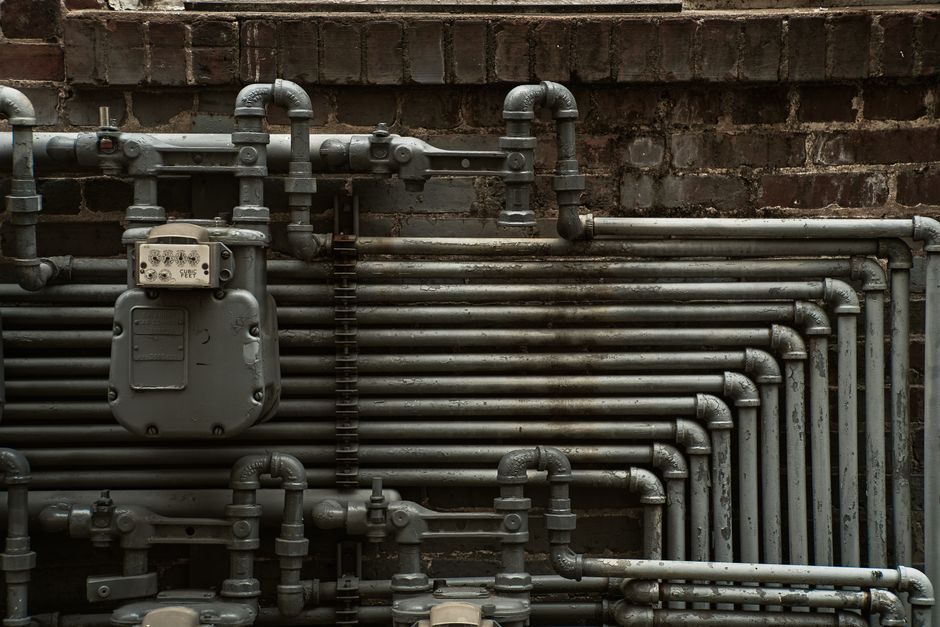
Cold chamber die casting machines built in the 200-9000 kN clamping-force band are the workhorses producing aluminum and zinc-alloy valve bodies, pipe fittings, pump housings and instrument enclosures for upstream and midstream oil and gas service, with shot weights typically spanning 1-25 kg per cycle [S1][S4].
For hydrocarbon-service components, buyers weigh platen size, shot weight, intensifier pressure (commonly 70-140 MPa), injection velocity and tie-bar clearance against the alloy spec, NACE MR0175 sour-service requirements and ASME B16.34 valve-body dimensional calls [S1][S4][S6].
Why Cold Chamber, Not Hot Chamber, for Oil and Gas Alloys
A cold chamber die casting machine keeps the melt pot and shot cylinder physically separate, so molten aluminum (typical bath 680-720 °C) or zinc (415-430 °C) sits in an external furnace and is dosed into the cold shot sleeve per cycle [S1]. Hot chamber machines are restricted to low-melting alloys (zinc, tin, lead) because the gooseneck is immersed in the melt; that geometry cannot survive the bath temperatures and iron-pickup tolerances required for aluminum-bodied valve and manifold castings [S5].
Cold-chamber geometry also delivers higher intensifier pressure (routinely 70-140 MPa versus 20-40 MPa on hot-chamber zinc machines), which is the pressure band that drives aluminum into thin-wall valve trim passages and NACE-compliant thread forms without cold-flow defects [S1][S4].
Clamping Force, Shot Weight and Platen Geometry for Hydrocarbon Castings
For 1/2" to 2" Class 150-600 valve bodies in A356 or A380 aluminum, 800-1600 kN machines with 130-180 mm shot-stroke and 4-8 kg shot capacity are the volume sweet spot; larger 4-bolt flange bodies and multi-cavity pump housings climb into the 2500-5000 kN range with 10-25 kg shots [S4]. Lanson publishes a small-machine series covering 200-500 tonnes (≈2000-5000 kN) targeting short-run and prototype work, while its main cold-chamber line runs through 9000 kN for structural castings [S4].
Tie-bar spacing sets the practical envelope: typical 800 kN-class machines ship with 560 × 560 mm tie-bar clearance, 2500 kN machines with 850 × 850 mm, and 4000 kN+ machines at 1000 × 1000 mm or larger, which dictates maximum die footprint and consequently the largest single valve-body projection you can cast in one shot [S4].
For an applied selection walkthrough on tonnage, shot and cycle parameters, the Cold Chamber Die Casting Machine Selection: Tonnage, Shot and Cycle Spec Cut page lays out the gating logic engineers apply to hydrocarbon-component runs.
Materials and Standards Binding Oil and Gas Castings
Aluminum alloy A356 (AlSi7Mg0.3) and A380 (AlSi8.3Cu3.3) dominate hydrocarbon-service die castings because of their pressure-tightness and machinability, with A380 the higher-volume choice for general valve bodies and A356 preferred where weld-repair or heat-treatment is part of the route [S1][S4]. Zinc-alloy Zamak 3 and Zamak 5 are reserved for low-pressure instrument-housing parts, manifolds under 10 bar and indoor enclosures; hot-chamber Zamak machines are not interchangeable with cold-chamber aluminum cells, even though Alibaba lists 1246 cross-category die-casting suppliers [S3].
For sour-service (H₂S-containing) applications, the castings themselves must meet NACE MR0175/ISO 15156 metallurgical limits; the die-casting machine does not carry a separate NACE certificate, but the die steel (typically H11/H13 hot-work tool steel at 48-52 HRC), shot sleeve material and plunger lubrication must not introduce contaminants that push the casting outside the standard's hardness and composition windows [S1][S4]. Dimensional references for flanged valve bodies typically fall back to ASME B16.34, and flange drill patterns to ASME B16.5 / B16.42 for the corresponding pressure class.
How Cold Chamber Compares Against Hot Chamber, Gravity and Vacuum Cells
The four main options for oil-and-gas metal castings line up against four buyer criteria as follows [S1][S4][S5][S6]:
- <b>Cold chamber die casting</b>: aluminum, zinc, magnesium; 200-9000 kN; 1-25 kg shot; thin-wall and high-pressure capability; cycle 30-180 s; the default for pressure-tight valve bodies. - <b>Hot chamber die casting</b>: zinc, tin, lead only; 160-1600 kN; sub-second cycle; high surface finish; cannot run aluminum bath temperatures. - <b>Gravity die casting</b>: aluminum, copper; no pressure-tightness; lower tooling cost; suited to large low-pressure housings and prototypes. - <b>Vacuum die casting</b>: aluminum, magnesium; sub-100 mbar chamber; porosity under 1% for high-integrity valve bodies; 20-30% cycle-time penalty.
For a 1-25 kg aluminum valve body in Class 600 service, cold-chamber standard cells deliver the best cost-per-shot, while vacuum-assist cold-chamber cells are specified when radiographic or ultrasonic QA rejects conventional porosity [S1][S4]. The vacuum die casting machine class is the upgrade path when radiographic acceptance per ASME B16.34 §6 or NACE hot-spot rules are written into the purchase spec.
Use Cases and Field Examples in Upstream and Midstream

Three castings define the demand profile. First, API 6D ball-valve bodies in 2"-12" sizes are typically A356 or A380 aluminum in 2500-5000 kN cold-chamber cells with intensifier pressures around 90-120 MPa, shot weights 8-20 kg and dies hardened to 48-52 HRC [S1][S4]. Second, ANSI 600# gate-valve bonnets and manifolds fall in 800-2500 kN machines, 4-10 kg shot, with multi-cavity dies on the smaller sizes. Third, low-pressure instrument enclosures and junction-box lids for NEMA 4X / IP66 sites run in 200-800 kN cold-chamber cells or in hot-chamber Zamak cells when the body is under 2 kg [S1].
Offshore Christmas-tree blocks and wellhead adapters are sometimes bid from the same cell range but lean toward vacuum-assist cold-chamber when the operator specifies radiographic acceptance on every casting. For a magnesium-alloy instrument housing where weight saving matters, the magnesium die casting machine class is the parallel route, typically with SF₆-protected atmosphere cells at 600-3800 kN.
Limitations, Failure Modes and What Cold Chamber Cannot Do
Cold-chamber die casting is not a universal process. Section thickness below 1.5 mm is at the edge of what 90-120 MPa intensifier pressure can fill cleanly without cold-shuts; below 1.0 mm wall, high-pressure die casting (HPDC) with vacuum assist or squeeze-casting are the alternatives. Pour weight above 25 kg per shot is rare and pushes cycle times past 200 s, which kills cost economics versus sand or permanent-mold gravity on large pump housings [S1][S4].
Porosity from entrapped air and oxide films remains the dominant field-failure mode: radiographic rejects cluster at die corners and thick-to-thin transitions, which is the entire reason vacuum-assist cells exist. Tooling wear from abrasive aluminum alloys (especially A380 with 3-4% Cu) sets die life around 80,000-150,000 shots for valve-body dies with proper nitriding, versus 200,000+ shots for zinc-alloy dies. Hydrogen porosity from wet charge material is mitigated by degassing the melt at 720 °C before ladling, not by machine selection.
Sourcing Map, Lead Times and Vendor Realities

Mainland China supplies the majority of the installed base, with established clusters in Guangdong, Zhejiang and Jiangsu covering 200-9000 kN cells. Chinese cold-chamber cell pricing for an 800 kN machine typically lands in the USD 60,000-120,000 FOB band, 1600 kN in the USD 120,000-250,000 band, and 4000 kN+ in the USD 350,000-700,000 band, with 60-90 day delivery on standard builds [S4][S6].
Longhua publishes its role as a Chinese group-standard formulator and ships cold-chamber cells in the same envelope, while Lanson groups its 200-500 tonne small cells as a separate line for short-run buyers [S4][S6]. Used hot-chamber inventory is plentiful globally, but used cold-chamber cells at 2500 kN and above are thinner; rebuild lead times run 30-60 days plus commissioning, which is the realistic window to plan for. Buyers should expect a 2-3 week FAT on the new cell, witness-tested with a production die or a sample die of equivalent shot weight.
For an aluminum-line orientation, the aluminum die casting machine reference page lines up the alloy choices, intensifier pressure bands and shot-weight envelopes used in valve-body production. Where the casting shape and weight suggest a non-pressurized cell instead, the gravity die casting machine class is the comparator, but it loses to cold-chamber on pressure-tightness and on cycle time for the 2"-12" valve-body band. For a parallel buyer-side perspective on metal-input cost (aluminum ingot, alloying elements) that drives part-price negotiations, the Carbon Steel Suppliers 2026: China OEM Map, Grade Bands and Sourcing Levers page covers the same China-sourcing channel mechanics on the ferrous side and is a useful cross-reference for procurement strategy.
A tracked signal worth watching is the second-half 2026 commissioning window at two of the larger Chinese cold-chamber builders, which will set the floor on delivery lead times through Q4 2026; the second is whether vacuum-assist retrofit kits for existing 1600-2500 kN cold-chamber cells will reach commercial pricing below USD 80,000, which would shift the cost calculus on radiographic-grade valve bodies away from new vacuum cells and toward retrofits.