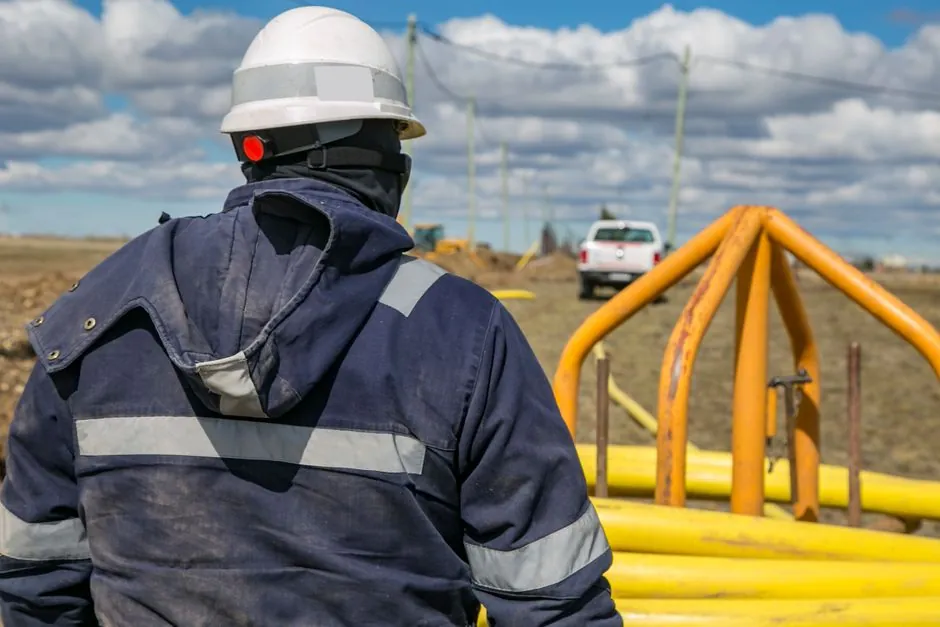
A cold milling machine is the workhorse that strips asphalt or concrete to a controlled depth before a new pavement or trench section is laid, and selecting the right size class matters more on pipeline right-of-way (ROW) spreads than on highway rehab jobs [S3].
Pipeline ROW crews typically need rotor widths of 1.0–2.2 m, maximum cutting depths of 200–330 mm, and engine ratings in the 300–900 hp band, with track undercarriage preferred over wheeled units for soft shoulder and cross-country terrain [S3][S2].
Why the Spec Map Looks Different for a Pipeline Spread
Cold planers sold for road rehab are commonly described in the 1.0–2.2 m rotor width range with cutting depths up to 330 mm and a 300–900 hp engine envelope, which already overlaps the envelope a pipelayer crew needs [S3]. A pipeline crew, however, almost always loses the ability to lane-shift on a finished highway and instead works on a narrow graded corridor shared with sidebooms, welders, and pipe haul trucks [S2]. The two practical consequences: track undercarriage dominates, and machine weight matters as much as cutter width because the unit often has to follow a soft, freshly-graded shoulder.
On long cross-country spreads, pipeline construction equipment fleets generally favor compact half-lane milling units (1.0–1.5 m rotor) over full-lane 2.0 m class machines, because the smaller planer can straddle a trench box and still feed a loadout conveyor [S2][S3]. The same planning logic that drives a pipelayer fleet (PL61 through PL87 in the Caterpillar-class lineup distributed by PLM Cat) also drives a tighter, more mobile milling envelope [S2].
Rotor Width, Cutting Depth, and Power: The Three Gates
Three gates actually decide the machine: rotor width sets productivity per pass, maximum cutting depth sets how thick a pavement lift can be removed in one pass, and engine power sets how hard the drum can be pushed in asphalt or concrete [S3]. A 1.0 m class planer typically pairs a 200 mm max cut with a 300–400 hp engine, while a 2.0 m class half-lane unit moves to 300–330 mm max cut depth and a 600–900 hp rating [S3]. Going below 1.0 m rotor width drops the machine into the compact attachment class that most ROW superintendents reject, because production rate falls off faster than the mobility gain.
Cutting depth in particular is the number that traps first-time buyers: a 330 mm rating is the maximum per pass, not the sustainable working depth, and asphalt contractors routinely run 50–100 mm below the rated maximum to keep fuel burn and bit wear inside budget [S3]. On a pipeline spread the working depth is usually 80–150 mm, set by the thickness of the existing road surface the right-of-way crosses, so a mid-size 1.2–1.5 m class planer covers the bulk of crossings without overspec'ing the engine.
Track vs Wheel Undercarriage on Soft ROW
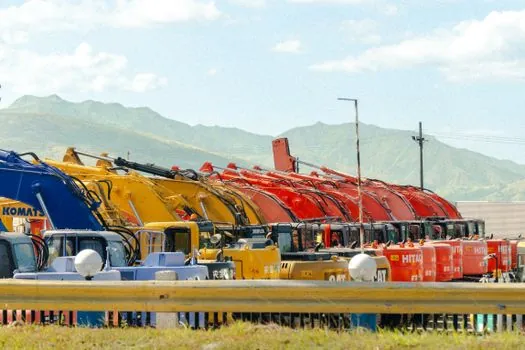
Wheeled cold planers dominate urban street rehab because they move between cuts under their own power at highway speeds, but on a graded pipeline ROW the same mobility is a liability: the tires sink into reclaimed subgrade and the machine cannot sit square over a trench cut [S3]. Tracked units distribute the 20–30 t operating weight over a longer footprint, which is the same logic that drives pipelayer and dozer choices on a spread (PL/D6/D7/D8 class machines all run steel track in the pipeline fleet catalog) [S2].
For long-haul ROW work, the inline pipeline pump spec discipline that asks "where will this thing actually sit" applies in mirror image to the milling planer: if the machine cannot reach the cut under its own track power, the cost of a lowboy move erases the productivity gain. Track units in the 1.2–1.5 m class are usually the right answer for pipeline spreads, and the wheeled equivalent is reserved for the paved urban tie-in sections at each end of the line [S3][S2].
Conveyor Discharge, Water Spray, and Dust Control
Three secondary gates separate a working planer from a headache: conveyor swing and discharge height, on-board water tank capacity for dust suppression, and the hydraulic system that drives the drum [S3]. On a pipeline ROW the discharge conveyor usually has to load directly into a haul truck running parallel to the machine, which means a long, high-elevation swing conveyor is more useful than a wide rotor.
Water tank capacity on compact cold planers in the 1.0–1.5 m class is typically 1,000–2,000 L, sized for one drum pass before refill, and that number sets the spacing of water trucks on the spread. Dust suppression is not optional on a pipeline job, because the milling waste is often re-used as trench padding or disposed of in a regulated corridor, so a cold milling machine selection decision that ignores water capacity is a decision to over-spend on support equipment later.
Where a Cold Milling Machine Fits, and Where It Does Not
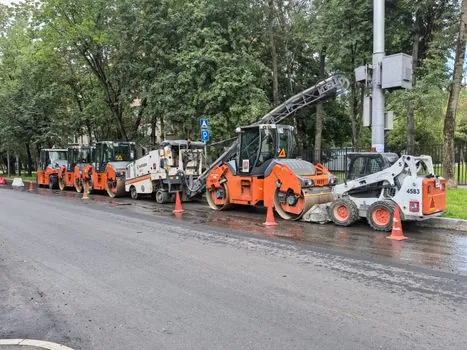
A cold milling machine is the right tool when the pipeline crosses an existing paved road, a hard-surfaced yard, or a concrete pad that has to be removed to a defined depth before trenching or lowering-in [S3]. It is the wrong tool for clearing a greenfield ROW, for cutting rock, and for any pass where the production rate is below roughly 200 m²/h, which is the floor at which a tracked excavator with a hydraulic hammer or a cold box core machine cycle becomes more economic on a pipeline spread.
In practice, the milling planer earns its spot on the equipment list only when (a) the crossing is paved, (b) the lift to be removed is 50–200 mm thick, and (c) the milled material is either stockpiled for reuse or trucked off in a known cycle. Outside those three conditions, a motor grader or excavator beats the planer on cycle time, even though the planer wins on cut quality and uniform depth [S3][S2].
Used vs New, and What to Verify on a Used Unit
The used cold planer market is the primary buying channel for pipeline contractors that need a 1.2–1.5 m class unit for one season and do not want to carry the asset on the books year-round, and listing density on the used market is high enough that price discovery is straightforward [S3]. The verification list on a used unit is short but unforgiving: drum and bit condition (bit wear sets the per-m² operating cost), track pad wear, conveyor belt splices, and the engine tier (Tier 4 Final / Stage V matters on any ROW inside an emissions-regulated jurisdiction) [S3].
For a 2026 buy, the practical decision is rarely "new vs used" and is almost always "this size class vs that size class": a 1.0 m compact unit buys mobility and loses production, a 1.5 m mid-size unit is the productivity sweet spot for most pipeline crossings, and a 2.0 m+ half-lane unit is a road-rehab machine that a pipeline crew can use but rarely needs. The next signal worth tracking is OEM availability of Tier 4 Final / Stage V engines in the 300–500 hp bracket through the 2026 model year, since that band is where most ROW-class planers live and where emissions rules, not spec sheets, will dictate the actual purchase. For related equipment spec logic on the same kind of fleet, see the inline pipeline pump selection guide and the broader pipelayer and dozer fleet catalog that sets the undercarriage standard on most spreads.
Detailed specification references: cold chamber machine.