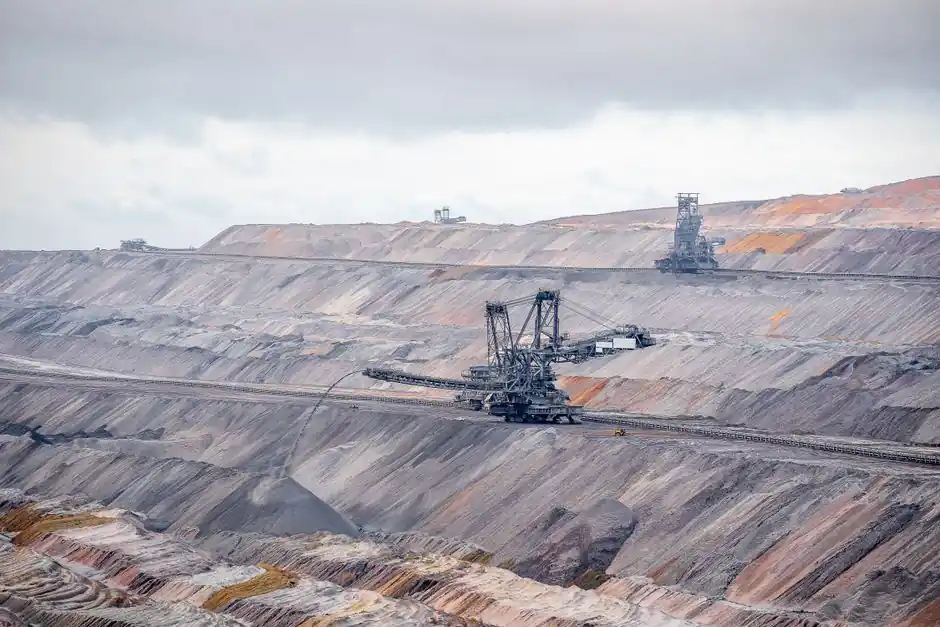
Inline pipeline pumps, vertical or close-coupled centrifugal units with coaxial suction and discharge flanges, deliver competitive single-stage efficiency of 75–82% at best efficiency point (BEP) while occupying 40–60% less floor space than equivalent end-suction pumps, per the engineering comparison in [S1]. In mining service they are correctly specified for clean-water transfer, pressure boosting, and pit dewatering of clear or lightly sedimented water, not for abrasive ore slurry transport where a dedicated slurry pump remains the only defensible choice [S2].
Specifying an inline pump for the wrong mining duty, especially a tailings or concentrator slurry line, is the single most common procurement error seen on greenfield sites. Mining pump demand sits inside a global market valued at USD 7.1 billion in 2024, projected to USD 11.5 billion by 2034 at a 4.9% CAGR, so the cost of a misapplied inline unit is amplified by the sheer scale of installed fleet [S2].
Inline Architecture vs End-Suction: What the Geometry Buys You
An inline pipeline pump is fundamentally a centrifugal pump with suction and discharge ports aligned on a common axis, fluid enters axially, accelerates radially through the impeller, and exits axially through a diffuser that straightens the flow, removing the L-shaped directional change that forces a volute casing on an end-suction unit [S1]. The structural trade-off is concrete: BEP efficiency sits 5–8 percentage points below an equivalent end-suction pump, but installation requires no grouted baseplate, no concrete foundation, and no alignment shimming, which compresses civil cost and commissioning time on tight mechanical-room builds [S1].
The common inline variants on the market in 2026 are vertical inline (vertical inline centrifugal, top-pull motor), horizontal in-line close-coupled, and vertical multistage in-line for high-head booster service. Published OEM envelopes for vertical inline centrifugal units span 800–1400 m³/h at heads up to 100–160 m, which is the practical ceiling for single-stage mining booster duty without moving to a multistage [S3]. Pressure ratings for inline pipeline pumps are typically PN16 (16 bar) or PN25 (25 bar); applications requiring higher pressure should move to multistage or end-suction heavy construction rather than overrating an inline casing [S1].
Where Inline Pumps Fit a Mining Plant, and Where They Do Not
Inline pipeline pumps are the right answer for clear-water duties inside a mining complex: plant service water booster, fire-fighting ring main top-up, clean process water recirculation, HVAC circulation in crusher-house or mill control rooms, and similar HVAC or building-services loads [S1]. For pit dewatering where the water is reasonably clear or only lightly sedimented, submersible pumps remain the default for pit-bottom duty, but inline units serve well in the surface transfer stage that follows [S6].
Inline pipeline pumps are NOT the right answer for abrasive slurry transport through a concentrator, tailings line, or grinding-circuit pump box, where a heavy-duty slurry pump is the only defensible choice. Specifying an inline pump on slurry service accelerates impeller wear, breaches the wet-end material requirements set out under ASTM A532 for hard-metal components, and forces a redesign within months [S4]. For high-viscosity reagent dosing, chemical metering, or thickener underflow, diaphragm, peristaltic, or positive-displacement pumps, not inline centrifugals, are the correct specification [S2][S5].
Selection Criteria: Flow, Head, NPSH, and Solids Tolerance
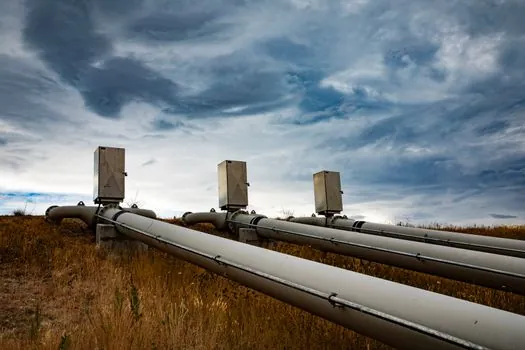
The first gate is duty point. Single-stage inline units in published 2026 OEM ranges cover 800–1400 m³/h and 100–160 m head, which maps to clean-water booster, transfer, and recirculation rather than high-head mill water or tailings pumping [S3]. For moderate flow and large head rise, the guide maps the decision to a multistage booster pump, not a single-stage inline, with stage count, speed, and NPSHr as the quote-stage checks [S7].
The second gate is solids and slurry. A mining pump procurement specification should reference ANSI/HI 12.1-12.6 as the governing performance-testing and slurry-derating standard, require wet-end materials to conform to ASTM A532 for hard-metal components, and demand performance curves corrected for slurry density and viscosity rather than water-only curves [S4]. Inline pipeline pumps with stainless-steel wetted parts in 304, 316, 316L, 2205, or 2507 are appropriate for medium-corrosive service, but not for abrasive solids at the concentrations seen in concentrator slurry [S2].
The third gate is installation envelope. A tight mechanical room favours a vertical inline pump for service clearance above the motor; a long horizontal pipe run with easy foundation access favours a horizontal pipeline pump for coupling access and suction-pipe layout [S7]. Variable demand over 24 hours on a clean-water circuit is the textbook VFD-controlled inline booster application, where the inline geometry's low rotating-group inertia and smooth flow path hold efficiency up at part load, unlike an end-suction volute whose part-load curve drops more sharply [S1][S7].
Material and Build Map for Mining-Conditions Inline Service
Stainless wetted structures in 304, 316, 316L, 2205, and 2507 are the common material choices where corrosion, not abrasion, drives wear; 2205 and 2507 duplex grades are typically selected for higher chloride or warmer process-water service, while 316L covers most plant-water and reagent-dosing circuits [S2]. The HB Series single-stage horizontal centrifugal, built to ISO 2858 dimensions and CE-marked, is a representative stainless build for medium-corrosive, lightly abrasive fluids, with material customisation across the five grades listed [S2].
For genuinely abrasive mining service, a hard-metal slurry build (high-chrome white iron to ASTM A532) on a dedicated slurry pump is the correct reference, not an inline stainless build [S4]. When an inline unit is installed on a mining site, the practical construction choices are mechanical seal versus packing (seals dominate on clear-water booster service), coupled versus close-coupled motor (close-coupled removes alignment risk but limits impeller access), and PN16 versus PN25 flange rating (PN16 covers most building-services and plant-water duty, PN25 covers higher-pressure booster rings) [S1].
Comparison: Inline vs End-Suction vs Slurry vs Submersible on Mining Duties
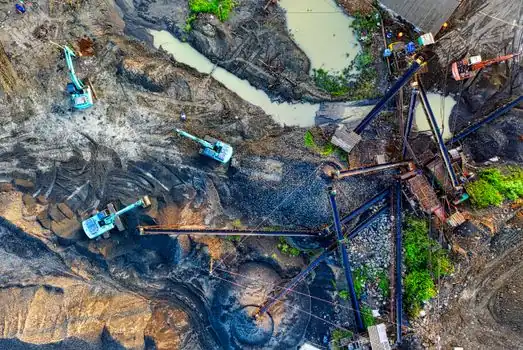
Lining the main options up against four decision criteria clarifies where an inline pipeline pump wins. On floor space, inline takes 40–60% less than an equivalent end-suction and does not need a concrete foundation, which is decisive in cramped crusher-house mechanical rooms [S1]. On peak BEP efficiency, an end-suction pump leads at 80–88% versus the inline's 75–82%, so for high-flow raw-water transfer where efficiency drives operating cost, an end-suction unit is the more defensible specification [S1].
On abrasive-slurry tolerance, neither inline nor end-suction is acceptable, hard-metal slurry pumps built to ANSI/HI 12.1-12.6 with ASTM A532 wet ends are the only defensible choice, and that decision is non-negotiable regardless of space savings [S4]. On pit-bottom dewatering, a sealed submersible pump is the default because it can run fully submerged in flooded workings with a sealed design that keeps external contaminants out of the motor, while inline units are relegated to the surface transfer stage that follows [S6]. This four-criteria split, space, efficiency, slurry tolerance, and submersion, is the matrix to apply before signing any mining pump purchase order.
2026 Sourcing Signals and Failure Modes to Track
The verifiable 2026 signals worth tracking are: continued migration of clean-water booster and HVAC circulation duty in mining infrastructure to vertical inline and close-coupled in-line builds, persistence of single-stage efficiency at 75–82% BEP for that class, and a stable envelope of 800–1400 m³/h at 100–160 m head from current OEM line-ups [S1][S3]. For self-priming and surface-transfer alternatives on the same sites, see the self-priming pump supplier map for 2026, and for pit-bottom dewatering and flooded-working duty, the submersible pump selection map is the companion reference. Generic reference material on the broader pipeline pump family, including end-suction and split-case variants, is also worth keeping open during spec review.
The failure modes to flag at commissioning are seal leakage on close-coupled in-line units running dry, NPSH shortfall when an inline pump is dropped into a suction line that was sized for a larger end-suction casing, and impeller erosion when an inline is misapplied on a slurry or sediment-laden line that should have been a slurry or submersible pump from day one [S1][S4][S6].
For component-level specifications, see mining dump truck, and centrifugal pump.