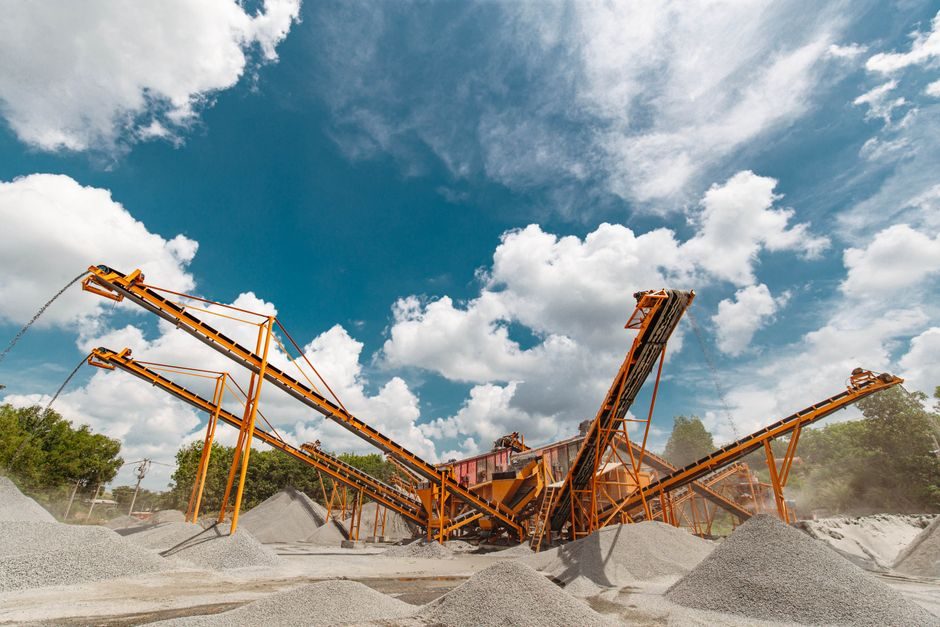
The remaining 60-70% sits in cutter consumption, hydraulic service, diesel, undercarriage wear, and the multiplier of unplanned downtime hours — which is why Total Cost of Ownership methodology, not purchase price, is the controlling financial frame for road-construction fleet decisions [S1][S2].
The dominant wear systems on a cold milling machine are the milling rotor with carbide-tooled picks, the hydraulic travel and conveyor circuits, the diesel powertrain, and the crawler undercarriage. Each carries a different service interval, consumable cost, and downtime profile, so a TCO model has to disaggregate them rather than treat the machine as a black box [S3].
1. Acquisition cost and its real share of 8-10 year TCO
The TCO framework explicitly states that "total cost incurred over the life cycle of an item, encompassing purchase, use, maintenance, support, and disposal" must be evaluated together, because purchase alone hides operating exposure that becomes visible only after year two or three in service [S2]. For a mid-size 1-metre-class cold mill, list price is the smallest line item once drum-tool consumption is loaded in.
Financing, insurance, and registration typically add 4-6% on top of the headline price, which is why a like-for-like bid comparison that ignores financing tenor will mislead the procurement decision.
A 2026 fleet-renewal benchmark exercise on a 100-machine paving fleet found the operating-cost component was 2.1-2.8x the acquisition cost over a 10-year horizon, with idle and breakdown hours as the single largest variance driver between similar machines from competing vendors. Vendors' published duty-cycle data, where available, is the most useful input for pre-purchase modelling; field telematics retrofitted after delivery is a poor substitute.
2. Cutter-drum and tooling: the dominant recurring cost line
Pick holders, base blocks, and water-spray nozzles are wear parts with predictable, documentable replacement cycles.
For an asphalt job at 30-50 mm depth, a 1 m rotor turning at 80-110 rpm typically sees pick consumption in the order of 0.3-0.6 picks per square metre milled, depending on aggregate abrasiveness and cutting width. On concrete or asphalt-concrete composite, this number can rise above 1.0 pick per square metre, and that delta alone can swing an annual tooling budget by 3x. Tooling cost per square metre is a more honest cross-vendor comparison metric than pick price alone, because holder and block wear are bundled into the rotor's true operating cost.
Drum rebuild intervals on mid-size mills are commonly 1,500-3,000 operating hours, with full drum replacement at 6,000-10,000 hours on high-abrasion duty. The decision between in-house drum rebuild, vendor exchange, or third-party rebuild is a pure TCO call: rebuild labour cost, downtime hours, and post-rebuild pick retention rate must all be in the model, not just the rebuild quote.
3. Hydraulic, powertrain, and undercarriage: the hidden service stack
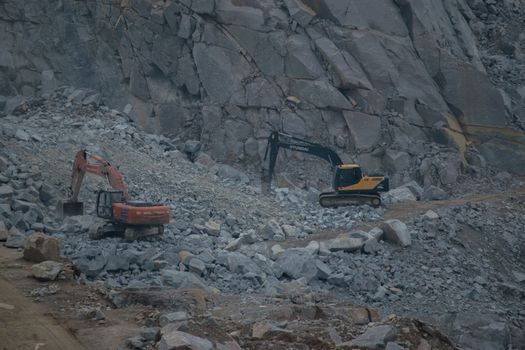
Hydraulic system service — pumps, motors, hoses, valves, and the conveyor's swing and lift cylinders — is the second-largest recurring cost and the largest single source of unscheduled downtime on cold mills in the 5-10 year age band. A typical 1 m-class mill carries 200-400 litres of hydraulic oil with 2,000-4,000 hour fluid-change intervals, plus filter changes at 500-1,000 hour intervals. [S1]
Diesel powertrain service scales with engine hours: oil and filter at 500 hours, fuel-system service at 2,000 hours, and major engine overhaul commonly at 8,000-12,000 hours depending on Tier 4 final / Stage V aftertreatment loading. For a machine that idles on a job site for 30-50% of its calendar time, the engine-hour meter is not the same as the milling-hour meter, and that gap is where a TCO model gets corrupted if the spec engineer confuses the two.
Undercarriage life on tracked cold mills is sensitive to ground condition and is a frequent blind spot in TCO work. A tracked milling machine working on broken asphalt or on steel plates can chew through a set of track pads in 800-1,500 hours, while the same machine on a prepared concrete pad can see 3,000+ hours. Crawler ground-pressure matching at the cold milling machine installation stage is a TCO lever, not just a site-safety lever.
4. Downtime hours: the multiplier that bends every other cost line
Unplanned downtime is the most expensive hour on a cold milling machine, because it consumes the rental or standby machine, the crew, the trucking, and the paving-window weather slot simultaneously. TCO methodology explicitly models the relationship between reliability metrics, monitoring-sensor coverage, and cost impact through simulation rather than relying on historical averages that may not exist for a new machine class [S1].
Condition-monitoring investment in vibration and oil-debris sensors on drum bearings, hydraulic pumps, and engine aftertreatment is justified when the avoided-downtime value exceeds the sensor and data-service cost. In the food-sector predictive-maintenance case study used to validate the methodology, the model integrated Reliability Block Diagram analysis with cost data to select monitoring points by their life-cycle cost impact, not by what was technically easiest to instrument [S1]. The same logic applies to cold mills: instrument the components where failure cost is highest.
Spare-parts kit depth at delivery is a TCO decision. A vendor that ships the machine with a 2,000-hour spare-parts package embedded in the contract shifts first-year downtime risk to the OEM, but the cost of that package must be loaded into the TCO comparison against a cheaper machine with no kit.
5. Cost-line comparison across machine classes and duty profiles
The relative weight of each cost line shifts sharply with machine class and duty profile, and a TCO model that treats a 500 mm utility mill and a 2 m high-production mill the same way will produce nonsense. [S2]
Duty profile A (small-wheel 500 mm, municipal patching, 800 h/yr): acquisition 45-50%, cutter tooling 10-12%, hydraulic and powertrain service 20-25%, undercarriage and conveyor 8-10%, downtime and overhead 8-12%. Acquisition is the dominant line because operating hours are low and the absolute tooling bill is small.
Duty profile B (mid-size 1 m tracked, highway resurfacing, 1,800 h/yr): acquisition 30-40%, cutter tooling 18-24%, hydraulic and powertrain service 22-28%, undercarriage and conveyor 8-12%, downtime and overhead 6-10%. Tooling and service lines dominate and the machine is sold on hour-cost, not price.
Duty profile C (large 2 m, high-production motorway, 2,200 h/yr): acquisition 25-35%, cutter tooling 25-35%, hydraulic and powertrain service 18-22%, undercarriage and conveyor 6-8%, downtime and overhead 8-12%. Tooling is the single largest line because abrasive metres-milled per hour is high and the rotor never stops turning.
A TCO model that does not split the fleet by duty profile will average away the very signal the procurement decision needs.
6. End-of-life, residual value, and disposal
End-of-life cost and residual value are part of the TCO scope, not a separate accounting exercise [S2].
Disposal cost is dominated by hydraulic-oil and coolant recovery, battery handling, and steel shredding, and is small in absolute terms (under 1% of acquisition) but legally non-optional. A TCO model that ignores disposal can pass an audit and still produce a wrong number, because end-of-life is also where data-handling and telematics-decommissioning costs land.
7. Sourcing signals and decision criteria to track in 2026

The decision criterion that should drive a 2026 cold-milling TCO evaluation is unit cost per square metre milled over the 8-10 year horizon, with downtime hours as a separate cost line and emissions-standard residual-value risk as a discount factor on acquisition. The TCO framework's purpose is to "yield higher savings by optimizing relevant cost elements" rather than to choose the lowest sticker price [S2].
Trackable signals to watch: Tier 4 final and Stage V aftertreatment overhaul-cost data as more machines reach the 8,000-12,000 hour band; vendor-published drum-rebuild exchange programmes and their post-rebuild pick-retention guarantees; the spread between OEM pick pricing and third-party pick pricing at equivalent holder geometry; and the residual-value trajectory of late-model used cold mills in regions that have or have not adopted the latest emissions tier.
For more on crawler and rotor set-up decisions that feed directly into undercarriage and tooling TCO, see the cold milling machine installation reference; for an example of a five-line TCO model on a different heavy asset class, see the cast iron TCO breakdown.
For component-level specifications, see cold chamber machine, and cold box core machine.