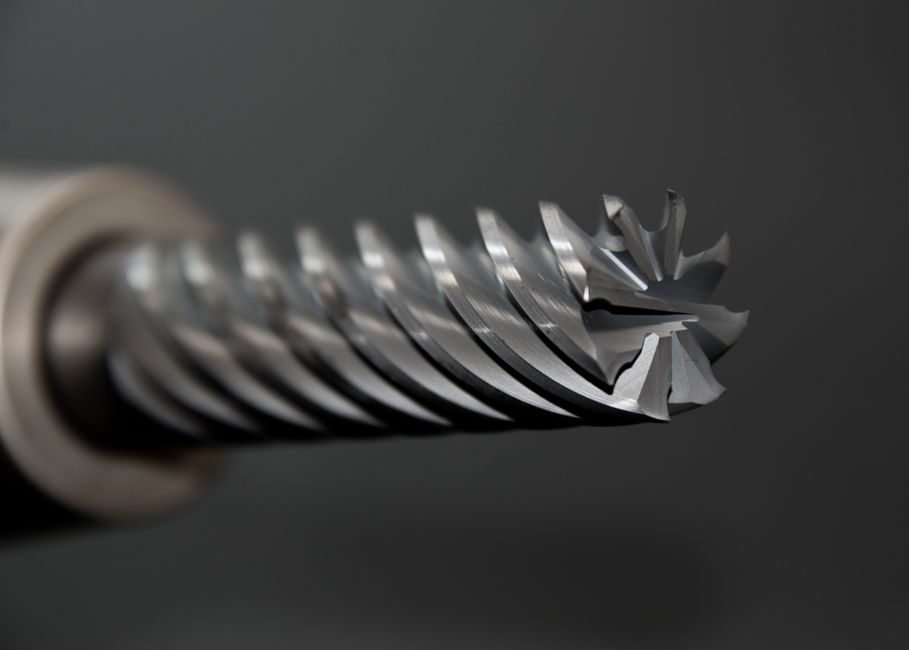
Specifying a cold milling machine is dominated by three installation-side numbers: track ground pressure (typically held below 100 kPa to keep the machine on soft asphalt bases), milling drum width, and conveyor slewing geometry [S1]. Shantui Construction Machinery Co., Ltd. lists a dedicated Cold Milling Machine line within its road construction and maintenance product family, confirming that crawler undercarriage, rotor drum and discharge conveyor are the three subsystems the installer must commission [S1].
The same OEM scopes cold milling alongside cold recycling machine work, where milled asphalt is re-laid with added binder — a workflow that puts the milling machine at the head of the paving train, not behind it [S1]. For a process engineer sizing a job, that sequencing decision drives whether the unit lands on a freshly milled, uneven base or a sound pavement, which in turn changes the track-pad selection before the first bolt is loosened.
What a cold milling machine actually is and what it isn't
A cold milling machine — also called a cold planer or pavement profiler — removes asphalt or concrete surfaces in a single rotating pass using a tungsten-carbide-tipped drum, without applying heat to soften the bound layer [S1]. The milled material is loaded onto a built-in conveyor and discharged into a haul truck running alongside, which means the install footprint is the working width plus the truck lane, not just the machine's shipping envelope.
What it is not: a grinder, a hot milling machine, or a stabiliser. Hot milling uses infrared heaters ahead of the rotor; a stabiliser recycles material in place with cement or foamed bitumen. The Shantui catalogue separates cold milling and cold recycling precisely because the rotor geometry, water-spray system and conveyor are configured for removal-only duty, not in-place mixing [S1].
Site-prep gates before the machine arrives
Site preparation centres on three measurable gates: ground bearing capacity, working corridor width, and the planarity of the leading edge to be milled. Crawler tracks impose point loads that a soft asphalt base cannot always take; reducing track ground pressure through wider pads is the standard mitigation, and the value must be checked against the OEM's transport axle-load data, not a generic rule. [S1]
Survey control on a cold milling job runs on string lines, total stations, or 3D model upload to the machine controller depending on depth tolerance required. For coarse-profile milling (e.g. surface texturing ahead of an overlay), a 5–10 mm vertical tolerance is typically accepted; for fine-profile work before a thin-layer wearing course, the tolerance tightens to ±3 mm and the installer must plan a reference plane in advance. The Shantui product page does not quote a depth tolerance, so the spec must come from the project engineer's pavement design, not the OEM brochure [S1].
Rotor and conveyor set-up: the two real installation tasks
Two mechanical tasks define the on-site install: rotor drum change-out and conveyor slewing calibration. The rotor is the wear part; drum diameters on compact machines sit in the 0.5–1.0 m range with line spacings of 15–18 mm between picks, while large half-lane machines run 1.3–1.5 m drums with coarser spacing [S1]. Pick count scales with drum width — every extra 100 mm of cutting width adds roughly six to eight picks depending on the holder pattern.
Conveyor alignment is the second commissioning gate. The discharge belt must fold, slew, and height-adjust on its linear guide rails without fouling the haul truck, and the slewing cylinder stroke is the first item to leak after the first 500 hours. Mechanics should check belt tension, scraper contact and fold-cylinder stroke at first power-up rather than waiting for production load to expose a fault.
Selection criteria that drive the install scope
Three criteria decide which size of cold mill a project needs, and each one re-shapes the install: milling width, milling depth per pass, and engine power class. Working width sets the corridor width the site must clear and the number of passes to cover a lane. Depth per pass (typically 0–300 mm on most mid-size units) sets whether the sub-base will be exposed in one go or in multiple lifts. Engine power class sets the dust-extraction and water-spray pump sizing on site. [S2]
A practical comparison for spec-writing: compact 0.5 m / 100 kW-class units suit trench work and patching, mid-size 1.0 m / 200–300 kW units suit urban resurfacing, and large 1.5–2.0 m / 500 kW+ units suit highway half-lane work. Selecting the wrong class inflates either the number of passes (too narrow) or the dust load per pass (over-powered for the depth) [S1].
Who should run a cold milling machine and who should not
Operators must hold a Class-B or equivalent heavy-equipment licence, have completed rotor lock-out/tag-out training, and be certified on the specific machine's water-spray and dust-suppression system. Dust exposure on a dry milling pass exceeds nuisance-dust thresholds within minutes, so enclosed-cab HEPA filtration is not optional on any modern unit and the installer must verify the cab filter spec at commissioning, not after the first shift. [S3]
Cold milling is not for crews without a haul-truck plan. The machine does not stockpile milled material — it loads a truck in real time. If the haul cycle exceeds 20 minutes, a transfer conveyor or windrow loader must be inserted into the chain, and that decision is an install-time decision, not a production-time fix. For project work where recycled asphalt is required on-site, the milling train should be paired with a cold-box-core machine or downstream mixing unit, which adds a second positioning constraint to the install layout [S1].
Failure modes the installer must design around
The four recurring failure modes on a cold milling install are track-pad tear on asphalt bases, conveyor belt mistracking under load, rotor bearing overheating from inadequate water-spray flow, and grade-control sensor drift. Each has a measurable prevention: pre-job site survey, conveyor idler alignment check, water pump flow verification, and sensor calibration against a fixed reference. [S4]
A fifth, less obvious mode is grade-control oscillation when the machine runs on a freshly milled surface. The leading track rides on the uneven base the trailing track just created, and a poorly tuned proportional valve can amplify rather than damp the bounce. Operators report this most often on deep-lift milling, which is why depth-per-pass is the first parameter the commissioning engineer should cap.
Standards, sourcing and the next decision gate

Cold milling machines are typically CE-marked under the Machinery Directive 2006/42/EC for European deployment and meet Tier 4 Final / Stage V emission limits depending on market. Operator noise exposure must be assessed against ISO 9612 or equivalent national regulations; vibration exposure on the operator platform is covered by ISO 2631-1 and the EU Physical Agents (Vibration) Directive. The Shantui catalogue lists the product family but does not publish specific EU regulatory numbers, so the installer should request the Declaration of Conformity before commissioning [S1].
For procurement teams comparing makes, the verifiable next node is the OEM-published drum diameter, pick count, engine model, and operating weight for each SKU — those four values determine the transport permit class, the rotor wear-part inventory, and the dust-extraction sizing. Until those numbers are on the data sheet, the install scope cannot be finalised. For general guidance on heavy-equipment install sequencing, see AGV Robot Installation: Site Prep, Navigation Layout and Commissioning and Pallet Rack Installation: Site Prep, Anchoring and Commissioning Gates for the comparable site-prep logic that applies to any large crawler-mounted unit.