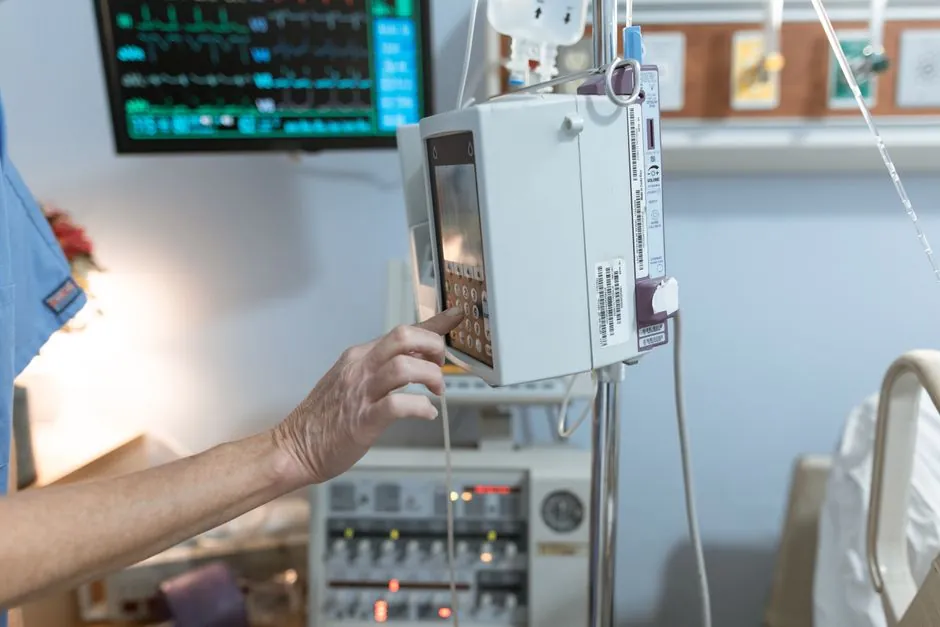
A cold-room monitoring thermocouple on a 2026 RFQ should be written as five separate parameter lines (sensing element, sheath, immersion, termination, cable), each closed with a tolerance and a standard; missing any one of them is the most common cause of a 30-50% price spread between quotes on identical-looking inquiries.
Cold-room work sits in the -80 to +10 °C band, mostly within IEC 60584 type-range territory for base-metal thermocouples, with pharmaceutical and food-storage envelopes commonly using Type T for sub-zero stability and Type K for the wider -40 to +1,000 °C envelope [S3]. The signal chain (sensor → head transmitter → cold-junction compensation → recorder or condition monitoring system) is what defines accuracy, not the probe alone, so the RFQ has to fix the cold-junction scheme on paper before the vendor picks one for you.
Sensing element and accuracy class
Type K (NiCr-NiAl) and Type T (Cu-CuNi) are the two base-metal choices most cold-room RFQs end up between; Type T holds the tighter initial accuracy to ±0.5 °C or 0.4% of reading at 0 °C under IEC 60584 class 1, while Type K relaxes to ±1.5 °C class 1 over the same point [S1]. The RFQ should state the type letter, the IEC 60584 class (1 or 2), and whether the limit-of-error is to be referenced to the measuring-junction temperature or the cold-junction temperature; vendors default to the cold-junction side unless you pin the wording.
For a freezer or cold-room, dual-element Type T probes are commonly specified at the evaporator inlet and outlet, while single-element Type K covers air-stream return ducts; noble-metal types (R, S, B) are not justified below 1,000 °C and waste money on cold-room RFQs. The thermocouple selection page lists the standard letter, color-code, and EMF tables that the vendor should reference on the calibration certificate.
Sheath material, diameter, and immersion depth
Cold-room sheath defaults to 316L stainless steel, 1.5–6.0 mm OD, with a sealed (hot-junction isolated from ground) or grounded junction chosen by the application; 310 stainless or Inconel 600 is over-specified for sub-zero work and adds lead time without accuracy gain. Immersion depth is the single most error-prone line: a 3.0 mm OD probe needs at least 60 mm of immersion to stay outside the stem-conduction error zone, and 100 mm is the typical RFQ value for cold-room air measurement. [S2]
Probe length is written as "L = X mm, immersion Y mm, cold-end termination Z" so the vendor cannot substitute a stock 250 mm probe when you need a 500 mm immersion into a deep duct.
Cable, cold-junction compensation, and signal output
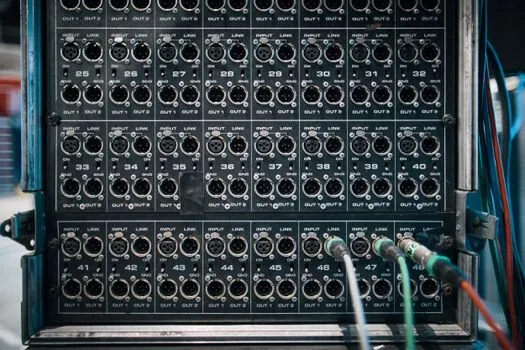
Extension or compensating cable must match the thermocouple letter (Type KX, Type TX) and carry the same color code as IEC 60584-3; mixing Type K wire with Type J wire is a frequent requote trigger on cold-room RFQs. For runs over 10 m, specify shielded twisted pair with an overall drain, aluminium/polyester foil plus tinned copper braid, and route the shield grounded at the instrument end only to avoid ground loops across the cold-room wall. [S1]
Cold-junction compensation (CJC) belongs inside the head transmitter or the data logger, not in the probe; the RFQ should name the CJC method (ice-bath reference, electronic block, or software compensation) and the expected CJC error (typically ±0.5 °C for a good electronic block). A 4-20 mA head-mounted transmitter with HART 7 is the default 2026 cold-room analog output; FOUNDATION Fieldbus or PROFIBUS-PA appear only where the plant already runs those busses [S1].
Ingress protection, cable gland, and cold-room mechanical details
Cold-room RFQs must state IP65 minimum for the probe termination, IP67 for wash-down zones, and IP68 for any probe routed through a floor or external wall penetration; specifying only "waterproof" guarantees a requote. Cable glands on cold-room penetrations are typically brass or 316L with -40 °C rated EPDM or silicone seals, not the standard nitrile that hardens and cracks inside six months of freezer service. [S2]
Probe mounting is a 1/2-NPT thermowell or a compression fitting on the duct wall; thermowells in 316L with a 6.0 mm bore are the common cold-room choice, and the RFQ should ask for a thermowell wake-frequency calculation if the probe sits in any airflow above 5 m/s, otherwise vibration failure appears within 18-24 months. Where the monitoring point is a refrigerated shelf, a 4-wire Pt100 Class A element may outperform a thermocouple on stability, so state "thermocouple unless the engineer-of-record approves RTD substitution" to keep the door open without re-issuing the RFQ.
Calibration certificate, traceability, and documentation

Each probe should ship with a traceable calibration certificate referencing NIST or NPL standards, with at least three calibration points inside the operating range (commonly -40, 0, and +50 °C for cold-room work); fixed-point calibration on the water triple point (0.01 °C) is the most useful single data point for sub-zero accuracy. The certificate must state the as-found and as-left error, not just "pass/fail", and the calibration must be performed with the probe in its supplied termination, not with bare leads. [S2]
Documentation deliverables on the RFQ should be a 2D drawing with overall length, immersion length, and process connection thread, plus a material certificate for the sheath (3.1 per EN 10204) and a conformity declaration for the IEC 60584 class. Vendors who cannot supply these in the first quote cycle usually cannot supply them after the order either, so ask for them as a priced line item rather than a freebie.
Comparison: Type K vs Type T vs Pt100 for cold-room monitoring
Across the four decision criteria that drive cold-room RFQ choices, the comparison is straightforward: Type K wins on temperature range and cost, Type T wins on sub-zero accuracy and copper-junction stability, and Pt100 (RTD) wins on long-term drift and interchangeability but loses on lead cost for multipoint runs. Type T typically runs 20-40% above Type K in unit price, and Pt100 elements with 316L sheaths run roughly 2-3x the Type K price at the same diameter and length. [S1]
For pharmaceutical cold storage with a -20 °C setpoint and ±0.5 °C control, Type T class 1 with a 4-wire head transmitter is the most common 2026 selection [S3]. For HVAC cold-room duct work at -5 to +5 °C, Type K class 1 is the cost-effective default. For ultra-low freezers at -80 °C, Type T still works but the cable and connector cold-rating becomes the binding constraint, not the sensor itself.
Common RFQ mistakes that force a requote

The top five requote drivers on cold-room thermocouple RFQs in 2025-2026 are: (1) writing "thermocouple" without naming the IEC 60584 type letter; (2) specifying only the probe length without separate immersion and cold-end dimensions; (3) leaving the cable type as "appropriate" instead of Type KX/TX with a color code; (4) omitting the cold-junction compensation method; and (5) failing to state the IP rating on the cable gland at the cold-room wall penetration. Each one typically adds 2-5 working days to the bid cycle and 10-25% to the as-quoted price once the vendor fills in the blanks. [S1]
A practical self-check before issuing the RFQ: every line above should appear in a single paragraph that a vendor can read and price without a clarification email; if it cannot, the line is under-specified. The same logic applies to adjacent process instruments, including a vibration condition monitoring channel on a refrigeration compressor skid, which often rides the same RFQ.
Trackable signal: the next update to watch is the IEC 60584-3 revision on extension cable color codes, which has been in comment for the 2024-2026 cycle; vendors quoting "to current IEC" should be asked for the exact revision date on the certificate. Also worth monitoring: the rollout of Ethernet-APL (10BASE-T1L) head transmitters, which are starting to appear on 2026 cold-room data-acquisition upgrades alongside 4-20 mA + HART, though most installed bases will stay on HART through 2027.
Related analysis: V-Process Vacuum Molding Line Spec Map for Pump and Valve Foundries.