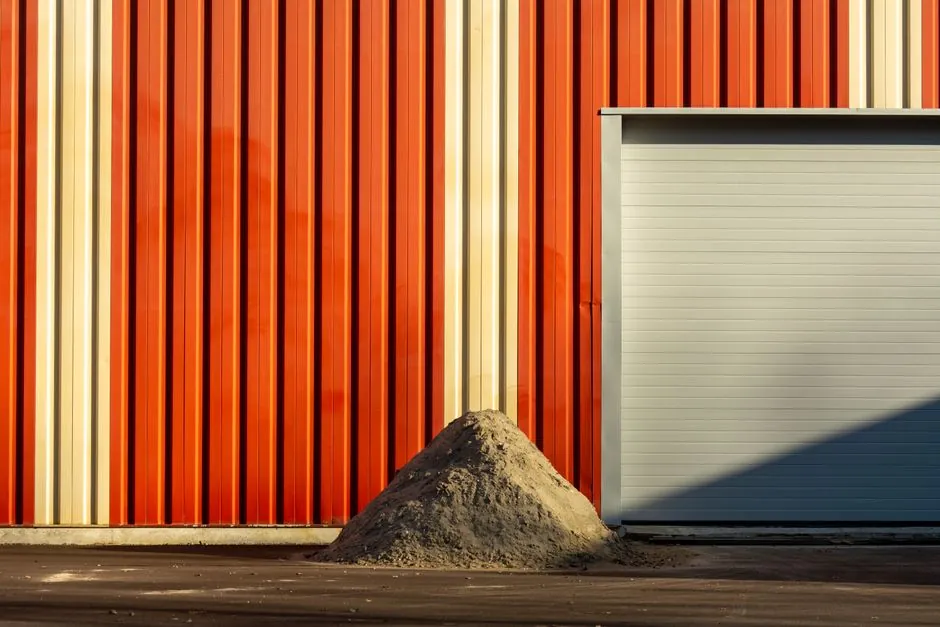
Ground-up U.S. cold storage in 2026 runs $150–$250 per square foot for 35°F cooler space, $200–$350 for 0°F freezer, and $280–$450 for −40°F blast freeze, against $60–$150 for dry warehouse, with refrigeration, the insulated metal panel envelope, and sub-slab heating driving the premium [S1].
National cold storage vacancy hovers near 3.4%, well below the 5–7% typical of dry warehouse space, and more than 60% of the existing U.S. cold storage stock was built before 1990, leaving the replacement cycle wide open for design-build contractors, racking suppliers, and storage rack integrators [S1][S3].
Market Size and Where the Growth Concentrates
The U.S. cold storage market is valued at US$46.8 billion in 2026 and is projected to reach US$82.3 billion by 2033, an 8.4% CAGR, with refrigerated warehouses holding an 82% share of material type and pharmaceuticals the fastest-growing application at a 10.2% CAGR (2026–2033) [S3]. Globally, analysts frame the construction slice at US$78.96 B in 2024, US$84.6 B in 2025, rising to US$168.64 B by 2035 at a 7.14% CAGR, with North America still the largest region and Asia-Pacific the fastest-growing [S5][S7].
Inside the U.S., the Southeast leads with a 24% regional share in 2025, anchored by the Port of Savannah's refrigerated container expansion, Georgia poultry processing, and Florida grocery e-commerce build-out, while the Southwest is the fastest-growing region at 9.4% CAGR (2026–2033), driven by Texas border produce through Laredo and Pharr and the Dallas–Fort Worth food-distribution hub [S3]. USDA-tracked gross refrigerated warehouse capacity sits at roughly 3.7 billion cubic feet nationwide, much of it ageing, which is the structural trigger for the wave of automation-ready new builds [S3].
Refrigeration Demand: What Specs Are Driving the Spend
Refrigeration can account for up to 70% of a cold storage facility's total energy consumption, and high-efficiency ammonia (NH3) and CO2 (R-744) systems now make up the bulk of new-build mechanical spend because they balance first cost against lifecycle performance and tightening F-gas pressure on HFCs [S2]. The 2026 design envelope spans four temperature bands: chilled 0°C to 15°C, frozen −18°C to −25°C, deep-frozen below −25°C, and ultra-low pharmaceutical cells (often −70°C and below) for biologics, mRNA vaccines, and GLP-1 therapies requiring validated 2°C to 8°C storage [S3][S5].
Pharmaceutical-grade cells are the segment pulling the most aggressive specs: validated 2°C to 8°C refrigerated zones, ultra-low-temperature freezers, redundant compressors, and continuous temperature mapping, all of which push total cost per square foot above the food-grade benchmark and concentrate spend in regions with biotech clusters. The DHL Supply Chain and RLCold partnership to deliver more than 5 million square feet of automation-ready capacity is a leading indicator that operators are buying replacement capacity in volume, not incremental units [S3].
Cost Stack: Why Cold Storage Costs 2–3x Dry Warehouse
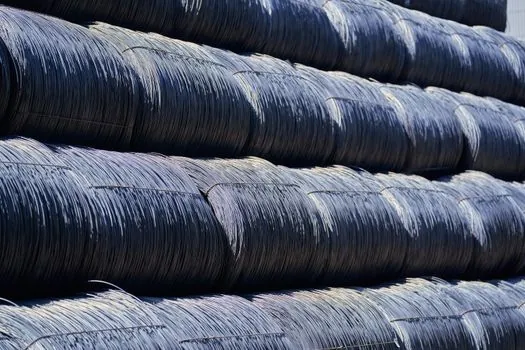
The cost premium over dry warehouse is mechanical, not cosmetic. Refrigeration equipment, the insulated metal panel (IMP) thermal envelope, sub-slab heat tracing to prevent frost heave, thicker floor slabs rated for forklift and rack loads, and heavier fire suppression add up to a 2–3x multiplier per square foot on equivalent footprint [S1][S2]. Vertical density is the single biggest cost-efficiency lever: pushing clear height into the 80–100 ft range increases pallet positions without expanding the building footprint, lowering cost per pallet, but it forces tight coordination with storage handling systems, slab tolerances, air distribution, and fire protection [S2].
Site selection compounds the math. Facilities sited near ports, rail intermodals, or major distribution hubs cut drayage costs and tighten cold-chain control, but land in those nodes is scarce and expensive, which is why the Southeast and Southwest are absorbing disproportionate share of new starts. The national development pipeline measured 9.4 million square feet at the beginning of 2024, roughly 206 million cubic feet, and the two dominant U.S. operators, Lineage Logistics and Americold Realty Trust, have collectively added more than 18 million square feet of new capacity since 2019, with both still in active expansion mode [S1][S8].
Automation: 16.72% CAGR and Throughput Economics
Automated cold storage facilities are growing at a projected 16.72% CAGR through 2031, roughly double the broader U.S. market rate, because automation directly offsets the acute labor scarcity in freezer warehouses and improves pick accuracy in temperature zones where human time-on-task is biologically expensive [S1]. Modern automated cells pair high-bay storage rack systems with automated storage and retrieval machines (ASRS), shuttle-based storage handling solutions, and WES/WCS software that orchestrates pick/put cycles in continuous −20°C environments.
For specifiers weighing where automation pencils, the rule of thumb is throughput: greenfield automated cells are most competitive at high SKU count, high pick density, and labor-constrained labor markets, and less competitive for low-throughput bulk frozen storage where pallet-in/pallet-out is still king. The cobot-versus-ASRS decision also matters at the picking face, where payload, reach, and cold-rated lubricant specs rule out general-purpose units; for a sizing reference, see Cobot Unit Price 2026: Payload Bands, Hidden Costs, and Sourcing Signals.
Structural Materials and Envelope Choices
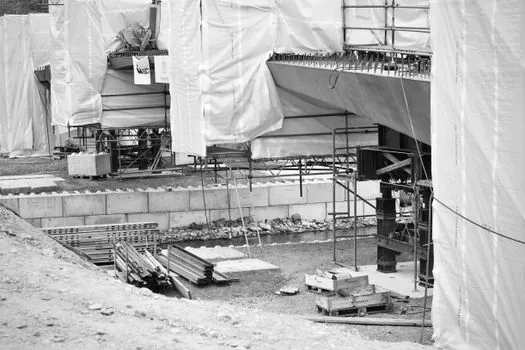
Construction type choices in 2026 cluster around four structural families: concrete masonry unit (CMU), metal panel (IMP-clad steel frame), tilt-up concrete, and steel frame with insulated metal panels, with metal panel dominant for most refrigerated and frozen cells because of speed and thermal continuity [S5]. Tilt-up concrete is gaining share in seismic zones and in taller freezers where wall mass dampens thermal cycling, but it adds schedule weeks versus IMP and complicates the vapor barrier detailing that freezer envelopes require.
For the envelope, panel thickness typically steps from 4 in. in chilled zones to 6–8 in. in frozen zones, with polyisocyanurate (PIR) and extruded polystyrene (XPS) foam cores the default, and the cold-side vapor retarder is non-negotiable; a single breach can frost the panel cavities and force a teardown. Floor design carries equal weight: insulation under the slab plus electric or hydronic heat tracing is required wherever the floor is colder than the water table, and slab flatness tolerances (FF/FL numbers) must match the rack and ASRS supplier, typically FF50/FL35 minimum for narrow-aisle and automated cells.
Constraints, Failure Modes, and What Slows a Project
Permitting, ammonia refrigeration code compliance (IIAR standards), health-department reviews for food-grade cells, fire-code approvals for high-bay freezers, and utility coordination for the massive electrical loads of ammonia compressor packages are the four schedule killers most often cited by design-build contractors; engaging authorities having jurisdiction in preconstruction is the documented mitigation [S2]. Refrigerant transition risk is a second constraint: as HFC phase-down accelerates, owners are locking in ammonia and CO2 systems now to avoid mid-life retrofit costs, but ammonia carries stricter process-safety management (PSM/RMP) obligations under U.S. EPA and OSHA rules, which raises the documentation bar on design.
Sub-slab heating and frost heave are the most common and most expensive failure modes. A refrigeration leak that drops the slab below freezing without adequate heat tracing will heave the floor, rack the uprights, and put the entire storage rack system out of plumb, often totaling the cell. Power resilience is a third: a multi-day outage in a −20°C freezer can compromise inventory worth multiples of the building's annual lease rate, which is why most new builds specify generator-backed refrigeration control, even when the utility feed is from a redundant substation.
Regional Snapshot: Southeast and Southwest Lead, Northeast Lags on Cost
Region is the single biggest swing factor on $/sq ft after temperature zone. Right-to-work states in the Southeast and Southwest typically sit at the low end of the cost bands above, while purpose-built pharmaceutical cells in the Boston suburbs, the NJ pharma corridor, and California biotech clusters can run 30–60% above the national median because of land cost, seismic detailing, and stricter regulatory review [S1][S3]. Cold storage is also a vertical play: reinforced concrete structures and higher clear heights are increasingly the default for land-constrained Northeast and California infill sites, where stacking automation is the only way to get pallet-position density without expanding footprint [S9].
Watch three signals over the next two quarters: (1) announced square-footage from Lineage and Americold against the 5 million sq ft DHL/RLCold benchmark, (2) updated USDA refrigerated capacity figures versus the 3.7 billion cubic feet 2024 baseline, and (3) any IIAR or ASHRAE code revisions that move ammonia/CO2 design rules. For specifiers planning 2027 starts, locking refrigeration and IMP packages now is the cheapest hedge against the next two quarters' demand pull.
For component-level specifications, see construction machinery and equipment.