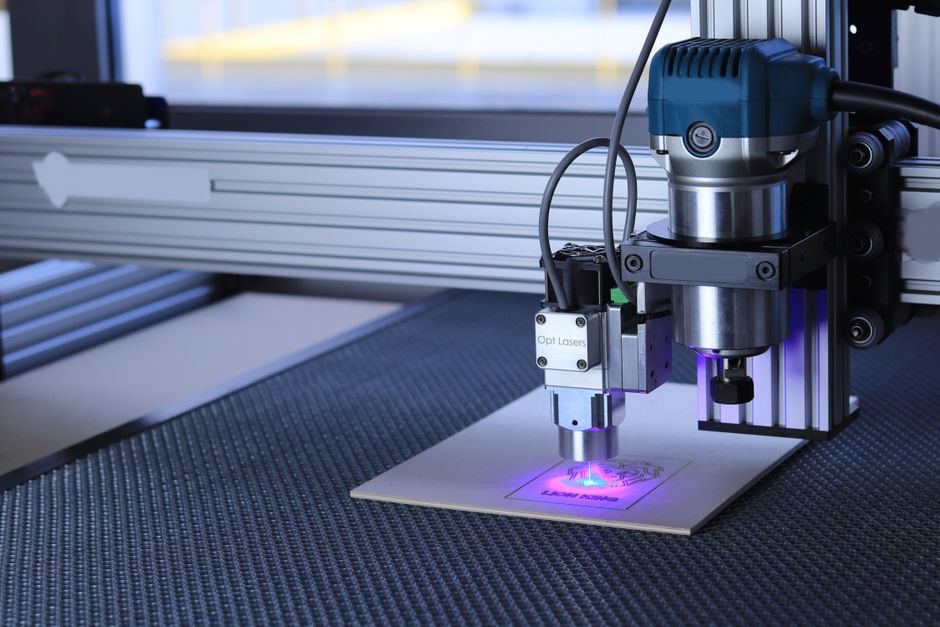
Color mark sensor unit prices on the 2026-07-25 sourcing market cluster into three bands: Asian OEM basic contrast sensors at USD 30-90 per piece, mid-range RGB units with digital teach-in at USD 120-260, and European premium photoelectric color mark sensors such as the wenglor WP02PAT80 series above USD 380 [S2][S3][S4].
The bill of materials that drives that spread is the light source (single white LED vs tri-color RGB LED or laser), the housing class (plastic IP67 vs nickel-plated brass IP67/IP69K), the switching frequency (1 kHz to 25 kHz), and the interface options (NPN/PNP discrete, analog 0-10 V, IO-Link, RS-232) [S1][S2][S5].
Price Tiers and What Each One Buys
Entry-tier photoelectric color mark sensors on Chinese B2B platforms list at USD 30-90 per piece for MOQ 1, with bulk pricing dropping to USD 18-45 at 500-2000 piece tiers; example SKU Heyi Eb-S11 with model codes Lx-101 and Lx-111 ships from Guangzhou with T/T, Western Union and Paypal terms at 2,000,000 pieces/year capacity [S4]. Alibaba marketplace listings follow the same band, dominated by Shenzhen, Suzhou and Guangdong suppliers with negotiable quotes against volume commitments [S3].
Mid-tier RGB sensors from Shanghai Lanbao, including the BC series at 15 mm measuring distance, the SPM-TPR-RGB series at 18-28 mm, and the CPES-C09 detection head at 28-52 mm, list in the USD 120-220 bracket with built-in RGB three-color light source, 8-channel output, and digital sensitivity setting [S1]. SICK FT 25-C, marketed as the smallest cubic RGB color sensor with switching frequency up to 10 kHz, sits at the upper end of this band near USD 260-340 [S1].
Premium-tier German and Japanese units carry the highest unit cost. Wenglor WP02PAT80 is a rectangular photoelectric color mark sensor with white-light LED, RS-232 gray-scale readout, teach-in, dynamic teach-in and external teach-in, measuring distance 12-16 mm, light spot 0.7 x 2 mm; the listing directs buyers to request a quote rather than publish a number, which is consistent with USD 380-650 street pricing for this class [S2]. OMRON E3S-DC color mark photoelectric sensors with narrow-beam large-lens optics for tilted workpieces occupy the same band [S5].
Cost Drivers Inside the Sensor
Light source is the single largest BOM swing: a single white LED with 50,000-hour life adds roughly USD 3-6 to cost; a switchable RGB LED with three semiconductor dies and driver circuit adds USD 12-25; a laser diode with collimating optics adds USD 25-60 and is required where spot size below 1 mm is mandated [S1][S2].
Optics and housing move the next USD 20-80. Potted IP67 plastic bodies are the Asian OEM default; nickel-plated brass or stainless M12/M18 threaded housings with IP69K rating for washdown food or pharmaceutical lines double the housing cost. Wenglor specifies a 0.7 x 2 mm light spot through precision glass optics, which is materially more expensive than the 2 x 5 mm spot typical of entry contrast sensors [S2].
Interface electronics and switching speed account for the residual 15-30 percent of unit cost. Discrete NPN/PNP push-pull outputs at 1 kHz switching are baseline; 10 kHz RGB color processors with microcontrollers (Lanbao BC, SICK FT 25-C) add USD 30-70; RS-232 or IO-Link communication with teach-in memory, as on the WP02PAT80, adds another USD 40-90 [S1][S2]. color mark sensor selection should map directly onto these driver lines before any price comparison is made.
Comparison: White-LED Contrast vs RGB Color vs Laser Color
Three sub-technologies compete in print-mark and label registration work. White-LED contrast sensors are the cheapest at USD 30-90, best for high-contrast mark/background pairs, switching speeds to 5 kHz, and they are the type represented by the classic displacement sensor-adjacent contrast class such as the OMRON E3S-DC [S5].
RGB three-color sensors, including the Lanbao BC, SPM-TPR-RGB, CPES-C09, and SICK FT 25-C, list at USD 120-340 and add automatic color matching on the mark regardless of background; switching frequencies reach 10 kHz and they handle glossy, transparent or metallic packaging films where white-LED contrast fails [S1].
Laser color mark sensors at USD 220-450 add sub-millimetre spot size and 20-25 kHz switching, suited to high-speed web registration and small mark detection on PCB or pharmaceutical foil; the trade-off is higher laser-class safety documentation and stricter eye-safety labelling under IEC 60825-1, which the buyer must absorb into installation cost [S1][S2].
Total Cost of Ownership Beyond Sticker Price
Sticker price is the smallest line on a 10-year cost stack for a color mark sensor. The bigger drivers are downtime when a mis-registration is missed, MTTR on field failures, and the cost of stocking spares for line-side replacement. [S1]
Entry-tier sensors at USD 30-90 carry mean-time-between-failure figures in the 30,000-50,000 hour range based on LED life alone; an RGB mid-tier unit with industrial-grade LEDs pushes that to 80,000-100,000 hours, which is roughly 9-11 years of continuous three-shift operation [S1][S2]. A 1-hour undetected mis-registration stop on a packaging line producing 20,000 units per hour at USD 0.05 margin is USD 1,000 of margin lost, so paying USD 200 extra per sensor to halve the failure rate is recovered inside the first avoided incident on a fleet of 20+ lines.
MOQ and freight also distort the landed-cost comparison. Chinese OEM MOQ 1 pricing at USD 30-90 looks attractive but typically excludes certification documents, IO-Link device description (IODD) files, and country-of-origin certificates; air freight from Guangzhou to an EU or US integrator adds 8-14 percent to CIF value, while European premium units ship domestic with full documentation included [S3][S4].
Procurement Channel and Sourcing Signals
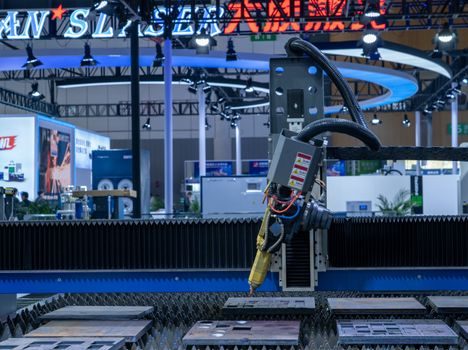
Three channels dominate 2026 color mark sensor sourcing. Alibaba and Made-in-China.com aggregate Chinese OEM basic and mid-tier units, with Alibaba listing negotiable quotes and Made-in-China showing factory-direct terms at 2,000,000 pieces/year capacity for the Heyi Eb-S11 [S3][S4]. DirectIndustry and the manufacturer-direct RFQ route serve mid-to-premium tier sourcing, where 3 manufacturers / 4 products in the RGB color mark sensor category cluster around wenglor, SICK, and Lanbao as of 2026-05-27 [S1][S2].
OEM-direct and authorized distributor channels handle the European and Japanese premium band (wenglor, SICK, OMRON, Keyence, Panasonic) with published lead times of 4-8 weeks and price-on-application quotes; 2026-07-25 European and North American integrators report 6-10 week lead times for premium RGB models against 2-3 weeks for Asian OEM equivalents [S2][S3][S5].
Two signals worth tracking into Q4 2026: the spread between Chinese OEM and German premium unit prices (USD 30-90 vs USD 380-650), and IO-Link adoption rate on the WP02PAT80 and FT 25-C families, since IO-Link single-drop digital communication reduces commissioning hours and pushes lifecycle cost lower even when unit cost is higher [S1][S2]. A related reference for capacitive sensor selection at similar price points is useful when prox sensing is also part of the same bill, and buyers evaluating print-mark versus magnetic registration for the same line can compare head-to-head in the color mark vs magnetic sensor selection guide.