
A bucket elevator tied into a packaging line must clear nine certification gates before commissioning: mechanical design, drive package, belt or chain credentials, dust explosion protection, food-contact material evidence, electrical conformity, structural codes, supplier document authenticity, and CE/GB documentation scope [S1][S5].
Most retrofit failures trace back to a single missing gate, typically the explosion-protection document or the food-grade mill certificate, rather than to bucket or belt capacity. Hubei Yidu Yunji's current supplier profile lists XK18-002-00004 production licence and ISO 9001:2000 as the baseline document set a Chinese OEM is expected to present [S1].
Casing and structural gauges for discharge heights up to 120 ft
Standard S Manufacturing casing charts map bucket size to minimum steel thickness: BE1239 (12 in x 39 in) uses 3/16 in up to 30 ft, 12 GA up to 120 ft; BE1442 (14 in x 42 in) and BE1848 (18 in x 48 in) step to 14 GA at the top end; BE2554 (25 in x 54 in) uses 3/16 in up to 120 ft with 10 GA boot/intermediate [S5].
For a packaging-line retrofit where discharge heights sit in the 20-40 ft band, BE1442 or BE1848 with 3/16 in boot/intermediate and 14 GA up to 30 ft is the common specification. A retrofit auditor should reject a sub-3/16 in boot section on any elevator over 25 ft, because boot deflection drives the dominant noise and spillage failures seen in the field. Material choice matters as much as gauge: a bucket elevator handling sugar, flour or HDPE pellet should default to 304/316 stainless contact surfaces, with the carbon-steel casing limited to non-contact frames. Hot steam or chemical service pushes selection toward nitrogen-sealed LSY-class conveyors, a class referenced in OEM product literature [S1].
Drive package: backstop, motor IP rating, and rated speed
Bucket elevators run at 1.25 m/s belt speed on 37 r/min heads in typical mid-size Chinese OEM offerings, with elevator-plus-chain mass of 21.30 kg/m on a 500 mm wide, 5-ply belt, per the published D450 datasheet [S9].
Three drive gates must close before sign-off. First, a backstop on the head shaft to prevent reverse rotation on power loss; this is non-negotiable for any vertical elevator handling free-flowing pellet or grain above 30 ft. Second, motor and gearbox IP rating must match the wash-down or dust zone; IP55 is the realistic minimum for a packaging-line interior, IP65 for any zone hosed down daily. Third, nameplate data on motor, gearbox, backstop, and belts must be cross-checked against the OEM datasheet, including the 1.25 m/s figure and 37 r/min head speed, before a CE technical file is closed out [S9]. Mismatched backstop or motor IP is the single most common retrofit punch-list item.
Belt, chain, and bucket credentials
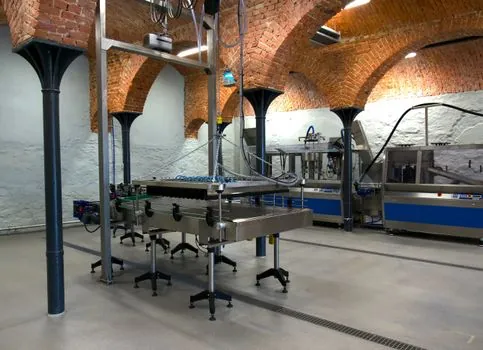
Replacement belts are quoted in a wide band, with Chinese OEM listings spanning US$1 placeholder pricing up to US$15,000-100,000 per piece for rubber-belt custom builds, and 25-day UV-protected iron-reel delivery as a baseline [S3][S6][S10].
For grain, sugar, flour or plastic pellet, three belt-credential gates apply: tensile strength rating documented in N/mm or kN/m, FDA or EU 1935/2004 food-contact compliance for any edible application, and splice method (mechanical fastener vs. vulcanised) declared on the data plate. Z-type continuous-flow elevators quoted at US$990-2,500 per set typically pair with low-tensile PVC food-grade belts, while heavy rubber belts sit in the upper price band and need hot-vulcanised splicing rather than mechanical lacing [S8][S10]. A retrofit spec should lock belt width, ply count, and cover thickness into the purchase order, then verify each on the incoming goods label. Chain-and-bucket elevators (en-masse conveyors in OEM parlance) need a separate gate covering chain pitch, pin material, and bucket-back fixing, since the load path is different from belt-bucket designs [S1].
Dust explosion protection and ATEX/IECEx zoning
A packaging line handling flour, sugar, starch, cocoa or any combustible dust with a bulk elevator must carry a valid explosion-protection document set, including zoning drawing, vent sizing calculation, and ignition-source assessment. [S8]
For EU sites, ATEX 2014/34/EU category 1D or 2D for the elevator interior and category 3D for the surrounding area is the typical split; for non-EU sites, IECEx certification on the same equipment is the accepted equivalent. North American sites route through NFPA 61 (agricultural dust) or NFPA 652 (combustible dust, general), with a DHA (Dust Hazard Analysis) refreshed on equipment change. The retrofit auditor should reject any zoning drawing that does not list the elevator as a single item with a defined zone, nor any vent calculation that ignores the elevator head as a primary enclosure. In Chinese OEM documentation, explosion-relief windows and explosion-isolation flap valves are the standard mitigation, but they must be declared in the type-test certificate, not just the brochure [S1].
Food-grade and pharmaceutical material evidence
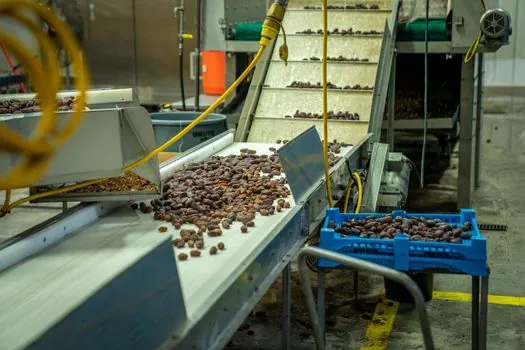
Any elevator handling edible product must present a mill certificate for all contact-surface stainless, plus a FDA, EU 1935/2004, or GB 4806.1 declaration depending on the destination market. [S3]
The minimum evidence pack is a 3.1 material certificate per EN 10204 for every stainless contact part, a surface-roughness declaration (typically Ra ≤ 0.8 µm for food contact), and a declaration of compliance covering the full regulatory chain. For pharmaceutical retrofit, the bar rises: 316L stainless, electropolishing, and full traceability of heat numbers back to the mill is standard. A packaging machine line handling infant formula or APIs cannot accept a generic 304 datasheet in place of 316L with documented heat number. Note that the packaging material flowing into the elevator also dictates the food-contact scope, since a contaminated upstream feed can re-contaminate the elevator regardless of its own compliance.
Electrical conformity and motor control cabinet integration
Retrofit electrical scope covers motor panel, VFD or direct-on-line starter, E-stop loop, and any belt-misalignment or bearing-temperature sensor tied into the packaging line's PLC.
For EU delivery, the panel must carry a CE mark under the Low Voltage Directive 2014/35/EU and the EMC Directive 2014/30/EU, with a Declaration of Conformity naming both directives and the harmonised standards applied. Belt misalignment, bearing temperature, and zero-speed switches are commonly missed items in retrofit scope; each must have a separate type-test certificate if it sits inside an ATEX zone, and a simple CE-only certificate outside the zone. The PLC handshake to the automatic molding line or upstream filler needs a documented signal list, including run, fault, and permissive, otherwise the packaging line's safety circuit will not see the elevator. For a deep dive on timing-belt choices inside the motor control cabinet itself, the spec map at timing-belt selection for motor cabinet drive trains is a useful cross-reference. Panel builders should be asked to declare the harmonised standards list in writing, not just a CE sticker, since the standards list is the only auditable evidence of compliance.
Standards map: which document covers which gate
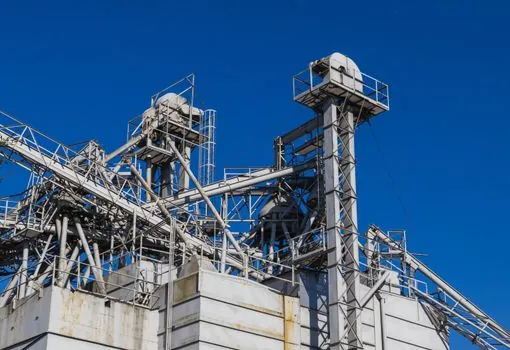
The nine gates map to overlapping standards: ISO 9001 covers the supplier's QMS, EN 10204 covers material certificates, ATEX 2014/34/EU or IECEx covers explosion protection, EN 1672-2 or NSF/ANSI 3-A covers food-grade hygienic design, ISO 4414 covers pneumatic/hydraulic safety, and CE/GB documentation closes the regulatory loop. [S1]
The practical audit sequence is: ISO 9001 certificate scope and validity, then EN 10204 3.1 mill certificates, then ATEX/IECEx type-test certificate with the elevator's serial number explicitly named, then hygienic-design declaration, then CE/GB Declaration of Conformity with harmonised standards listed. The Chinese mandatory production licence, where applicable, sits alongside ISO 9001 and is verifiable through the issuing authority's database [S1]. Buyers should also verify the supplier's business registration and representative identity through the platform's verification trail, a baseline check that has caught counterfeit certificates in past B2B transactions [S2]. A retrofit punch-list that fails any of the nine gates should be closed out before the elevator is energised, regardless of schedule pressure.
Supplier document verification: catching forged certificates
Three checks catch most forged or out-of-scope certificates on a retrofit quote: certificate number lookup with the issuing body, scope-of-supply cross-check, and validity period on every page. [S1]
First, every ISO 9001, ATEX, IECEx and CE certificate has an issuing body with a public registry (IAF CertSearch for ISO, the ATEX Notified Body database for ATEX, the IECEx OD database for IECEx). A certificate that does not appear in the registry is not a certificate. Second, the scope-of-supply on the certificate must name bucket elevators or conveying equipment, not a generic 'industrial machinery' line; Hubei Yidu Yunji's ISO 9001:2000 certificate and XK18-002-00004 production licence are the type of scope-specific evidence a retrofit auditor should expect to see cited on the supplier's own page [S1]. Third, validity dates on every page must be checked, since some suppliers present expired certificates as current. Cross-referencing the supplier's platform verification status, including company registration, identity proof of representative, and address proof, is a fourth low-cost check that has been used to screen B2B counterparties [S2]. Any retrofit purchase order should include a contractual clause requiring the supplier to refund or replace if the certificates are later found to be invalid or out of scope.
Trackable signals for the next 60-90 days: EU Notified Body registry updates for any new ATEX bucket-elevator certificates issued to Chinese OEMs, and any IECEx OD database additions under the 'conveying equipment' category; both are leading indicators of how many 2026 retrofit quotes will clear the explosion-protection gate on the first audit pass.