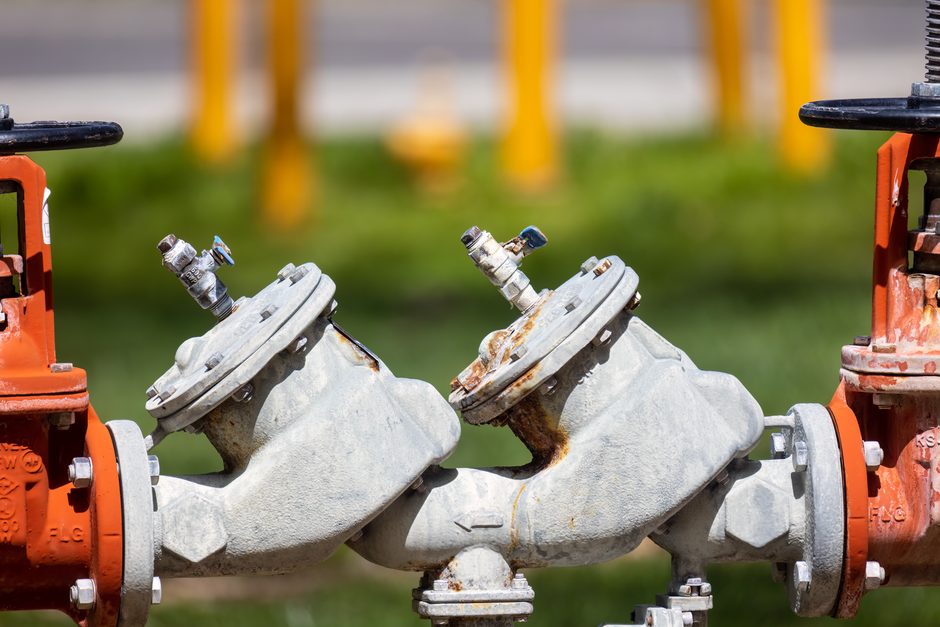
Combustible gas detectors from manufacturers such as Henan Hanwei Electronics Group Corporation and Bacharach are specified for natural gas, LPG, methane, propane, and hydrogen service, with sensing technology choice directly controlling which span gases, bump-test reagents, and poisoning agents a maintenance crew can run on a given instrument [S1][S3].
Detectors listed on industrial sourcing catalogs in the 2025-2026 window span catalytic-bead (pellistor), semiconductor (MOS), and non-dispersive infrared (NDIR) constructions, each imposing different demand curves on test-gas cylinders, filter replacements, and inhibitor chemicals during routine calibration and bump testing [S5]. The 42 combustible-gas-detector suppliers indexed on Made-in-China.com in early 2023 and Yaoan (Shenzhen) Electronic Technology in May 2026 confirm that the technology mix has remained broad rather than consolidating, which keeps the reagent-compatibility question a live spec-gate for buyers comparing portable gas detector and fixed gas detector units [S5][S6].
Catalytic-Bead vs NDIR vs MOS: Maintenance Reagent Demand
Catalytic-bead pellistor sensors consume a methane-in-air or propane-in-air span gas at concentrations of 50% LEL during calibration, typically drawn from a 34 L or 58 L aluminum cylinder rated to 150 bar, and the bridge circuit requires a weekly bump test with the same reagent to verify response within ±10% of the applied gas [S1]. NDIR optical sensors, by contrast, are zero-pointed on nitrogen (N₂) or instrument air and spanned on the same hydrocarbon gas at 50% LEL, eliminating the need for a separate oxygen-zero step that catalytic-bead units require; the optical bench also tolerates exposure to silicone vapors that would poison a pellistor catalyst, so facilities running pump lubricants near the sample line favor NDIR for lower reagent-handling overhead [S3].
Semiconductor (SnO₂ MOS) sensors operate at 300-450 °C element temperature and drift noticeably within 6-12 months, demanding a three-point calibration (zero, mid, span) using isobutylene or ethanol in air at 25-1000 ppm depending on the target gas, which adds a fourth reagent bottle to the maintenance kit compared with catalytic-bead or NDIR units that share a single 50% LEL methane cylinder [S5]. Yaoan's portable and fixed lines documented on EveryChina in May 2026 continue to ship all three technologies, and the catalog distinction between "for LPG" and "for natural gas" detectors is most often a sensor-selection problem (MOS for LPG, catalytic-bead or NDIR for methane-rich natural gas) rather than a chassis or PCB difference [S1][S6].
Span-Gas Selection and Cylinder Management Constraints
Maintenance crews standardise on 50% LEL methane-in-air (≈ 2.5% vol CH₄) as the universal span gas for catalytic-bead and NDIR detectors, with alternative cylinders of 50% LEL propane (≈ 1.05% vol C₃H₈), 50% LEL pentane (≈ 0.7% vol), or 50% LEL hydrogen (≈ 2.0% vol H₂) selected to match the gas the detector is installed to monitor; mixing these cylinders on a multi-gas fleet is the single most common source of cross-sensitivity errors during bump tests [S1]. Bacharach's Leakator 10 combustible gas detector, sold through eBay secondary channels at US $333.33 in February 2025, ships with a 5-10% LEL methane-equivalent response curve and accepts a hand-held hydrogen or methane span gas at the inlet, which keeps the cylinder set to a single bottle for that handheld class [S3].
Reagent shelf-life adds a hard maintenance constraint: methane-in-air span gas is typically certified for 24-36 months from manufacture, while reactive gases such as hydrogen sulfide-in-nitrogen (used only on electrochemical toxic sensors, not on combustible channels) drop to 6-12 months, so facilities with mixed multi-gas detector fleets must segregate cylinder stock by stability class and track expiry separately. A 34 L cylinder at 150 bar delivers roughly 4,200 L of usable test gas at atmospheric pressure, enough for approximately 280-420 bump tests per cylinder at 10-15 L per test, which becomes a budget line item at any plant running more than 20 fixed catalytic-bead points on a monthly bump schedule [S1][S5].
Poisoning Agents, Inhibitors, and Detector-Specific Reagent Hazards

Catalytic-bead sensors are poisoned by silicones, lead, sulfur compounds, and halogenated hydrocarbons, and the only "reagent" response in a poisoned bead is sensor replacement; the in-field workaround is to route sample lines through a hydrocarbon filter or to swap to an NDIR head when the area carries pump oil, mold-release agents, or anaerobic thread-sealant residues [S3]. NDIR sensors are immune to these catalytic poisons but degrade under high concentrations of water vapor and corrosive acid gases, so the maintenance reagent set for an NDIR-equipped fixed gas detector swaps the poison-monitor filter for a nafion dryer tube and a particulate filter, each of which has a defined replacement interval (nafion: 6-12 months; particulate: 3-6 months in dirty environments).
MOS semiconductor sensors cross-react strongly with alcohols, solvents, and humidity swings above 90% RH, and the field-calibration reagent for them is often ethanol-in-air at 50-300 ppm rather than methane, so a single 50% LEL methane cylinder will not span a MOS element; the maintenance supervisor must stock a separate "low-ppm organic vapor" cylinder for any SnO₂ detector in the fleet [S5]. For hydrogen service, only catalytic-bead and electrochemical sensors are viable; NDIR has no infrared absorption band for H₂, and MOS sensors require a dedicated low-concentration hydrogen span gas (typically 500-1000 ppm H₂ in air) because methane-in-air will not produce a meaningful response on a hydrogen-tuned element [S1][S6].
Bump-Test Cadence, Sensor Life, and Reagent Consumption Budgeting
Typical bump-test cadence for a fixed catalytic-bead LEL detector is 30-90 days, with sensor replacement at 24-36 months and full re-calibration annually; for an NDIR LEL detector the bump cadence can stretch to 90-180 days because of the optical baseline stability, and sensor life commonly extends to 60 months, halving the annual reagent cylinder count per point [S3]. A plant with 100 fixed LEL points running on catalytic-bead technology at a 60-day bump interval will consume approximately 600 bump tests per year, drawing down roughly 2-3 standard 34 L methane-in-air cylinders annually; the same plant on NDIR cuts that cylinder count to 0.5-1 per year, which offsets the higher unit price of the NDIR head within the first 18-24 months of operation on labor and gas-reagent savings alone [S1][S5].
Portable detectors are bumped pre-shift (typically 8-12 hours of use per bump), so a 4-gas or multi-gas detector fleet on a 100-person site can pull 100-150 L of test gas per shift from a single 58 L cylinder, which lasts roughly 25-30 shifts before swap-out; the cylinder-exchange labor and the Ex-rated storage cabinet for flammable span gases both belong on the maintenance reagent budget line, not on the instrument-purchase line. Hanwei's VESTA-series natural gas and LPG detectors documented in March 2025 carry a 1-3 year sensor-life rating, which sits between catalytic-bead and NDIR expectations and implies a reagent-cadence model closer to MOS than to either extreme [S1].
Standards Governing Reagent Selection and Test Frequency

IEC 60079-29-2 specifies the selection, installation, maintenance, and functional testing of fixed and portable combustible-gas detectors, including the requirement that bump testing be performed with a gas of known concentration at intervals not exceeding 30 days for catalytic-bead sensors in continuous service. ATEX 2014/34/EU equipment-group II category 2 (zone 1) detectors must demonstrate functional response to a test gas at the verification interval stated by the manufacturer, and the maintenance reagent set must include a test gas matched to the LEL value of the target gas at 25-50% of that value to verify response within ±20% of the applied concentration. For hydrogen service, the IEC 60079-29-1 performance standard for flammable gas detectors applies separately and requires explicit hydrogen calibration rather than a methane-equivalent response, so facilities that bundle hydrogen and methane monitoring on a single portable gas detector need a dedicated hydrogen cylinder in addition to the methane cylinder used for the methane channels [S1][S5].
Compatibility Decision Matrix for Maintenance Planning
Buyers should weight four decision criteria when matching detector technology to maintenance reagent availability: cylinder inventory complexity, poison vulnerability, bump-test interval, and target-gas coverage.
For a plant with mixed methane and LPG service and no hydrogen, an NDIR primary plus a catalytic-bead backup is the lowest-reagent-overhead configuration; for a plant with hydrogen pipelines in the loop, catalytic-bead on hydrogen plus NDIR on hydrocarbon is the only working combination, and the maintenance reagent budget must carry both methane and hydrogen span cylinders with separate expiry tracking [S1]. When designing a new PLC-based gas-detection network, specifiers can integrate the detector signal path with a programmable logic controller buying guide to align the 4-20 mA or Modbus RTU output with the shutdown logic and with the maintenance-reagent alarm that flags expired cylinder stock, since a 4-20 mA loop is the same analog signal used in process instrumentation and can carry the LEL reading alongside a separate digital channel for sensor-health flags.
Failure Modes and Common Reagent-Driven Errors
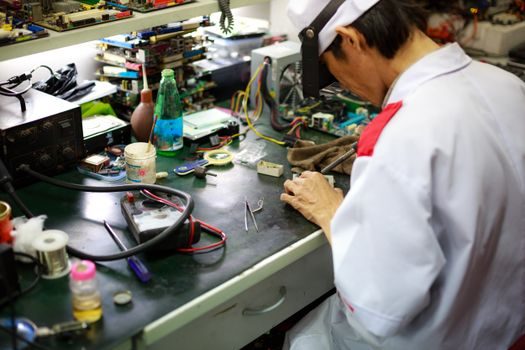
The four most common reagent-driven errors in combustible-gas detector maintenance are: applying a methane span gas to a hydrogen-tuned pellistor (reads zero, plant believes it is safe), applying a propane span gas to a methane-calibrated NDIR unit (reads low by the methane-to-propane cross-sensitivity factor of approximately 1.6-1.8), bumping a MOS sensor with methane (no response, sensor flagged as failed), and using an expired methane-in-air cylinder on a unit that was actually functional (false-fail reading leads to unnecessary sensor replacement) [S1][S3].
A secondary failure mode specific to handheld detectors is contamination of the calibration adapter with the previous shift's bump-gas residue, which can shift the zero point on the next calibration by 2-5% LEL equivalent; the only field fix is a dedicated calibration adapter per gas family and a five-purge-cycle flush with the new gas before locking in the span value. Yaoan's May 2026 catalog continues to ship detectors with manufacturer-supplied calibration adapters, but does not standardise the adapter by gas family, leaving the cross-contamination risk to the end-user's maintenance procedure rather than to the OEM [S6].
For buyers planning the 2026-2027 detector replacement cycle, the verifiable next nodes are: confirm the target-gas list with operations before selecting sensor technology, stock methane and propane span cylinders separately for any mixed fleet, and validate the bump-test interval with the OEM rather than relying on a generic 30-day or 90-day default, since the maintenance reagent budget follows directly from that interval. Henan Hanwei's natural-gas and LPG detectors and Bacharach's Leakator 10 handheld both publish explicit bump-test intervals and span-gas part numbers on their product data sheets, and matching those part numbers against the maintenance cylinder inventory is the most reliable way to close the compatibility loop [S1][S3].