
Selecting a programmable logic controller in 2026 is a five-gate exercise: physical I/O count, scan cycle time, program/data memory, fieldbus protocol stack, and the safety integrity level (SIL) tier the application demands. The PLC market is segmented by form-factor into modular, compact, rack, traditional, safety, and smart-relay types, with the dominant verticals in 2026 being automotive, chemicals & petrochemical, paper & pulp, energy & utilities, and oil & gas [S1].
Per the IEC working draft published in 1987, a PLC is defined as a "digital, electronic computing system designed for use in industrial environments," executing logic, sequencing, timing, counting and arithmetic operations through digital and analog I/O to control machinery and processes [S5]. That definition still governs 2026 buying — the controller is a hardened industrial computer, not a general-purpose PC in a panel, and the spec gates below all derive from that constraint.
Form-Factor Comparison: Modular, Compact, Rack, Safety and Smart Relay
Modular PLCs use a backplane with separate CPU, I/O, communication and power modules that can be mixed per slot, which makes them the default for plants above ~256 I/O or where future expansion is planned. Compact (all-in-one) PLCs integrate CPU, fixed I/O and often a few communication ports into a single block; they target sub-128 I/O machines where footprint and price dominate. [S1]
Rack PLCs extend the modular concept with a larger chassis, redundant CPU slots and high-speed backplane buses for plant-level cells. Safety PLCs carry certified SIL 1/2/3/4 firmware and hardware (e.g. dual-processor cross-checking) and are paired with safety I/O modules. Smart relays sit below compact PLCs as low-cost fixed-logic replacements for 8–40 I/O applications, typically programmed in ladder only. The published 2026 market taxonomy also keeps "traditional PLC" as a segment for legacy installed bases still using older instruction sets [S1].
Spec Gate 1 — I/O Count, Type, and Hot-Swap Protection
Count digital inputs (DI), digital outputs (DO), analog inputs (AI) and analog outputs (AO) at the controller level, then add headroom of 15–25% for spares and future sensor additions. PLC I/O is the physical boundary with field devices, so I/O module reliability and noise immunity are hard engineering constraints, not marketing claims [S4].
For harsh cabinets, I/O modules with built-in protection — over-current, over-voltage, thermal shutdown and hot-swap controllers — are increasingly specified so a failed output card can be replaced without shutting the line. The semi vendor ROHM groups PLC I/O silicon into three functional blocks: protection/hot-swap controller ICs, signal-conditioning ICs (for analog AI/AO and digital DI/DO), and intelligent power devices (IPDs) for actuator drive [S4]. When auditing a PLC bill of materials, ask the vendor which of those three blocks are integrated into the module versus sourced as discrete components, because that directly drives MTBF and field-replacement time.
Spec Gate 2 — Scan Time, Memory and Instruction Set
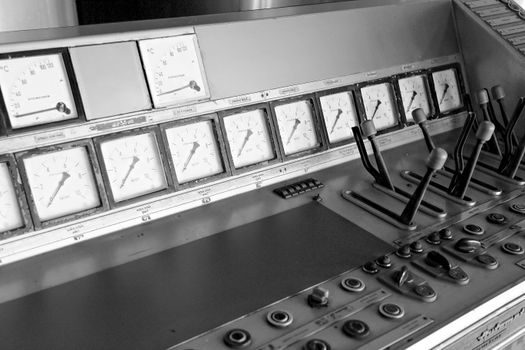
Scan time on a modern compact PLC is typically 1–10 ms per 1 K of ladder logic; modular CPUs sit at 0.05–0.5 ms/K. A machine running a motion loop at 2 kHz needs a controller with a deterministic scan under 0.5 ms plus a dedicated motion task class — a generic compact PLC will not close that loop reliably. Memory is split into program memory (ladder, FBD, ST, SFC code), data memory (registers, retentive tags) and sometimes a separate recipe/project memory; sizes are quoted in KB or steps, and buyers should match them to the IEC 61131-3 programming environment actually being deployed. [S2]
Buyers comparing a logic-module-class controller like the Siemens 6ED1052-1MD08-0BA2 LOGO! family (an OEM module listed at roughly US$105.70 new in May 2025 listings) against a modular S7-class CPU must resist treating them as price points on the same axis — they target different scan-time and I/O tiers [S3]. A logic module will not replace a modular PLC in a 256-I/O cell with PROFIsafe motion. For a deeper walk through I/O, scan and protocol gates, see the related PLC selection criteria on I/O, scan time, memory and protocol fit.
Spec Gate 3 — Fieldbus and Industrial Ethernet Protocols
Fieldbus selection in 2026 is dominated by PROFINET, EtherNet/IP, EtherCAT, Modbus TCP, CC-Link IE and a long tail of legacy PROFIBUS, DeviceNet and Modbus RTU links. Program-less communication is now a real procurement gate, not a buzzword: certain controller families (e.g. Keyence KV Nano series) ship with native EtherNet/IP program-less binding to the vendor's own sensors and remote I/O blocks, which removes ladder work for tag exchange [S6]. That advantage is real but bounded — it only applies when the same vendor's sensors and remote I/O are specified, and it locks the panel into one ecosystem.
For multi-vendor lines, the realistic decision matrix is: PROFINET if the plant already standardises on Siemens or German/Japanese machine builders, EtherNet/IP if the lines are dominated by Rockwell/Omron, EtherCAT for high-speed motion at 250 µs–1 ms cycle, Modbus TCP for retrofit tie-ins to older SCADA. Specify an explicit industrial-ethernet protocol list in the RFQ and reject proposals that only support legacy RS-485 — that choice will block any future vision or motion integration, both of which are covered as standalone controller categories in the motion controller and vision controller reference pages.
Spec Gate 4 — Safety Integrity (SIL/PL) and Certified Hardware
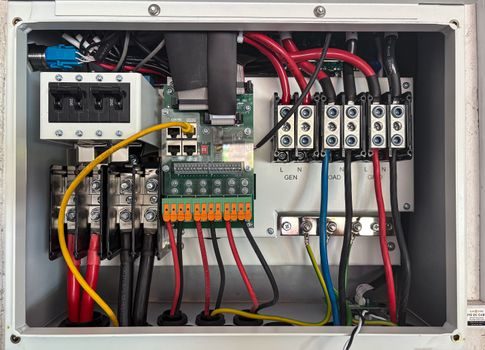
Safety PLCs are specified to IEC 61508 SIL 1–4 and to ISO 13849-1 PL a–e for machine-side functional safety. SIL 3 controllers use dual, diverse processors running in lockstep with diagnostic coverage above 99% for dangerous failures, plus safety-rated I/O modules. If the application is a press, a robot cell, an ESD loop in oil & gas, or a burner management system, the controller must be a safety PLC with a certificate issued by an accredited body — a non-safety PLC retrofitted with safety relays is not an equivalent substitute [S1].
For non-safety applications, overspec'ing to SIL 3 drives cost and scan-time penalties with no real benefit. The right cut is a SIL 2 safety PLC for most machine-side guarding, and a separate, higher-tier safety system (often a standalone safety PLC or a process-safety controller) for burner, ESD and HIPPS functions. Buyers should also confirm that the safety controller's fieldbus (PROFIsafe, CIP Safety, Safety over EtherCAT) matches the plant bus, because a SIL 3 PLC on a non-safety bus is not a complete safety chain.
Spec Gate 5 — Environment, Certifications and Lifecycle
Operating temperature is normally 0–55 °C for office-class panels and −25 to +70 °C for cabinet-less or outdoor cabinets; vibration/shock ratings of 5–10 g are typical on modular I/O. Hazardous-area cabinets in oil & gas and chemical plants add ATEX 2014/34/EU or IECEx requirements, which cascade into the controller's I/O and the surrounding pressure transmitter and instrumentation choices. Buyers should request the controller's CE, UL, cUL, ATEX and IECEx certificates with the exact temperature and gas/dust group codes stamped on them — not generic "industrial" claims. [S3]
Lifecycle is the forgotten gate: PLC families typically run 10–15 years from launch to end-of-life, and a 2026 procurement on a platform in its last 3 years of production is a 2031 forced migration. Confirm the manufacturer's "active" or "preferred" status, the spare-parts window (usually 10 years post-EOL), and whether the programming software is a current version that will still run on a 2026-era engineering workstation. For process plants with 20+ year horizons, the safest choice is a vendor with a published migration path, not the cheapest unit price.
Quick Selection Matrix and 2026 Price Bands

Compact PLCs in 2026 typically list at US$200–800 for the CPU block plus US$50–200 per I/O expansion, modular PLCs at US$800–4,000 for a CPU plus US$150–600 per I/O or communication module, and safety PLCs at a 1.5–3× premium over the equivalent non-safety modular line. Logic-module-class controllers such as the Siemens 6ED1052-1MD08-0BA2 sit at roughly US$105.70 at retail on 2025-08 listings, which puts them at the bottom of the price stack but well below the I/O and safety tiers covered above [S3]. A side-by-side matrix of form-factor versus scan, I/O, protocol and SIL tier is the fastest way to short-list two or three candidates before RFQ.
For plants that also use pneumatic or hydraulic motion, the same engineering review should be cross-checked against the linear axes — see the linear guide and crossed roller guide reference material so the PLC's motion task class is matched to the mechanical envelope rather than sized in isolation.
Trackable signals to watch over the rest of 2026: (1) new IEC 61131-3 programming-environment revisions and tool vendor announcements, (2) PROFINET and EtherNet/IP device-certification updates for safety profiles, and (3) vendor migration roadmaps for any PLC family currently marked "active but not preferred" in 2026 procurement databases.