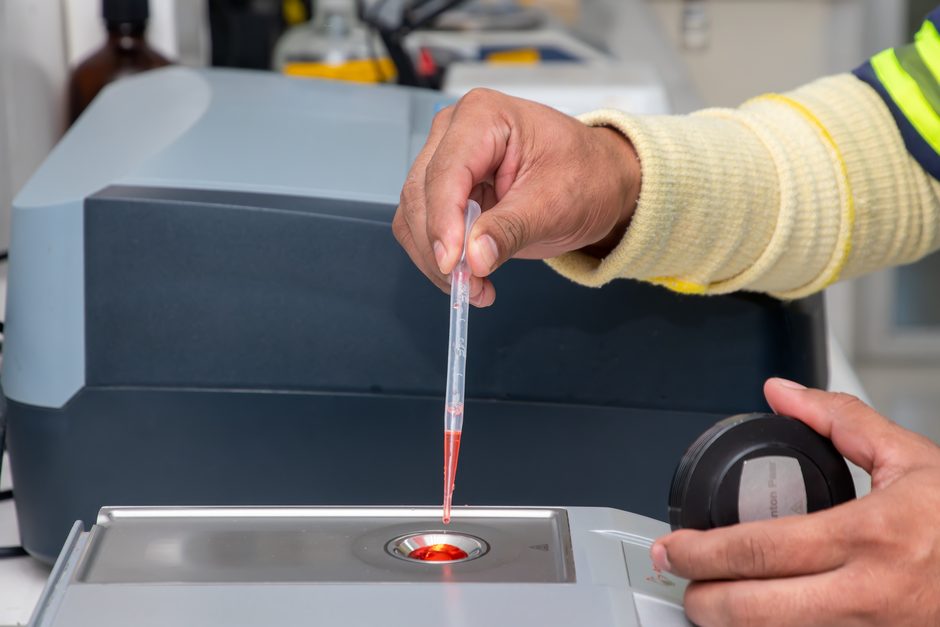
The 2026-08-02 sourcing market on Chinese B2B platforms shows portable single-gas units at US$33–39 (MOQ 2 pieces) and battery-powered multi-gas instruments at US$400–1,300 (MOQ 1 piece), with fixed wall-mount detectors in the US$93.91–255.00 band and IR-based fixed units at US$145–200 [S1][S3][S6]. The price spread tracks sensing technology, certification tier, and enclosure rating, not just gas range.
Sensor Technology Comparison for Lab Duty Cycles
Catalytic-bead (pellistor) sensors oxidise combustible gas on a heated catalyst and measure the resulting Wheatstone-bridge imbalance; they are low-cost (US$33–39 entry portables), respond in under 30 seconds to methane, and are poisoned by silicone vapours and hydrogen sulfide — a known failure mode in analytical labs using silanes or GC solvents [S1].
Semiconductor metal-oxide sensors (SnO₂) cost less than catalytic types and run on lower power, but suffer humidity cross-sensitivity and 5–10% FS/month zero-drift, so they belong in qualitative leak-sniffing roles rather than quantitative LEL metering inside a lab [S5]. NDIR (non-dispersive infrared) detectors use a reference and measurement detector pair, are immune to poisoning, and suit long-life fixed installation; the CRH-80 wall-mount fixed detector in the US$145–200 range and the Millennium-series IR detector both target this segment [S3][S8]. The 2018 IR-combustible-detector design study confirms NDIR units meet national standard accuracy and stability requirements across temperature, though published design data is dated (2018-06) [S7].
Certification and Explosion-Proof Form Factor
Portable detectors destined for solvent-handling laboratories need an "intrinsically safe" Ex ia design, where the TC-BO3-3 portable detector published on 2026-07-19 explicitly carries an "Intrinsically safe explosion-proof" form and is targeted at combustible gases plus organic-solvent vapours [S4].
Fixed wall-mount detectors installed inside lab gas-cabinet rooms typically use Ex d (flameproof enclosure) or Ex e (increased safety) rather than Ex ia, because the sensor head is remote and signal cabling can carry higher power. The CRH-80 fixed detector from Royal Hope ships as a wall-mounted unit at 5,000 pieces/month capacity and 1-piece MOQ, supporting retrofit lab projects [S3]. In China, lab installations generally fall under GB 3836.1 / GB 3836.4 (IEC 60079-0 / IEC 60079-11 equivalents); ATEX 2014/34/EU applies for EU-funded or EU-located labs.
Alarm Threshold, Response Time, and Calibration Specs

Set the low-level alarm at 20% LEL and the high-level alarm at 50% LEL for personnel evacuation and process-shutdown respectively — the standard practice for combustible-gas detection in occupied indoor spaces. Response time T90 should be under 30 seconds for methane; slower sensors in semiconductor form are unsuitable for life-safety paths in labs. [S4]
Calibration interval is 90 days for catalytic-bead and 180 days for NDIR when exposed to clean lab air, with bump-test gas typically 50% LEL methane in air. Battery-powered multi-gas detectors like those listed in the US$400–1,300 band integrate O₂, LEL, CO and H₂S in one head — useful for university chemistry labs running multiple experiments [S1]. For comparison, fixed combustible-gas systems in oil-and-gas service use the same sensor heads but with redundant voting (1oo2 or 2oo3) logic and IEC 61508 SIL 1/2 rating; for a typical analytical lab this redundancy is excessive.
Price-Band Mapping on the 2026-08-02 Sourcing Market
The 2026-06-26 Made-in-China catalog returns entry LPG/natural-gas portables at US$33.00–39.00 per piece with a 2-piece MOQ from Shenzhen Sconda — a valid choice for spot leak checks but lacking the Ex ia rating needed inside a solvent-cabinet [S1].
The mid-band is the Kb-501sg online fixed detector at US$255.00 per piece (1-piece MOQ) and an industrial-commercial fuel-gas monitor at US$93.91 — these suit gas-cabinet walls and cylinder-storage rooms [S6]. The high-band is the multi-gas handheld at US$400–1,300, the Royal Hope fixed CRH-80 at US$145–200, and the ISweek TC-BO3-3 intrinsically safe portable — appropriate for solvent-fume hood perimeters and biosafety labs [S1][S3][S4]. Multi-gas detector models like the KELISAIKE 4-gas head add electrochemical toxic-gas channels that single-gas combustible gas detectors cannot, at roughly 10× unit cost.
Selection Criteria Table for Lab Buyers

Five decision criteria cleanly differentiate lab-appropriate detectors: (1) sensor type, (2) Ex certification, (3) alarm range in %LEL, (4) response T90, (5) unit cost. Catalytic-bead scores high on cost (US$33+) and response under 30 s but fails on poison resistance. NDIR scores high on poison immunity and 5-year life, but 3–5× the cost. Semiconductor scores low across the board except for power and price. [S7]
For typical analytical chemistry labs handling hexane, acetone, methanol, and diethyl ether, the practical pick is a fixed combustible gas detector with NDIR sensor, Ex d IIB T6 rating, and 4–20 mA + relay output to the BMS, plus one portable combustible gas detector with Ex ia IIB T4 for personnel pre-entry checks. If the lab also handles CO, H₂S, or NH₃, a multi-gas detector is more cost-effective than separate toxic gas detector units. For general area surveillance and life-safety compliance, a wide-range gas detector head covering 0–100% LEL with SIL 1 capability is the conservative choice.
Failure Modes and Field Maintenance Traps
The most common field failure is sensor poisoning: catalytic-bead elements lose sensitivity within weeks when exposed to silicone sealants, phosphate esters, or H₂S above 50 ppm, then read low — a dangerous false-negative. NDIR eliminates this mode but fails in the presence of high humidity condensing on the optics; specify a heater cycle or hydrophobic membrane if the lab runs steam baths nearby. [S7]
Another trap is using a semiconductor sensor as a life-safety LEL meter. Semiconductor zero-drift of 5–10% FS/month means a "0% LEL" reading three months after calibration can mask a real 15% LEL atmosphere. Reserve semiconductor units for qualitative leak tracing around fittings, not for breathing-zone compliance. Forbid the use of uncalibrated or expired sensors in any occupied lab — bump-test every 30 days, full span calibration every 90 days on catalytic, 180 days on NDIR. The Yaoan (Shenzhen) product catalogue shows 12 fixed-gas-detector models, 56 portable multi-gas, 22 handheld single-gas, and 51 fixed gas detector variants as of 2026-07-03, with the breadth itself signalling the market's drift toward specialised lab and industrial variants [S5].
Standards, Sourcing Channels, and Trackable Signals
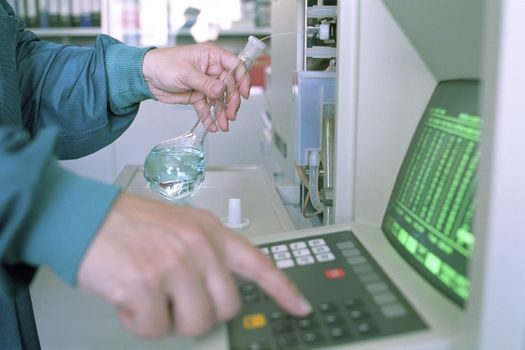
Lab-grade detectors in international projects must satisfy IEC 60079-0 (general Ex requirements), IEC 60079-1 (flameproof enclosures "d"), and IEC 60079-11 (intrinsically safe "i"); the corresponding Chinese GB 3836 series and ATEX 2014/34/EU cover the EU market. Performance and calibration practice generally follow IEC 60079-29-1 for combustible-gas detectors, with response-time and alarm-setpoint definitions explicit there. The 2018 NDIR design study confirmed that the optical/embedded design passed national standard accuracy and temperature stability tests, which remains the most-cited NDIR lab design reference for Chinese-language academic work [S7].
Trackable signals for 2026 lab procurement: monitor the Kb-501sg listing for unit-price updates (last seen 2026-03-03 at US$255), watch the Henan Ronghe Royal Hope CRH-80 inventory (5,000-piece/month capacity), and note that the KELISAIKE 4-gas handheld at US$400–1,300 is the most-specified multi-gas unit in the current combustible gas detector sourcing catalogue [S1][S3][S6]. For a deeper drill on oil-and-gas-facility combustible detection, the related combustible gas detector selection for oil and gas facilities and the mining selection map carry the same spec discipline into adjacent process industries.