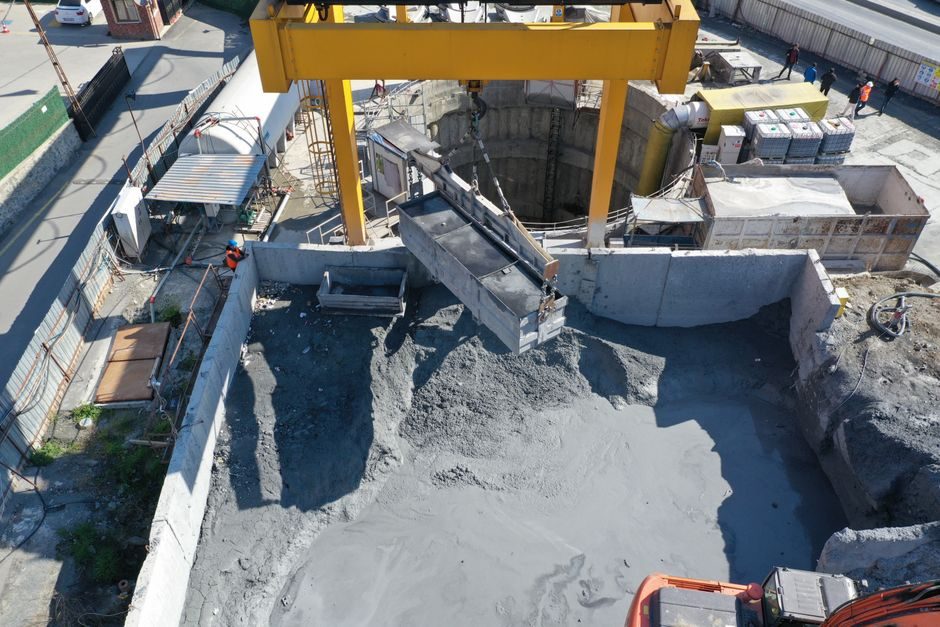
Hyperscale data center construction now drives admixture packages built around polycarboxylate ether (PCE) high-range water reducers, set-retarding slump retainers, and shrinkage-reducing admixtures, with naphthalene-sulfonate formaldehyde (NSF/SNF/PNS) options still specified where cost and steam curing dominate [S1][S2].
For slab-on-grade and mat foundations supporting 1-3 MW IT halls, the working envelope is a maximum water-to-cement ratio of 0.42-0.45, 4-6 hours of slump retention at 25-32 °C ambient, and 56-day drying shrinkage below 0.04 % — a combination that pushes specifiers away from plain SNF toward PCE systems [S2]. Reference data center concrete programs now align with ACI 360R "Guide to Design of Slabs-on-Ground," which explicitly recommends water-reducing and shrinkage-reducing admixtures for floor flatness tolerance F<sub>F</sub> ≥ 35 / F<sub>L</sub> ≥ 25 [S2].
Admixture Chemistries and the Relevant ASTM Type
ASTM C494 "Standard Specification for Chemical Admixtures for Concrete" defines seven types: A (water-reducing), B (retarding), C (accelerating), D (water-reducing + retarding), E (water-reducing + accelerating), F (high-range water-reducing), and G (high-range water-reducing + retarding) — these are the codes a data-center concrete spec should reference on every mix-design submittal [S1].
For hyperscale floor pours, a Type F (HRWR) or Type G (HRWR + retarding) PCE at 0.8-1.5 % binder weight is the default, paired with a Type B or D retarder where ambient temperature exceeds 27 °C; NSF at 0.5-1.0 % solid dosage remains specified under ASTM C494 Type F for steam-cured precast elements and shotcrete rings used in cable vault construction [S1][S2]. An adjacent technical reference frames the broader mix-design logic in Industrial-Facility Concrete Admixture Spec Map: 2026 Selection Guide, which is consistent with the chemistry-to-ASTM-type mapping used here.
Selection Criteria Specific to Data Center Concrete
Selection begins with three hard numbers: target w/c, required slump retention, and permissible heat-of-hydration rise. For a 600-1,200 mm mat foundation, peak internal temperature must stay below 70-75 °C to avoid thermal cracking — a threshold that favors Type B/D retardation plus supplementary cementitious materials (slag, fly ash) at 30-50 % replacement. [S2]
Slab-on-grade flatness for raised-access floor pedestals drives a second criterion: F<sub>F</sub> ≥ 50 / F<sub>L</sub> ≥ 30 per ACI 117, which in turn requires extended workability windows of 90-120 minutes without bleeding — a behavior the PCE slump-retainer hybrids (PCE grafted with carboxylate-side-chain length 4,500-5,500 g/mol) are formulated to deliver [S2].
Comparing PCE, NSF/SNF, and Lignosulfonate

Three admixture families dominate data-center concrete bids. The decision matrix below summarizes typical performance ranges drawn from manufacturer technical data and the supplied source material [S1][S2][S3]:
PCE (polycarboxylate ether) — dosage 0.8-1.5 % solid, water reduction 25-40 %, slump retention 4-6 h, 28-d strength 80-110 MPa capability; cost premium 20-40 % over SNF, but lower total binder per m³ and tighter flatness tolerance make it the hyperscale default [S2].
For the cable trench and duct bank concrete, an alkali-free flash-setting admixture based on calcium sulfoaluminate (CSA) is the standard for sprayed or rapid-strip applications, with set time controllable to 5-15 minutes per typical product datasheets [S2]. A common site requirement is: "0.40 max w/c, 200 ± 25 mm initial slump, ≥ 150 mm at 4 h, 35 MPa @ 28 d" — the admixture system must be qualified against that envelope before any production pour.
Compatibility with Cement, SCMs, and On-Site QC
PCE compatibility drops sharply with high-alkali cements (Na₂Oeq > 0.6 %) and with over-dosed Type F fly ash, where slump-loss curves can steepen from 25 mm/h to 80 mm/h — on-site QC must therefore include a 60-minute and 120-minute retained-slump test on every mix-design submittal [S2]. For facilities using ternary blends (OPC + slag + silica fume), the PCE side-chain density should be retuned to 4,000-4,800 g/mol rather than the 5,200 g/mol typical of OPC-only mixes, to avoid the rapid slump-loss and air-content drift commonly seen in those systems [S2].
Use of concrete admixture products in conjunction with membrane-forming concrete curing compound is the standard layered approach to meet these moisture-control criteria.
Manufacturer Landscape and Supply Capacity
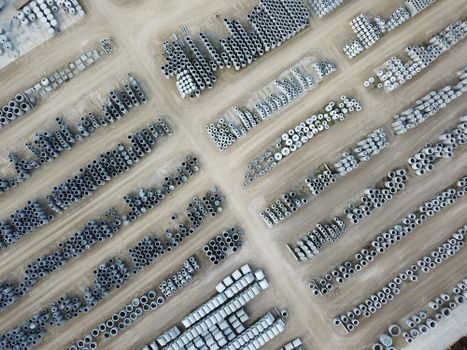
Chinese PCE and SNF suppliers dominate global volume: at least one Jiangsu-based high-tech enterprise operates a 90,000 m² plant with 1 million t/year planned output and ISO 9001 certification, exporting concrete admixtures to more than 20 countries across Southeast Asia, South America, Europe, Africa, and the Middle East, with product lines covering ten chemistries from ZM-1B (naphthalene-based) to ZM-6 (multi-purpose expansion) [S3].
Beyond Asian supply, a North-China supplier list confirms PCE, SNF, SMF (sulfonated melamine formaldehyde), sodium gluconate, magnesium sulfate, and food/fertilizer-grade chemical supply at 200-t minimum order quantity, with sodium bicarbonate and sodium metabisulphite side-utilizations typical of integrated chemical groups [S5]. For mission-critical data-center builds, specifiers commonly dual-source the HRWR from at least two qualified manufacturers and require each lot to carry a fresh mill certificate referencing ASTM C494 Type F or G performance data.
Use Cases, Failure Modes, and Trackable Signals
Typical data-center use cases: mat foundations (PCE Type F, w/c 0.40-0.42), generator pads (PCE + SRA, 56-d shrinkage ≤ 0.04 %), cable trenches (PCE + accelerator for early-strip), white-room floor toppings (PCE + shrinkage reducer + steel or macro fibers for F<sub>F</sub> ≥ 50), and shotcrete vault walls (alkali-free flash-setting admixture, set 5-15 min). In flooring pours, use of macro-synthetic or steel fibers as a secondary reinforcement system interacts with PCE chemistry — the fiber concrete fiber reference covers the dispersion and pull-out behavior relevant to slab impact loading under seismic and equipment-vibration events. [S1]
Common failure modes to monitor: (1) rapid slump loss above 50 mm/h when PCE meets high-alkali cement, (2) air-content drift above 6 % causing finished-surface blistering, (3) retardation beyond 18 h in cold-weather pours, and (4) slump loss from re-tempering on the delivery truck — usually a sign of mismatched retarder / HRWR sequencing. Two trackable signals worth following: the next ACI 360R revision update on shrinkage limits for F<sub>F</sub> ≥ 50 floor slabs, and any ASTM C494 re-classification work covering PCE slump-retention hybrids. For vibration-sensitive equipment pads, see also the concrete vibrator specification guidance, which addresses consolidation strategy adjacent to dense rebar mats in mat foundations.