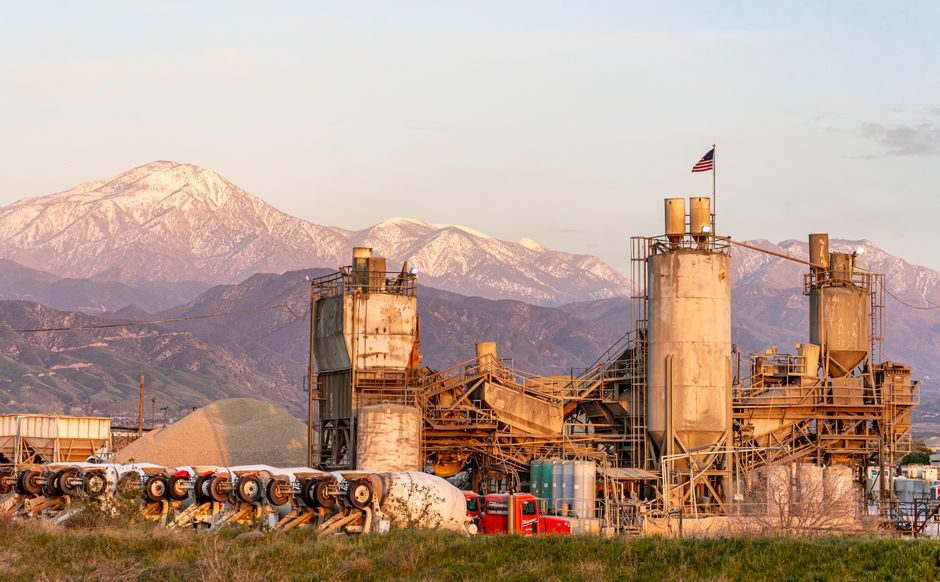
Stationary and mobile concrete batching plants sold in 2026 cover a 25–240 m³/h output envelope, with HZS25/50/60/75/90/120/180/240 as the dominant ISO/CE-rated designations carried by Chinese OEM lines [S3][S4]. A typical mid-tier HZS100 plant pairs a JS2000 twin-shaft mixer (2,000 L nominal, 2×37 kW motors) with a PL3200 aggregate batcher (3×15 m³ bins, ±2% weighing tolerance) and 50–200 t powder silos [S3].
The 2026 China B2B catalog shows foundation-free (skip-hoist) quick-install plants priced at roughly US$12,450–40,000 per set, while 75 m³/h modular and 120–180 m³/h commercial-station plants occupy the next tier [S2]. Mobile concrete batching plants and twin-shaft mixers are now grouped as standard product lines by Henan-based OEMs alongside asphalt and self-loading concrete mixer offerings [S8][S9].
Plant Class vs Output Band and Mixer Type
Plant classification in current supplier catalogs is set by theoretical output, not by footprint: HZS60 delivers 45–60 m³/h on a JS1000 mixer at 130 kW total, HZS75 reaches 60–75 m³/h on a JS1500 at 165 kW, and HZS180 climbs to 150–180 m³/h on a JS3000 with a 3 m³ per-cycle mixing capacity [S4]. The HLS120 commercial tower plant discharges at 3.8 m and stores, meters, and mixes aggregate, powder, water, and admixture in a single integrated frame [S5].
Twin-shaft non-gravity mixers are the workhorse for 60 m³/h and above, while single-shaft paddle mixers — including single-axis blade slurry dry-mortar variants from Elite Machinery — handle dry-powder mortar production rather than structural wet concrete [S1]. The HLS-series tower-type building uses standing aggregate metering, which removes four intermediate transfer steps versus the HZS series and lifts plant productivity by roughly one third at equivalent model size; an HLS90 floor plant matches an HZS120 stand, and an HLS180 floor plant equals an HZS240 [S3].
Selection Criteria: Stationary vs Mobile vs Foundation-Free
Spec the plant class from three vectors: rated m³/h, project duration, and site civil work tolerance. Foundation-free (quick-install) skip-hoist plants need only a flat hardstand and can be relocated in days; stationary belt-conveyor plants need engineered foundations, conveyor trusses, and aggregate pre-bin pits [S2][S3]. HZS100 dimensions and weight are configuration-dependent (≈65 t without screw conveyor and cement silo) and shift with each accessory chosen, so layout drawings must come from the OEM [S3].
Power draw scales roughly linearly with output: HZS60 needs 130 kW, HZS75 needs 165 kW, and the HZS100 baseline is 140 kW excluding the screw conveyor and cement silo [S3][S4]. Aggregate bin count is a real spec, not a marketing line: HZS100 ships with 4 aggregate types and 3×15 m³ bins, while HZS60 supports 3 aggregate types and 80 mm max aggregate size appears at HZS75 [S3][S4]. Powder silo capacity on HZS100 is selectable at 50, 100, or 200 t — a 4× swing that drives both footprint and truck-fill cycle [S3].
Mixer Comparison: Twin-Shaft, Planetary, and Single-Shaft
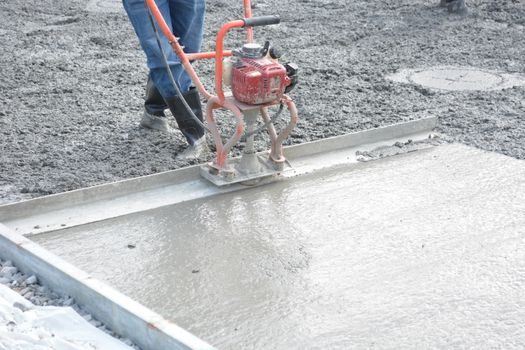
Three mixer families appear across the 2026 supplier range, and each is gated to a specific concrete class. JS-series twin-shaft mixers (JS1000, JS1500, JS2000, JS3000) are non-gravity, high-intensity, and dominate plastic and structural mixes at 60–240 m³/h plants [S3][S4]. Planetary mixers (also called vertical-shaft) and single-shaft paddle mixers are used where dry-mix, mortar, or low-slump architectural mixes are required; Qingdao Elite's single-axis blade slurry dry-powder mortar mixer is sized for compact footprint and equipment-retrofit installation, not for high-output wet structural concrete [S1].
Mixing intensity is data, not slogan: the HZS180's JS3000 discharges 3 m³ per mixer cycle, and the HZS100's JS2000 mixes 100 mm max aggregate at 2×37 kW — limits the buyer should not cross [S3][S4]. The concrete admixture dosing stage on an HZS100 typically holds ±1% precision, equal to the water and additive precision, while aggregate weighing sits at ±2% [S3]. For projects where dosing tolerances matter, see the concrete admixture encyclopedia entry for downstream selection logic.
Application Boundaries by Project Type
Application fit is set by output class, discharge height, and mobility. HZS100 and HZS180 plants are documented for highways, high-speed rail, airports, ports, bridges, hydropower stations, and commercial ready-mix stations serving real estate and municipal work [S3][S7]. HLS120's 3.8 m discharge height suits ready-mix truck loading under a plant tower on a permanent commercial site [S5].
Mobile concrete batching plants and self-loading concrete mixers — both standard product lines at New Ways and Luton Group — are the right answer for short-cycle road jobs, remote hydropower pads, and small site batches where civil work and truck-mixer logistics dominate cost [S8][S9]. The combined offering of stationary concrete batching plants, asphalt mixing plants, and self-loading mixers from the same OEM is now table-stakes for the Henan export cluster [S9]. For fiber-reinforced mixes, the concrete fiber encyclopedia entry covers dosage and class logic that interacts with the plant's batching sequence.
Configuration Options and Sourcing Risks
Optional equipment on HZS-class plants is the single largest source of price and weight variance. The HZS100's 50/100/200 t cement silo choice, screw-conveyor inclusion, and aggregate bin configuration move shipped weight from 65 t upward with each add-on [S3]. Aggregate measuring precision is held at ±2%, and powder/water/additive precision at ±1% on HZS100 — values that are not generic, they are spec-sheet facts you should verify on the OEM data plate [S3].
Sourcing risk in 2026 concentrates in three places: certificate validity (CE/ISO/SONCAP badges appear on quick-plant listings but require re-check with the issuer), after-sales spares for the twin-shaft mixer gearbox, and configuration lock-in on the powder silo when a project later scales [S2][S6]. Made-in-China lists 19,000+ concrete-batching-plant line items across stationary, mobile, foundation-free, and tower types, and Made-in-China's filters expose shaft type (single/double) and layout (horizontal/vertical) as the key machine-side selectors [S6][S10]. If a project shifts toward automated dosing and palletized output, a palletizer spec map is a logical next read. For the post-batch consolidation step, concrete vibrator selection and the concrete curing compound finish path round out the spec chain. Verify CE/ISO status directly with the issuing body before locking the PO. Track any revision to mixer model codes (JS1000 → JS1500 → JS2000 → JS3000) and the 3.8 m discharge standard as your two durable buy-spec anchors.