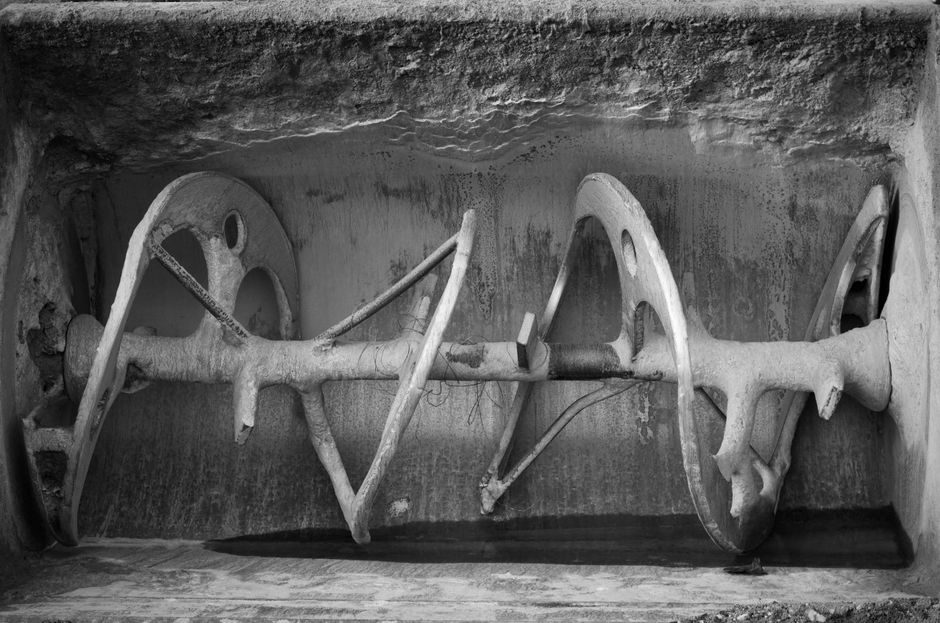
A concrete batching plant is the equipment that weighs, doses, and mixes cement, aggregates, water, and admixtures into fresh concrete; ready-mix concrete is the factory-batched, truck-delivered end product that comes out of that plant [S2][S3].
Most commercial ready-mix is produced in a stationary HZS-series forced-mix plant with rated outputs from 25 m³/h to 240 m³/h, then hauled in 6-10 yd³ (4.6-7.6 m³) drum trucks to the pour within roughly 90 minutes of batching [S2][S3].
Plant Type by Output Tier
HZS-series plants in the 25-240 m³/h range cover ~80% of the global ready-mix supply; HZS25 / HZS50 suit small contractors, HZS60-HZS120 covers most urban ready-mix fleets, and HZS180+ is reserved for infrastructure and precast [S2][S7]. Twin-shaft compulsory mixers dominate above 60 m³/h because they reach homogeneous mix in 30-45 s versus 60-90 s for planetary or drum mixers [S2]. A central-mix plant — like the Berkshire Concrete facility in Western MA — finishes all mixing before trucks load, which gives tighter QC and supports high-performance, fiber-reinforced, and colored mixes [S3]. For field work under ~50 m³/day, a mobile volumetric mixer (cement, sand, stone bins mounted on a truck) is a lower-capex alternative that does not match central-mix consistency but eliminates re-mix and short-load waste.
Dry-Batch vs Central-Mix vs Volumetric
Three plant architectures serve three different delivery models. A dry-batch plant weighs ingredients directly into the truck mixer, which then mixes in transit — lower plant capex, higher driver skill demand, and wider slump tolerance at the site. A central-mix plant completes all mixing before loading, so the truck only agitates, which is why operators like Berkshire Concrete specify it for high-performance and fiber-reinforced mixes [S3]. A volumetric mobile mixer carries separated bins of cement, sand, aggregate, water, and admixture and proportions them at the spout, which is the only option that keeps water out of the mix until the truck is parked on the slab — ideal for short loads, remote sites, and repair work where re-mix is uneconomic. Capex spread runs roughly $80-180k for a dry-batch or small mobile setup, $250-600k for an HZS60-120 central-mix line, and $1-3M for an HZS180+ twin-shaft plant with aggregate bins and admixture skids [S7][S8].
Ready-Mix Concrete: Mix Design, Slump, and Admixtures
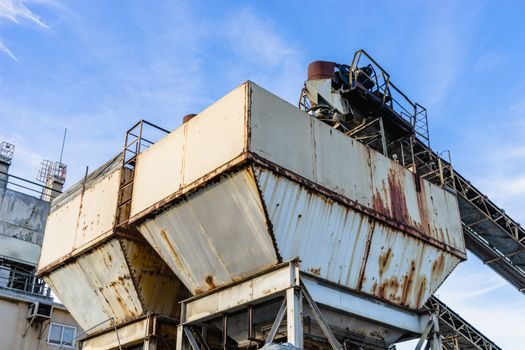
ASTM C94 governs ready-mix production, delivery, and the 90-minute / 300-revolution discharge limit that defines the working life of a load in the drum [S1]. Typical 28-day compressive strength for residential pours is 20-25 MPa (3,000-3,600 psi), with 28-35 MPa standard for commercial slabs and 40 MPa+ for structural columns and high-performance mixes [S1][S3].
When a Ready-Mix Supplier Beats Owning a Plant
Below ~3,000 m³ of annual demand, buying ready-mix from a local central-mix plant is cheaper than running any stationary plant once labor, fuel, maintenance, QC lab, and the standby 80-150 kVA generator are loaded in [S1][S3][S5]. Berkshire Concrete, Kansas Sand & Concrete, and Mar-con Products all absorb those fixed costs across a 30-80 km delivery radius, which is why the spec-first answer for ~90% of contractors is "buy the mix, not the plant" [S1][S3][S5]. A mid-size fleet such as Mar-con's 10-truck, 10 yd³ roster plus a single batch plant serves a regional ready-mix market at lower delivered cost than any in-house solution a general contractor could justify [S5].
When a Batching Plant is the Right Buy
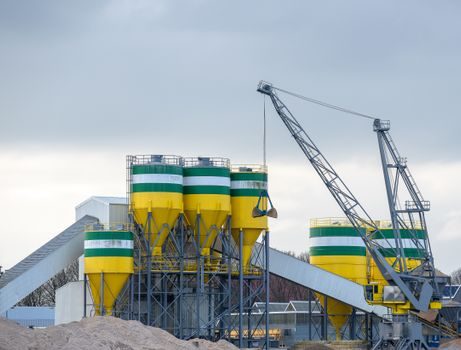
Step up to a stationary HZS plant when annual demand passes ~3,000-5,000 m³, when the project timeline is longer than 6 months, when the site is remote from any central-mix supplier, or when the spec demands mix designs the local ready-mix plant will not certify (high-strength SCC, low-shrinkage bridge decks, fiber-reinforced shotcrete) [S3][S4][S7]. Haomei, UNIQUE, Quanzhou Jiayi, and Meycheny all quote turn-key HZS60-HZS180 containerized packages with PLC control, screw conveyors, and cement silos in the 60-240 m³/h range, with quoted lead times of 30-60 days ex-China [S4][S6][S7][S8][S9]. Most plants ship with a 380 V / 50 Hz main supply, optional 220 V / 60 Hz transformer skid for the US market, and an aggregate moisture probe that trims batch water in real time [S7][S8].
Decision Matrix: Plant vs Ready-Mix Buy
Three decision criteria line up the options. (1) Annual volume: under 3,000 m³ → buy ready-mix; 3,000-30,000 m³ → mobile or compact HZS25-50; over 30,000 m³ → stationary HZS60-180 with central-mix drum. (2) Capex tolerance: under $100k → volumetric mobile; $250-600k → mid-size HZS with twin-shaft mixer; $1M+ → full central-mix plant with aggregate pre-feed, admixture skid, and on-site QC lab [S4][S7][S8]. (3) Mix complexity: commodity 20-25 MPa slabs → ready-mix; high-performance, fiber-reinforced, colored, or SCC → concrete fiber dosing with batch-level QC is a job for a central-mix plant like Berkshire's, not a dry-batch truck-mix line [S3]. For tight slabs and bridge decks, pair the spec with a concrete vibrator sizing check and a concrete curing-compound callout to lock in the 28-day strength [S3].
Spec Defaults That Travel
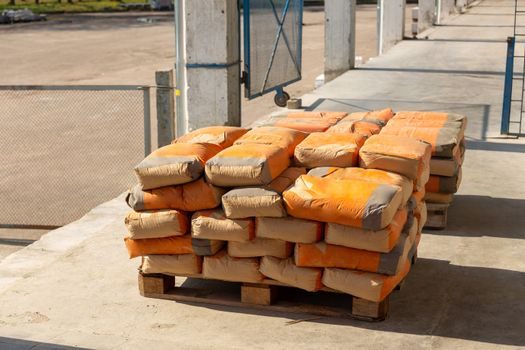
Cite ASTM C94 for ready-mix production and delivery, ACI 211 for mix proportioning, and ACI 318 for structural strength classes [S1]. Pump mixes use a 100-150 mm slump and a maximum 20 mm aggregate for line-pipe work above 80 m horizontal run; self-consolidating concrete (SCC) flows at 600-750 mm slump-flow and needs a viscosity-modifying admixture to prevent segregation [S3]. Haul distance is capped at ~45 min one-way before a retarding admixture is mandatory to keep the load workable through 90 minutes of drum agitation; over 90 min, the load is rejected and returned to the plant [S1]. If a project sits outside that haul radius, the right call is a site-placed HZS50-90 plant, not a longer truck run.
Limits and Failure Modes to Flag
Three failure modes end more ready-mix jobs than any spec error. First, slump loss in hot weather: above 30 °C ambient, expect 25-40 mm of slump loss in the first 30 minutes; spec a retarder or ice-water batching above 32 °C. Second, re-tempering at the site: drivers adding water to recover slump is the single most common cause of 28-day strength failures and w/c ratios above the 0.55 durability cap. Third, aggregate moisture drift: a 1% moisture error in sand translates to ~7 kg/m³ of extra batch water, which is why central-mix plants with inline moisture probes outperform dry-batch in QC [S3]. Note also that ready-mix concrete sourced from a concrete batching plant is a perishable product, not inventory; the 90-minute clock starts at first water-cement contact and cannot be paused.
This topic is covered further in Sound Level Meter Price Guide: Class 1 vs Class 2 Cost Drivers.