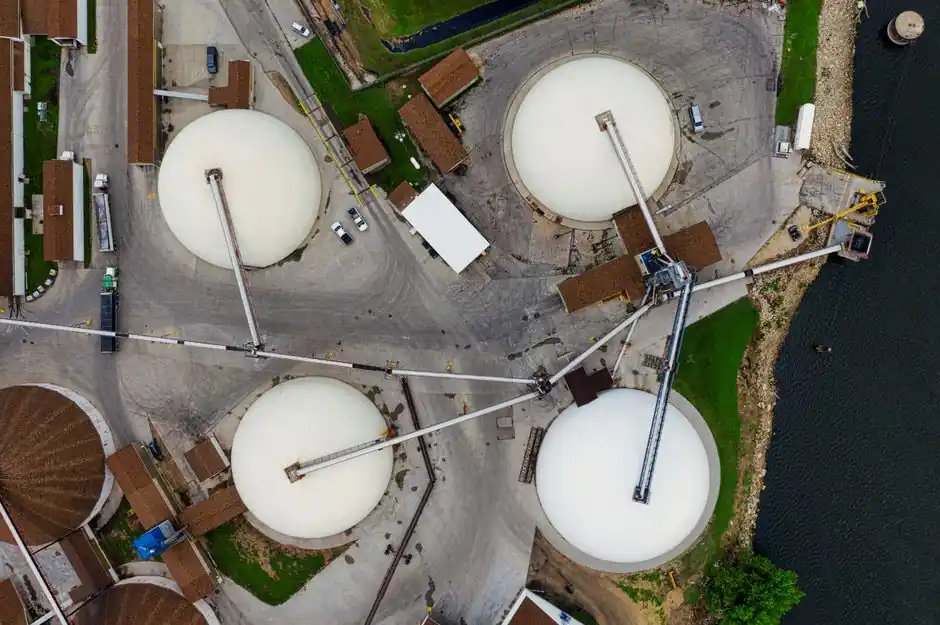
For industrial facility slabs, the practical spec is ASTM C309 Type 2 liquid membrane-forming compound applied at 200 ft²/gallon (4.9 m²/L), with a 72-hour water-loss ceiling of 0.55 kg/m² and a reflectance floor of 60% versus a magnesium oxide reference plate for any white-pigmented grade, per manufacturer and state DOT guidance [S3][S7].
Skipping or thinning the membrane is the single most common cause of dusting, crazing, and a measurable strength loss of up to 40% on flatwork, which is why agencies like MoDOT and the Urban Manual require the compound, sampling protocol, and coverage rate to be called out explicitly on the submittal [S3][S5]. Industrial owners who treat curing as a finish-line chore rather than a spec line item generally pay for it in surface defects within the first quarter of service.
What an ASTM C309 Liquid Membrane-Forming Compound Must Do on the Slab
ASTM C309 is the gating performance spec for nearly every North American industrial slab curing compound, and it controls three measurable behaviors: the compound must hold water loss to no more than 0.55 kg/m² in 72 hours, white-pigmented grades must reflect at least 60% of a magnesium oxide reference plate, and the spray film has to dry and adhere on freshly placed concrete without re-emulsifying [S3][S7]. The Type 1/2 split in C309 distinguishes clear or translucent grades (Type 1, optional fugitive dye 1D) from white-pigmented grades (Type 2); Class A allows any vehicle solids including wax, while Class B restricts the vehicle solids to all resin, and sodium silicate cures will not pass C309 on their own [S3]. The companion spec ASTM C171 governs sheet materials and ASTM D2103 covers polyethylene film when a project elects to cure with wet burlap or poly rather than a spray compound, a fallback the master spec 03 39 00 typically lists as an alternative [S4].
For spec writing, the cleanest approach is to write the project section 03 39 00 to C309 Type 2 Class A or B with a required coverage rate of 200 ft²/gallon (4.9 m²/L), then call out the reflectance and water-retention numbers rather than trusting the data sheet blurb. That posture matches what the Illinois Urban Manual (NRCS-IL-URB 534, 10/98) prescribes for agency work, and it is the same shape the MoDOT EPG 1055 sampling protocol uses to accept or reject a lot before it hits the slab [S2][S5].
Resin, Wax, and Sodium Silicate: How the Three Families Behave in Service
Resin-based curing compounds form a thin film that seals fresh concrete and offers meaningful resistance to water, mild chemicals, and abrasion, which is why they show up in industrial floors, parking decks, and process areas where the slab will see wheel traffic or light chemical splash within days of placement [S1]. Wax-based compounds, including the white-pigmented Class A formulations, lean on a melt-and-set film that holds moisture but is generally softer and more sensitive to early abrasion, making them a default on bridge decks, highway flatwork, and any white-pigmented reflective slab where heat-of-sun load is the bigger concern [S3][S6]. Sodium silicate cures are densifiers first and curing aids second; SpecChem positions them for industrial floors and high-wear areas where the spec author also wants surface densification, but they must be applied to a wet surface and the surface kept wet afterward to drive the silicate reaction, and they do not satisfy C309 on their own [S1][S3].
Acrylic cures, a sub-family of resin cures, function as both a curing aid and a sealer, with the SpecChem Cure & Seal WB/EX and Cure Shield lines cited as typical examples that come in VOC-compliant and varied-solids versions for indoor air-quality sensitive facilities [S1]. Epoxy, urethane, silane, or liquid hardener topcoats cannot be placed over a curing compound film without mechanical or chemical removal of the membrane, which is a hidden line item many industrial owners miss when they try to combine densifier and sealer steps in one mobilization [S3].
Application Rate, Substrate State, and Coverage Discipline on the Slab
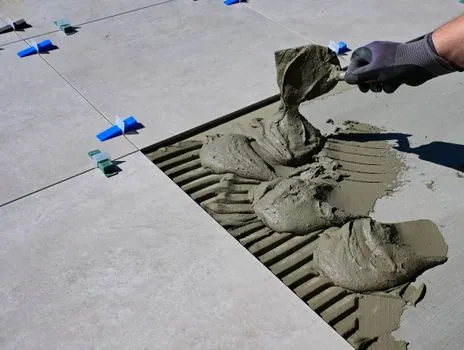
The default spray rate in agency and OEM guidance is 200 ft²/gallon (4.9 m²/L) on flatwork, applied uniformly to a surface free of standing water, and the most common field failure is over-thinning the film to 300-400 ft²/gallon, which directly degrades moisture retention and shows up as dusting within weeks [S3]. A two-pass crosshatch application (one pass at right angles to the other) or a deliberate slight flood of material on the surface is the field rule-of-thumb that keeps the rate honest, and water-based products need gentle agitation to resuspend solids before spray without high-shear mixing that breaks the emulsion [S3].
Substrate moisture state is not a detail; it dictates which family is even viable. Resin and acrylic cures want the surface free of excess water, sodium silicate cures want the surface wet and require post-application wet holding, and wax-based cures tolerate the broad middle ground of damp, finished concrete that most slab placements leave behind [S1]. For projects that switch between indoor process floors and outdoor aprons, the simplest spec is to require Type 2 Class A or B at 200 ft²/gallon everywhere, then override to a non-yellowing resin in UV-exposed or owner-occupied interior areas, since the wrong wax film will track and soften under forklift traffic [S1][S3].
Decision Map: Industrial Facility Use Case vs Compound Family
Use ASTM C309 Type 2 Class B (all-resin) for interior industrial floors receiving densifier, epoxy, urethane, or silane topcoats within 30-90 days, because the resin film is more predictable to remove and bonds predictably with subsequent treatments [S1][S3]. Use Type 2 Class A wax for bridge decks, highway pavements, and large exterior slabs where heat-of-sun reflectance and low cost matter more than topcoat compatibility, with white pigmentation specified to hit the 60% MgO reflectance number [S3][S6]. Use a sodium silicate cure plus densifier on warehouse slabs where the owner wants both curing and surface densification from one product line, accepting that the silicate alone will not pass C309 and the spec should pair it with a C309-compliant membrane if the project is agency-funded [S1][S3].
Avoid solvent-based cures on indoor industrial work where VOC limits or worker exposure rules apply, and avoid wax-based cures on slabs that will receive a hardener, sealer, or traffic coating within 60 days unless the spec explicitly budgets for mechanical removal of the membrane [S1][S3]. The W. R. Meadows CC-309-10WS water-based product with red fugitive dye is a representative C309-grade water-based option whose dye helps QA confirm uniform coverage before the color fades, which is a cheap insurance policy against the 300-400 ft²/gallon over-thinning failure mode [S6].
Submittal, Sampling, and Storage Discipline That Catches Bad Lots
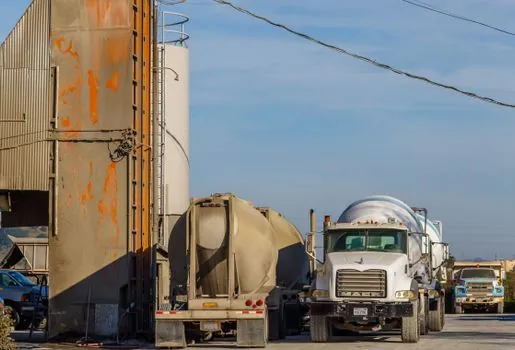
MoDOT Category 1055 sampling calls for a one-quart (1 L) sample in a metal friction-top lined can, drawn by the manufacturer or contractor's agent in front of the inspector, and recorded in AASHTOWARE Project (AWP) with manufacturer name, brand, designation, lot number, net quantity, and storage location on the project [S5]. The Illinois Urban Manual adds a delivery clause that the compound must arrive in original, manufacturer-labeled containers, and water-emulsion grades must be stored to prevent freezing, which destroys the emulsion and is one of the most common reasons a passing lab sample fails in the field [S2].
Owner-side QA should require the C309 test report, the lot number, the application rate statement, and the manufacturer's data sheet at submittal, then witness the sampling, then verify storage conditions on every delivery; this three-step process catches roughly the same failure modes that show up as surface defects six months after pour [S4][S5]. For agency-funded industrial work, the spec section 03 39 00 should explicitly cite C309, C171, and D2103, define the submittal data the contractor owes, and require delivery in original unopened packaging with manufacturer application instructions included [S4].
One trackable signal to watch on the next pour: whether the contractor actually documents the achieved coverage rate, since the 200 ft²/gallon target is the one number that most directly predicts whether the slab will hit its 28-day strength and resist the dusting and crazing that come from a starved membrane [S3][S7]. The secondary signal is the data sheet's stated water-loss figure per ASTM C309; anything outside the 0.55 kg/m² in 72 hours envelope is a non-starter regardless of brand. Spec authors comparing residential and commercial guidance can cross-check the commercial buildings map and the residential C309 spec map for context on how Type 1 versus Type 2 choices change between owner-occupied and industrial occupancies, while the broader concrete curing compound encyclopedia entry anchors the chemistry and families behind these numbers. When the slab also needs vibration or fiber reinforcement, the concrete vibrator and concrete fiber pages sit upstream of the curing step and influence how the membrane has to be applied.