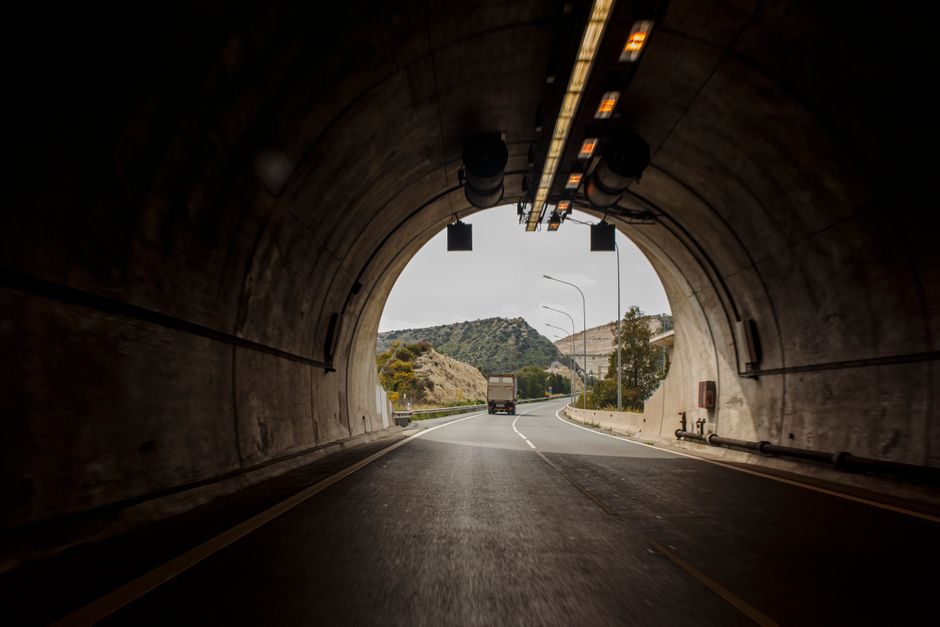
Concrete mixer trucks are rotating-drum in-transit mixers that keep ready-mix concrete workable between batch plant and pour; the dominant global class in 2026 remains 6×4 diesel chassis carrying 6–12 m³ drums, with discharge residue held below 0.5% by weight per current OEM specifications [S2].
Output classes for mainstream production units span 6 m³ at 5 m³/min on lighter chassis up to 15 m³ mixing volume (12–16 m³ optional) on heavier Shacman/SANY-type 6×4 platforms, with top speeds typically capped at 90 km/h and feed rates ≥3 m³/min [S1][S2]. Reference pricing in the secondhand/export band for used 6×4 units sits around US$25,000–30,000 per unit FOB at 1-unit MOQ, dropping at 2+ unit orders [S5].
Drum Volume Classes and Matching Chassis
Drum volume is the single most decisive selection variable because it sets axle load, route access, and per-trip cost; common production classes cluster at 6 m³, 9–10 m³, and 12–15 m³ [S1][S2][S6][S7]. The 6 m³ class (SANY SY306C-8(R), 211.89 ft³) targets narrow urban streets and small pours, with output rated at 5 m³/min and a diesel engine sized for short-haul duty [S1]. The 9 cbm (9 m³) class on Hino chassis typically runs an 8 L displacement 4-stroke diesel, manual transmission, 30 T payload, Euro 3 emission standard, and certifications including ISO9000, CCC, TS16949, EPA, EEC, RoHS, and CE [S7]. The 10 m³ class uses double-logarithmic variable-pitch helical blades and T-shape alloy-steel blades to resist drum abrasion, with geometry claimed to eliminate segregation during dry or wet transport [S6]. The 12–15 m³ class on a Shacman SX5255GJBJT384 chassis pairs a 336 hp WP10 engine, Fast 9JS119 manual transmission, ARK hydraulic pump and motor, PMB 6.5sp reducer, and a 450 L air-pressurized water tank for on-site washout [S2]. A concrete mixer truck is the standard reference asset for ready-mix haulage; the related concrete pump truck and truck-mounted concrete pump handle placement after delivery.
Drive Configuration: 4×2, 6×4, and 8×4 Trade-Offs
Drive layout sets legal payload, manoeuvrability, and off-road reach; 4×2 is the lightest class, 6×4 is the volume workhorse, and 8×4 carries the largest 12–18 m³ drums [S2][S5][S7]. Light 4×2 chassis host small 3–5 m³ urban mixers, where tight turning radius and low tare weight outweigh raw drum capacity. The 6×4 class dominates 6–12 m³ production because it balances a 30-tonne payload rating against two steered front axles for job-site access [S7]. Used 6×4 chassis listed in the export channel cover 6 m³, 10 m³, and 18 m³ drum bodies, indicating that 6×4 platforms are routinely re-bodied across the volume spectrum [S5]. For a direct side-by-side of payload, route access, and pour size, the 4×2 / 6×4 / 8×4 split maps cleanly: 4×2 wins on street access but loses on payload; 6×4 wins on per-trip economics for urban ready-mix; 8×4 wins on mega-pour and infrastructure jobs but requires route permits and reinforced pavement.
Drum, Blade, and Hydraulic System Specs
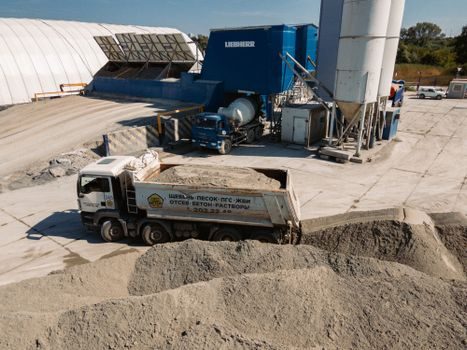
The 10 m³ class specifies a double-logarithmic variable-pitch helical blade paired with a T-shape alloy-steel leading blade, designed to lift aggressively at the feed mouth and to fold gently at the discharge end, reducing segregation in wet mixes and balling in dry-haul applications [S6]. Hydraulic packages on Shacman 12 m³ trucks use an ARK high-pressure oil pump driving an ARK hydraulic motor through a PMB 6.5sp planetary reducer, with the water tank pressurized by the chassis air system for drum washout at the pour site [S2]. The 6 m³ SANY SY306C-8(R) adds an exhaust-valve braking system that cuts braking distance by 15% and brake-lining wear by 50% versus the previous generation, paired with a high-volume air compressor for repeatable stopping on loaded downhill grades [S1].
Engine, Emissions, and Certification Stack
Engine displacement, emission tier, and certification set export eligibility and operating cost; mainstream 2026 listings are 4-stroke water-cooled turbo EFI diesels, with displacements from compact 8 L blocks to 10+ L workhorses [S2][S7]. The Shacman 12 m³ class uses a Weichai WP10.336 rated at 336 hp, paired with a Fast 9JS119 9-speed manual gearbox and integral power steering, with air-conditioning specified as a Shacman factory option [S2]. The 9 cbm Hino-based unit declares Euro 3 emissions and lists a broad certification stack: ISO9000, CCC, TS16949, EPA, EEC, RoHS, and CE, which together cover quality, automotive homologation, environmental, and electrical-safety requirements for cross-border shipment [S7]. Certification breadth matters more than horsepower for export tenders: a single missing approval (EEC for EU, EPA for North America, CCC for China-domestic) can disqualify an otherwise spec-equivalent truck, so the certification row on the data sheet should be checked before any drum-volume decision is finalized.
Applications: Ready-Mix Haul, Dry-Haul, and Specialty Routes
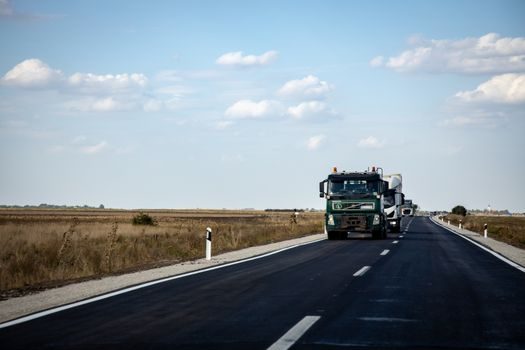
Application fit divides into three operational modes: wet-haul ready-mix from batch plant to site, dry-haul of dry-mix constituents for site-batched production, and specialty pours where the truck doubles as a mobile batcher [S2][S6]. Wet ready-mix haulage is the default 6 m³ / 9 cbm / 10 m³ / 12 m³ use case, with the drum rotating at mixing speed to preserve slump over typical 60–90 minute windows [S1][S2][S6][S7]. Dry-haul applications use the same drum at slow agitation to keep dry-blend constituents blended without premature hydration, exploiting the variable-pitch geometry that resists segregation [S6]. Specialty applications include high-rise pours paired with a concrete pump truck for vertical placement, infrastructure pours (bridges, mat foundations) where 8×4 chassis carry 15–18 m³ drums to cut trip count, and remote-site batched-haul in mining or road-building where on-site water dosing replaces plant batching. For comparison against plant-side or small-site alternatives, the stationary power mixer and sand mixer cover fixed-installation mixing; the mobile dump truck is the wrong tool once slump is in play because it cannot keep concrete workable without agitation.
Selection Boundaries: When a Mixer Truck Is and Is Not the Right Tool
A concrete mixer truck is the right tool when haul distance, drum rotation, and continuous pour volume align; it is the wrong tool when haul is short enough for site-mixed stationary batching, when the mix contains aggregate that segregates in transit, or when the pour is below roughly 1 m³ and a trailer or mobile mixer makes more sense [S2][S6]. Route constraints: 4×2 mixers access narrow urban streets but cap at smaller drum volumes; 8×4 mixers require reinforced pavements and permit checks for overhang and gross vehicle weight. Mix constraints: discharge residue <0.5% holds for properly cleaned mainstream units, but sticky mixes (high-cement, low-slump) can push residue above spec and force drum washout between loads, eroding per-trip economics. Cost constraints: used 6×4 units in the US$25,000–30,000 FOB band can undercut new builds for secondary markets, but buyers should verify drum shell wall thickness, blade wear, and hydraulic seal condition independently of marketing claims [S5].
Sourcing Signals and Trackable Next Nodes
For buyers building a shortlist in 2026, the trackable next nodes are: (1) confirm drum volume class against per-trip pour demand, (2) verify the certification stack against the destination country's homologation rules, and (3) pin a residue-rate acceptance test on the data sheet before shipment [S2][S7]. Related engineering reads worth pairing with this spec map: Stainless Steel Coil 2026: Sizing, Pricing Bands, and Spec-First Buying for chassis-grade steel sourcing, and Disc Coupling Trade-Offs: Spec Map, Misalignment Limits, and Failure Modes for the driveline coupling behind the hydraulic pump. Watch for OEM data-sheet revisions on Euro 5/6 emission transitions for the 9 cbm class, and on tank-body geometry updates for the 12–16 m³ optional range, as those are the most likely near-term spec changes affecting 2026 procurement.