
Stainless steel coil buyers in 2026 are navigating a market where 300-series austenitic grades (304, 304L, 316, 316L) dominate transactional volume, China remains the structural low-cost exporter, and nickel-driven alloy surcharges set the marginal price on every European and North American order [S1][S5].
The demand pull in 2026 comes from three end-use pillars: chemical tanker newbuilds (stainless steel variants held 44% product share of the US$32.35 Bn global chemical tanker market in 2026 per [S2]), kitchenware and commercial foodservice flatware, and architectural/elevator-grade cold-rolled coil — the last is visible on Chinese export platforms as AISI 316L/304 mirror 8K coils in 0.2–0.5 mm precision gauges trading in a US$1,000–3,000/t FOB band [S6].
2026 Market Sizing and Growth Anchors
The chemical tanker segment — a heavy gauge stainless coil consumer for cargo tank construction — was valued at US$31.50 Bn in 2025 and is sized at US$32.35 Bn in 2026, forecast to reach US$42.23 Bn by 2036 at a 2.7% CAGR [S2]. Stainless steel chemical tankers account for 44% of product share in 2026, making this the single largest pull-through channel for duplex/austenitic coil and plate into marine fabrication yards [S2].
The adjacent stainless steel flatware category — a downstream consumer of 304/430 cold-rolled coil for cutlery stamping — was valued at US$17.13 Bn in 2025 and is projected to reach US$29.43 Bn by 2034, a 6.2% CAGR over 2026–2034 with a US$210.79 Bn cumulative addressable market over the same window [S3]. This flatware channel is the second-largest flat-product tonnage sink for 304-grade 2B and BA finish coils [S3].
Grade Selection: 304, 316L, 430, and 201 Compared
304/304L remains the default general-purpose austenitic grade for indoor architectural, kitchenware, and chemical-processing service; 316L adds 2–3% Mo for chloride resistance and is the marine, pharmaceutical, and coastal-architecture default; 430 is a ferritic low-Ni option chosen where magnetic response or cost is the primary driver [S1][S5]. Chinese mill price lists published 2026-06-12 break the standard 300 series (304/2B, 304/NO.1, 304J1, 321/2B, 316L/2B, 316L/NO.1) and 400 series into separate daily quote blocks, with 201/202 grades (high-Mn, low-Ni) tracked as the budget alternative [S5].
For a typical 2026 sourcing decision, four criteria drive grade choice: corrosion environment (chloride exposure → 316L), forming requirement (deep draw → 304L or 304J1 for better elongation), magnetic/ferritic preference (→ 430), and budget sensitivity on raw material surcharge (→ 201/202 to dodge nickel exposure) [S1][S5][S6]. Refer to the stainless steel grade family overview for compositional limits, and to the stainless pipe entry for downstream tube/pipe conversion that consumes a meaningful share of cold-rolled coil output.
Price Bands, Alloy Surcharges, and Surcharge Mechanics
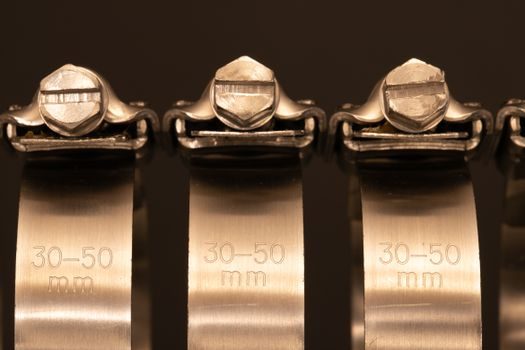
European stainless steel flat-product alloy surcharges for 304L, 316L, and 430 grades are published on a forward two-month rolling basis and reset monthly, with the published 2026-07-29 forecast reading serving as the live benchmark for 2026-09 deliveries [S1]. The surcharge mechanism — a published addition to the mill base price that passes through nickel, chromium, and molybdenum cost volatility — is the single most important variable in any stainless coil quote, frequently exceeding the mill base on 316L during nickel spikes [S1].
On Chinese domestic spot markets as of 2026-06-12, daily reference prices for cold-rolled 2B and hot-rolled NO.1 finishes are quoted separately for 201, 202, 304, 304J1, 321, and 316L families, with 400-series ferritics tracked on a parallel sheet [S5]. Export-side, made-in-China listings for AISI 316L/316/304 mirror 8K EN 1.4404 precision coils in the 0.2–0.5 mm range were observed at US$1,000–3,000/t FOB in mid-2026, with 0.5 mm TR (temper-rolled) 316L coils priced as a separate SKU [S6]. For a deeper structural read on nickel cost transmission into coil pricing, see the lithium carbonate and lithium hydroxide supply-side notes — both nickel-adjacent battery raw materials whose pricing dynamics correlate with the LME nickel reference that drives the surcharge.
Supply-Side Movements: China, Japan, and Q3 2026 Signals
China's stainless steel exports rose for a fifth consecutive month in June 2026, reaching the highest monthly volume since December 2025, although cumulative H1 2026 shipments remained below the prior-year comparable [S1]. The 2026-07-28 Japan Kyushu earthquake disrupted industrial operations regionally, but market participants confirmed stainless steel production and supply were unaffected — a key reassurance for buyers with Q3 delivery exposure to Japanese mill allocations [S1].
Producer-side, Daido Steel reported improving stainless business conditions in Q1 FY2027 (calendar Q2 2026), with rising semiconductor equipment orders and increased sales to industrial process plants cited as the supporting drivers [S1]. China's structural export position is reinforced by 0.3–150 mm thickness range availability across 304 sheet, 430 plate, and 8K/2B/hairline/mirror surface finishes, with cold-rolled coil SKUs dominating the made-in-China product mix alongside hot-rolled plate [S4].
Spec Boundaries and Failure Modes
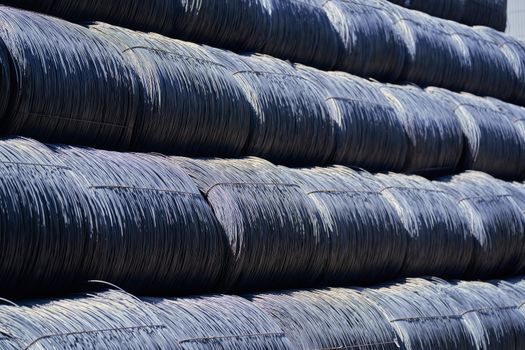
Stainless coil failures in service cluster around four modes: chloride-induced pitting and stress corrosion cracking on 304 in marine/coastal exposures (specify 316L or lean-duplex instead), sensitization at weld HAZs on non-L grades in 430–870 °C service (specify 304L/316L with controlled carbon ≤0.03%), galvanic coupling to carbon steel in mixed-metal fabrications (use alloy steel or dielectric isolation), and surface contamination during storage that produces rust staining mistaken for base-material corrosion (specify 2B or BA finish and store under cover) [S1][S5]. Refer to the solenoid coil and silicon steel entries for the electrical/lamination-grade context that sits alongside austenitic stainless in motor and transformer fabrication.
For 201/202 high-manganese substitutes, the spec boundary is corrosion-critical service: these grades trade nickel for manganese and show measurably lower pitting resistance, making them unsuitable for chloride exposure, pharmaceuticals, and food-contact marine applications despite the cost advantage [S5].
Sourcing Map: Who Supplies What in 2026
Chinese mills and trading platforms dominate 300-series cold-rolled coil export volume in 2026, with daily price publication, 0.2 mm–150 mm thickness coverage, and surface finishes ranging from 2B industrial to 8K mirror [S4][S5][S6]. Japanese producers (Daido, and the broader mill complex) hold the specialty and high-purity segment, including semiconductor-grade stainless and long products for process plant fabrication [S1].
Western mills — Outokumpu, Aperam, Acerinox, North American Stainless — remain the default for European and North American buyers who require documented EN 10088 / ASTM A240 compliance, full traceability, and domestic alloy surcharge structures [S1]. Specialty service centers in both regions slit, cut-to-length, and polish coils into downstream blanks for elevator, kitchen equipment, and architectural cladding customers. For an adjacent 2026 sourcing reference that maps vendor boundaries and price bands for industrial hardware, see the pressure reducing valve suppliers map and the zinc die casting sourcing map.
Buying Recommendations by Application
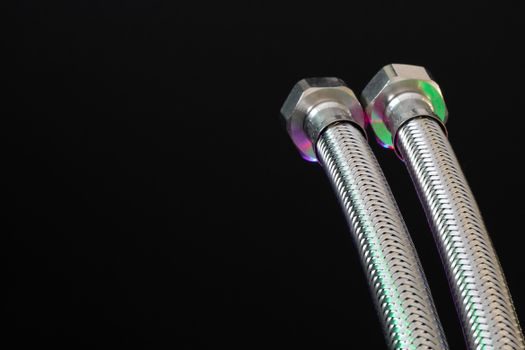
For chemical tankers, pharmaceutical, and coastal architecture: specify 316L (EN 1.4404) cold-rolled coil with 2B or BA finish, demand EN 10204 3.1 mill certification, and budget for the Mo-driven surcharge premium on top of the nickel index [S1][S2][S6]. For kitchenware, cutlery, and commercial foodservice: 304/304J1 2B cold-rolled coil from a flatware-qualified supply base remains the cost-optimized default [S3][S5].
For indoor architectural paneling, elevator cabs, and decorative trim: 304 mirror 8K or hairline finish in 0.3–0.5 mm gauges sourced from Chinese export platforms is the standard 2026 specification, with 430 ferritic offered as a lower-Ni alternative where magnetism is acceptable [S4][S6]. For general industrial fabrication and process plant: 304L/316L with controlled-carbon certification to avoid HAZ sensitization, sourced through the local service-center network for slitting and cut-to-length [S1]. For applications where magnetic response, lower thermal expansion, or transformer/lamination behavior matters, see the silicon steel and carbon steel reference pages for adjacent material families.
Track the August 2026 European alloy surcharge update on 304L/316L/430 and the August China export volume print (following five consecutive monthly gains through June 2026) as the two most actionable Q3 2026 signals for spot and contract coil buyers [S1].