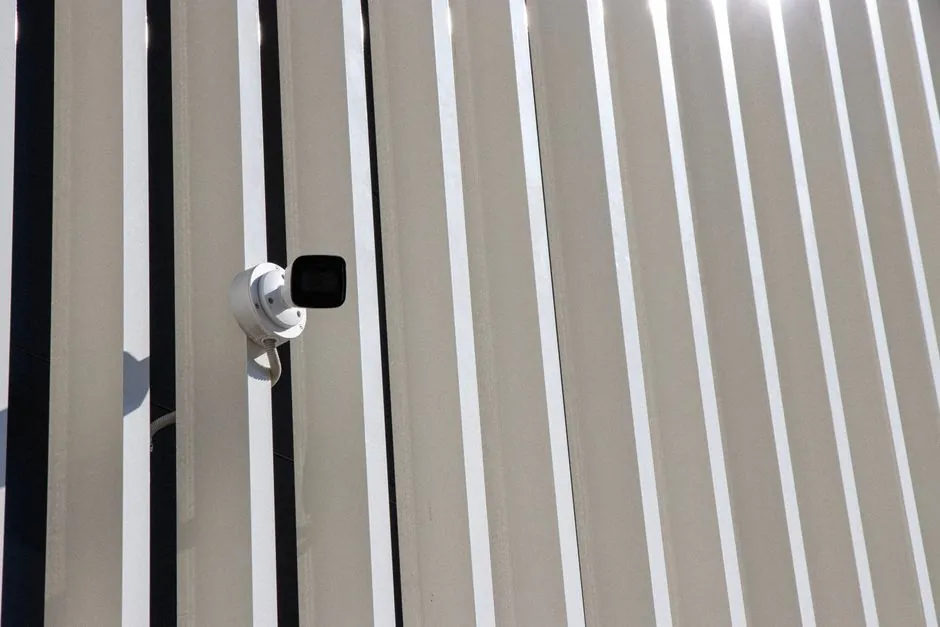
For 2026 jobsite procurement, a usable construction surveillance kit resolves around five engineering decisions: DORI pixel density at the perimeter, IP66 or IP67 housing, PTZ versus fixed bullet, 1080p versus 4K sensor resolution, and power plus backhaul (110 V, solar, or 4G LTE) [S1][S2][S4][S8].
Annual theft losses on U.S. construction sites are estimated at $300 million to $1 billion, with only about 25% of stolen materials ever recovered, which is why spec writers now treat the camera as a loss-control instrument rather than a passive recorder [S4]. Builder's Risk Insurance carriers also give premium discounts when deployed video monitoring is documented, adding a financial line to the spec argument [S2].
DORI pixel density and resolution floor for evidence-grade footage
DORI (Detect, Observe, Recognize, Identify) is the industry standard that maps pixel-per-metre density to the level of detail a reviewer can extract from a recorded frame, and it is the single most abused number on a security datasheet [S2]. For a construction laydown yard, the practical floor is 1080p HD streaming and recording, which is what WCCTV ships on its pole and solar-trailer units as a baseline [S5]. When the spec calls for license-plate capture at a gate or for facial identification at a turnstile, integrators step up to 4K sensors so the pixel density at the target distance clears the Identify band of the DORI curve [S8].
Higher megapixel count does not by itself deliver evidence-grade footage; the lens focal length, sensor size, and compression bitrate all interact, which is why a 4K camera with a wide 2.8 mm lens can still fail at a 30 m gate line. The conservative rule used on active sites is to calculate pixel density against the longest shot distance, then verify the Identify pixel-per-metre threshold on a bench test before the unit is mounted.
Form factor comparison: fixed bullet, PTZ, solar trailer, and time-lapse
Fixed construction site cameras dominate laydown-yard and entry-gate duty because their narrow field of view concentrates pixels on the zone, which is exactly what DORI rewards for fixed monitoring tasks [S9]. PTZ (pan-tilt-zoom) cameras are the perimeter tool, capturing four distinct preset views and giving the operator robotic scan control across a site that may span several hectares [S2]. Mobile and solar jobsite cameras on trailers solve the no-power phase at the start of a project, and they can be relocated as the work front moves [S9].
Time-lapse and progress cameras are a separate category: they are not used for security deterrence but for owner reporting, schedule tracking, and marketing archive, with custom time-lapse exports and one-click sharing that have become standard deliverable features on managed-service platforms [S2][S4]. A typical large-project spec therefore mixes one PTZ on the perimeter, three to six fixed bullets across laydown zones, one solar trailer for the early mobilization phase, and a dedicated time-lapse unit aimed at the primary elevation.
IP rating, vandal rating, and outdoor housing for jobsite duty
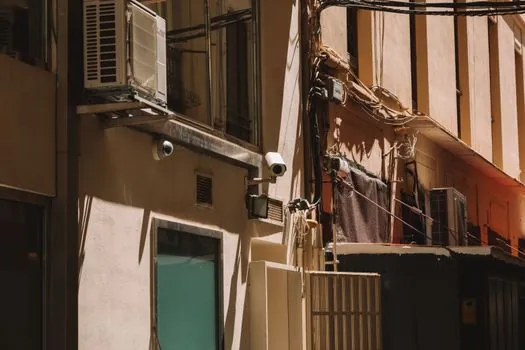
Construction cameras live outdoors through rain, dust, concrete dust, and impact from tools and debris, which is why IP66 or IP67 ingress protection is the de facto housing floor on any site-rated unit [S1][S8]. Vandal-proof or IK10-rated housings are standard on perimeter and trailer-mounted cameras because the housing has to survive thrown objects, not just weather, and this is one of the differentiators between consumer-grade and construction-rated product lines [S1].
Operating temperature ranges of −30 °C to 60 °C are common on construction-rated housings, and stainless or powder-coated mounting hardware is needed for coastal or chemical-adjacent sites where standard zinc-plated brackets fail within a single season. The 110 V hard-line option suits sites with temporary distribution boards, while solar-plus-battery trailers are specified for the early site-clearance phase before any grid power is on site [S5].
Low-light, IR, and active deterrence hardware
Infrared illumination is the default night-vision technology on fixed jobsite cameras, and it pairs naturally with the fixed form factor because IR coverage drops off sharply past 30 m on most IR units [S2]. Active deterrence layers, including strobe lights, sirens, and talk-down audio from a remote operator, are now standard on managed-service trailers because audible warning has a measurable effect on intruder dwell time [S2][S4].
One Indiana project manager quoted in industry coverage reports catching roughly 80% of theft attempts at sites equipped with cameras and active monitoring, against an annual loss band of $10,000 to $15,000 per site, and he estimates peer builders who do not deploy cameras lose $75,000 to $100,000 a year [S4]. For more on how surveillance and security hardware layers onto a project risk register, the linked reference walks through the camera-plus-alarm-plus-monitoring integration logic.
Power, connectivity, and deployment speed
Construction sites are temporary, so cabling permanent Ethernet or fiber for video backhaul is rarely economic, which is why integrated cellular (4G LTE) modems inside the camera or trailer are now standard rather than optional [S5]. The same constraint drives the plug-and-play mobile surveillance unit, which is advertised as installable and fully operational in minutes on a pole or a trailer, with relocation as the work front advances [S5].
Solar-plus-battery trailers are the no-power answer during site clearance and earthworks, and they can also be redeployed to remote pipeline or transmission-line inspections where grid power is years away [S1][S5]. The 110 V hard-line option is preferred once temporary distribution is live because it removes weather-dependent runtime limits and keeps the camera on a UPS or generator-backed circuit for outage tolerance.
AI analytics, integration, and platform openness
Smart AI analytics, including intrusion detection, line crossing, and vehicle classification, are now baseline on construction-rated product lines, with vendors emphasizing an open platform for third-party VMS and access-control integration [S3]. Pelco's construction vertical page markets this open-platform AI analytics stack as a primary differentiator against closed-ecosystem competitors [S3].
For sites that already run a surveillance camera network for perimeter or office use, the open-platform claim is the deciding spec line, because a closed ONVIF profile will not interop with the existing NVR or VMS. The deeper reference on industrial camera selection walks through the IP, PoE, and ONVIF profile matrix that often gates inter-vendor compatibility.
Selection criteria and the minimum spec table
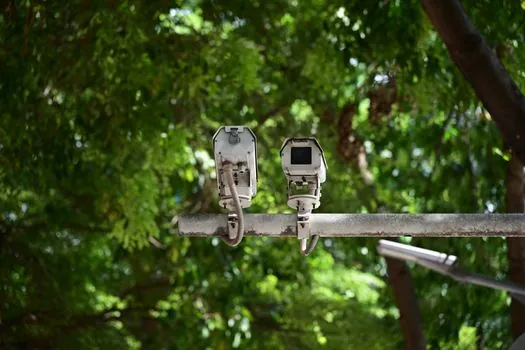
The minimum construction-rated camera spec, distilled across the cited sources, is: IP66/IP67 outdoor housing, IK10 vandal rating where the unit is reachable, 1080p HD as the absolute floor with 4K justified by Identify-band DORI, infrared night vision to at least 30 m, and a power-plus-backhaul plan covering both the powered and no-power phases of the project [S1][S5][S8][S9].
The practical buy decision compares the four form factors on five criteria. Fixed bullet cameras win on per-unit cost, DORI pixel density at a given range, and tamper resistance, but lose on coverage area per device. PTZ cameras win on coverage area and on operator-driven pursuit, but lose on per-unit cost and on continuous full-scene recording. Solar trailer units win on deployment speed and on no-power-phase suitability, but lose on fixed-installation aesthetics and on theft of the trailer itself. Time-lapse cameras win on schedule documentation and owner reporting, but they are not a security device and should never be the only camera on a high-theft site.
Spec gates that fail the most bids
Three spec errors dominate construction-camera bid rejections. The first is quoting megapixel count without the lens and target-distance DORI calculation, which lets a 4K wide-angle camera fail at the gate. The second is specifying IP65 or no IP rating at all, which voids the warranty on dust ingress within the first concrete-pour season. The third is omitting the cellular or solar backhaul, which forces the installer back to trenching temporary fiber, an option that has been uneconomic on temporary sites for the better part of a decade [S5][S8].
For projects that also need signage, confined-space labelling, or hazard marking on the same site, the related guide on confined space warning sign selection covers the OSHA 1910.146 and ANSI Z535 spec gates that often run in parallel with the camera deployment. A second useful pairing is the warehouse warning sign selection reference, which lines up with the laydown-yard zones that the fixed bullet cameras are watching.
The trackable signal for 2026 procurement is the move from 1080p to 4K Identify-band capture at vehicle gates, paired with LTE-only backhaul on solar trailers as the default no-power solution, and AI analytics delivered through open ONVIF profiles rather than vendor-locked VMS stacks [S3][S5][S8].