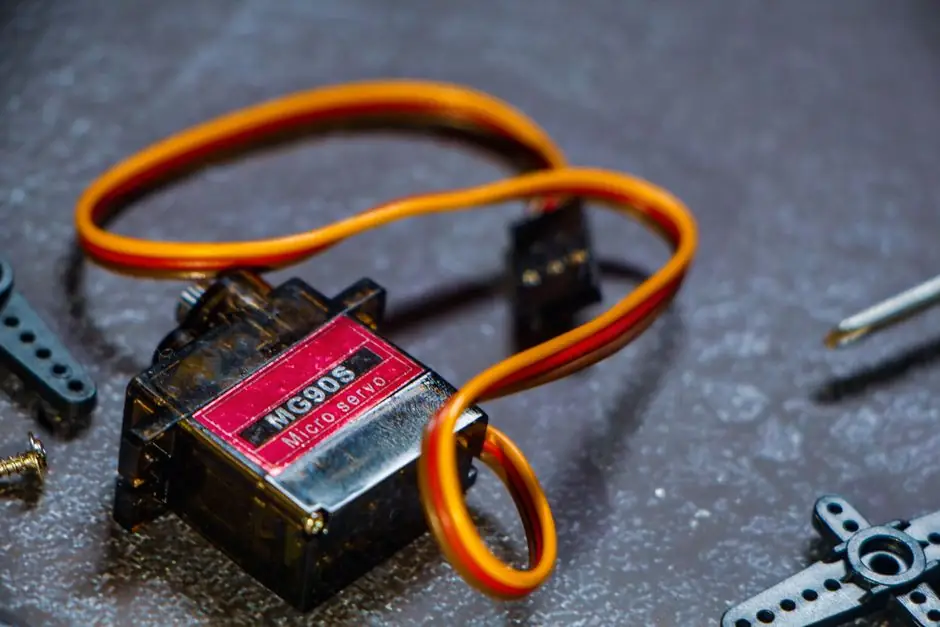
Control cables commonly use 300/500 V or 450/750 V voltage classes and multi-core constructions to transmit commands, sensor signals, interlocks, and equipment status [S2][S3].
Control cables are selected by voltage, normative requirements, environmental conditions, mechanical stress, and structural design, with control cables commonly available from 0.25 mm² up to 6 mm².
What Defines a Control Cable?
A control cable carries low-current information or control signals rather than the bulk energy handled by a power cable. Typical connections run between programmable logic controllers, valves, actuators, sensors, interlocks, and monitoring equipment [S2][S4].
Control cables usually contain several insulated conductors. Copper conductors may be solid or stranded, while PVC, XLPE, and LSZH are listed insulation materials; optional aluminum foil or copper braid shielding reduces electromagnetic interference [S4].
The assembly can include conductors, core insulation, fillers, an optional shielding layer, an inner sheath, and an outer sheath. The outer sheath provides resistance to abrasion, moisture, oils, sunlight, and other installation conditions, with material selection governed by the environment [S4].
Voltage Classes and Conductor Sizes
Control cables commonly have a voltage class of 300/500 V.
These values must not be confused with a power cable's operating voltage.
Control cables are already available with a cross-section of 0.25 mm² and are in most cases offered up to a cross-section of 6 mm². The comparison with motor cables is clear: control cables commonly extend to 6 mm², while motor cables start at 0.75 mm² and may reach 50 mm² or more in larger systems [S2][S3].
Core Construction and Stranding

Solid and stranded conductors are the two fundamental conductor constructions. Solid copper suits fixed installation, while stranded copper provides greater flexibility for routes with repeated or minor bending [S4].
Core count follows circuit complexity.
Shielded, Unshielded, and Armored Constructions
Unshielded twisted-pair cable, designated UTP, is widely used where electromagnetic interference is manageable. STP uses shielding around twisted pairs, while FTP uses foil shielding; both shielded constructions reduce interference coupling into sensitive signal paths [S6].
Control-cable families also include unshielded types such as YY and KV, shielded types such as CY and KVVP, armored versions for added mechanical protection, and flexible constructions for dynamic applications [S8]. Shielding solves an electrical problem, while armor addresses physical protection, so one option does not automatically satisfy the other requirement.
A comparison by four criteria makes the selection clearer. UTP has the fewest shielding components and suits quieter routes; STP adds braided or equivalent pair shielding for interference control; FTP adds foil for high-frequency noise reduction; armored cable adds an external mechanical barrier but does not eliminate the need for an electrically suitable shield [S6][S8].
Flexible Cables for Moving Equipment
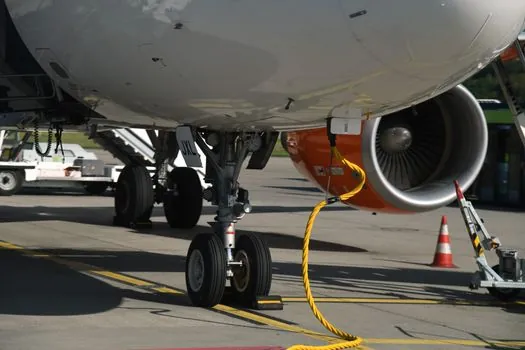
Flexible control cable serves applications with dynamic movement, including machine axes, robot systems, and cable carriers. Its Class 5 or Class 6 stranding increases bendability, while the drag chain cable construction must be matched to the movement cycle [S2].
Continuous flexing imposes requirements beyond static installation. Strand fatigue, conductor fatigue, jacket abrasion, and torsional loading can damage a cable that would perform normally in a fixed conduit, so bend radius and service-cycle limits need confirmation from the product data [S2][S7].
For moving systems, the installation method also affects signal integrity. A shielded flexible cable can reduce interference in a motor enclosure, but a standard control cable should not be assumed suitable for repeated drag-chain operation or for high-frequency feedback networks.
Selection Criteria by Installation Environment
A control cable specification should address five decisions in sequence: voltage class, applicable normative requirements, environmental conditions, mechanical stress, and structural design. That order prevents a familiar core size from overriding an unsuitable sheath or bending arrangement [S7].
For dry indoor panels, conventional PVC can serve many applications; for exposed or confined installations, LSZH can be specified for low-smoke, zero-halogen behavior, while XLPE provides another established insulation option. Outer-sheath material selection is governed by the environment in which the cable will be installed.
Armored construction is justified where cables face mechanical damage, while flexible construction is justified where movement is unavoidable. Shielding is justified where the connected device, cable route, and ambient electromagnetic field make interference credible [S4][S8].
Control Cable or Power Cable?
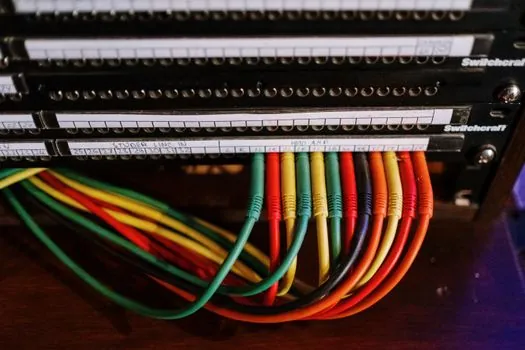
Control cables carry commands, measurements, and interlocks; power cables supply motors, transformers, panels, lighting, and other loads. A 300/500 V control cable is therefore not a substitute for a 600/1000 V motor cable, particularly where a frequency converter can produce voltage peaks [S3].
The practical distinction extends beyond insulation thickness. Motor cables normally provide three phases and protective earth, while control cables provide separate conductors for multiple signals. Replacing one with the other can impair command integrity, grounding continuity, or protection design [S3].
Where control circuits cross electric-motor or high-load routes, control cable selection should include shielding, conductor size, and separation from sources of interference. Termination hardware and environmental sealing must be specified with the cable rather than treated as an afterthought.
Installation and Sourcing Checks
The cable type, core count, cross-section, conductor class, shielding, sheath, and voltage rating should be cross-checked against the schematic and terminal schedule. A generic multi-core designation does not establish conductor quantity, usable cross-section, shield coverage, or environmental suitability [S4][S7].
Procurement data should also request manufacturer compliance documentation for every claimed standard and should not infer a rating from the cable family name. A control cable usually has a voltage class of 300/500 V, but its construction must still satisfy the requirements of the intended installation.
Trackable procurement signals are the approved conductor class, shield construction, outer-sheath material, temperature rating, bending radius, and applicable certification. These six fields expose substitution risk faster than a cable code alone, especially where routes contain moving machinery or high electromagnetic noise.