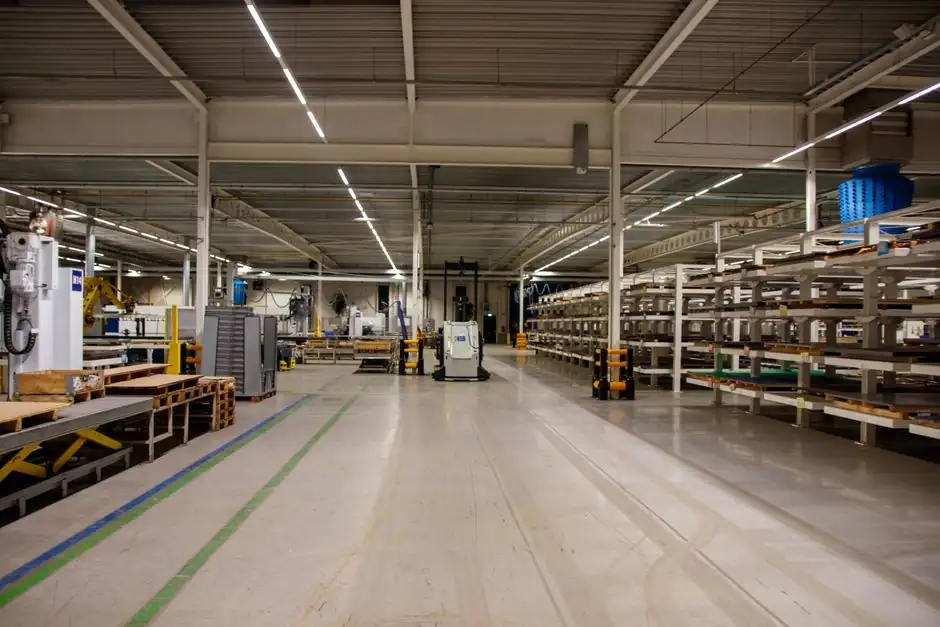
Published sorter estimates range from $2,500 per divert for a ProSort 1400 shoe sorter to $4,500–$6,600 for ProSort MRT transfers [S5].
The figures cover conveyor equipment, not the full installed line, and they vary with sorter type, load capacity, divert count, control package and site integration [S3][S5].
What Cost per Divert Lane Actually Includes
A conveyor sorting line combines induction, merges, identification or tracking, divert mechanisms, destination conveyors and controls [S3]. The published $2,500 and $4,500–$6,600 figures are equipment-level “cost per divert” estimates, so they do not automatically include foundations, structural work, electrical service, controls integration, safety guarding or commissioning.
Hytrol lists base estimated equipment costs of $1,700 for the ProSort 1400, $540 for the ProSort MRT and $410 for the ProSort SC [S5]. The difference between base cost and cost per divert demonstrates why a lane-by-lane quotation is more useful than a single conveyor price: the sorter, transfer method and number of destinations materially change the unit cost.
For a plant budget, define “divert lane” precisely. It may mean each discharge destination, each diversion action, or each take-away conveyor. Fixed equipment appears in every alternate route, while variable transfer equipment may appear only where product is redirected. A controlled comparison should therefore show sorter base price, installed mechanical cost, controls, number of lanes and annual product volume separately.
Published Cost per Divert Comparison
Hytrol’s comparison gives $2,500 per divert for the ProSort 1400 shoe sorter, $4,500 for 30 diverts and $6,600 for 90 diverts on the ProSort MRT, and $5,900 for the ProSort SC [S5]. The MRT estimate therefore increases as the installed divert count rises, from $4,500 per divert at 30 diverts to $6,600 per divert at 90 diverts.
The comparison also shows that cost per divert does not indicate rate by itself. The ProSort 1400 is rated at 350 cycles per minute and 700 feet per minute, while the ProSort MRT is rated at 200 cycles per minute for 30 diverts and 120 cycles per minute for 90 diverts [S5]. A cheap per-divert figure may not represent the lowest cost per correctly sorted item.
One practical calculation is equipment cost divided by annual sorted units. Another is total operating cost divided by annual sorted units. The second calculation must include energy, controls, maintenance and planned downtime, none of which can be inferred from the published equipment estimates [S2][S5].
Sorter Options by Throughput and Load
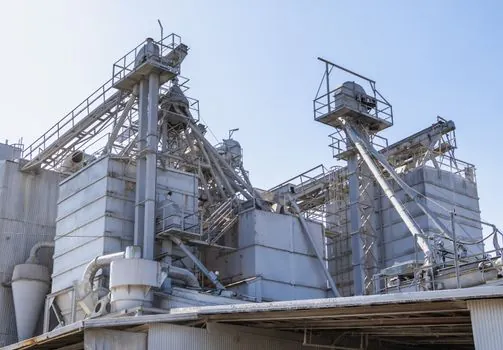
The ProSort 1400 handles a maximum load of 100 pounds, the ProSort MRT and ProSort SC each handle 75 pounds, and the ProSort SS handles 8 pounds [S5]. Its shoe sorter uses anodized aluminum slats or steel tubing on a formed-steel frame, with widths of 15, 21, 33 and 39 inches overall [S5].
The ProSort MRT uses narrow belts and a formed-steel frame, with available overall widths of 18, 21, 24, 27 and 30 inches [S5]. The ProSort SC uses a wide belt, formed-steel frame and overall widths of 18, 24, 30 and 36 inches [S5]. The ProSort SS uses an aluminum frame and is intended for smaller loads [S5].
Package sortation alternatives include omni-directional transfer units, activated roller belt, Z-sort and pop-up systems [S2]. Published performance examples include 60–80 packages per minute for omni-directional transfer units, up to 45 packages per minute for Z-sort and up to 50 parcels per minute for pop-up sorters [S2]. Activated roller belt systems can handle boxes, totes, poly bags and mailers down to a stated 4 by 4 inches [S2].
Low-Speed Alternatives for Small Flows
A right-angle pusher can achieve 45 cycles per minute, while an Extenda pusher is described as handling 50 cartons per minute [S4]. Pushers divert product through 90 degrees onto another conveyor, spur or chute, and overhead versions can also reposition products onto a parallel line [S4].
Deflector arms provide another low-speed option, using a swing or powered arm to redirect a carton or tote at a different angle [S4]. Pushers generally operate faster than deflector arms, but their impact can damage fragile loads, so product strength and presentation must be tested before selection [S4]. Pop-up timing-belt transfers provide a moderate-speed option for parallel-line transfers and zone picking [S4].
These low-speed mechanisms suit projects where the required rate does not justify a high-rate sorter. They do not suit every load: size, shape, weight, balance, dimensions, line speed, destination count and sort frequency determine which mechanisms are feasible [S4]. Static guides and plows or dynamic gates and paddles can also be added to a standard conveyor for simpler diversion [S1].
Cost Drivers for the Complete Sorting Line
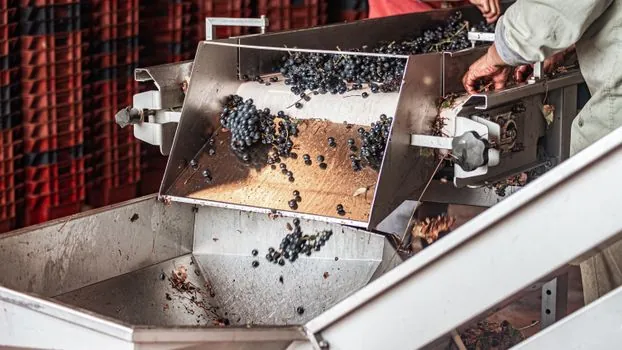
Product handling determines the mechanical concept before price comparison. Parts sorting can be based on size, shape, material, color, poor part quality or metal detection, while package sorting directs boxes and totes to specific destinations [S2]. A medical-device application may involve small individual components, whereas e-commerce parcel sorting requires destination-based routing at end of line [S2].
The major price drivers are therefore conveyor length and width, sorter technology, transfer count, maximum load, required cycles per minute, product-contact surfaces, controls, documentation and installation complexity. Material choices affect both capital and maintenance exposure: the ProSort SS has an aluminum frame, while three compared ProSort models use formed steel [S5]. Contact surfaces range from anodized aluminum slats or steel tubing to narrow or wide belts [S5].
Turnkey scope can add design, permitting support, supplier management, procurement, installation and structural review. REB’s design process collects SKU profiles, space restrictions and picking requirements, while its preliminary layouts may require engineering review and utility or structural scanning [S3]. Those site-specific tasks can exceed the quoted sorter price in a constrained brownfield installation.
Installation, Maintenance and Total Cost of Ownership
Purchase price is only one element of sorting-line economics. Installation can include supports, electrical connections, controls, safety devices, destination conveyors and integration with upstream identification or tracking [S1][S3]. Commissioning also depends on product presentation and destination accuracy, not only nominal sorter speed [S2].
Maintenance exposure follows the mechanism and load. Shoes and wide conveying surfaces encounter continuous product contact, narrow-belt transfers add belt mechanism wear, and powered pucks or arms introduce moving drive components [S5]. Energy consumption varies with conveyor length, line speed, drive efficiency and the number of active transfer mechanisms, so no defensible energy value can be assigned without a vendor quotation and duty profile.
Total-cost evaluation should divide annual installation, energy, maintenance, controls support, spares and downtime by annual correctly sorted units. The public comparison provides a useful screening method: compare base equipment cost, published cost per divert, maximum load and rated rate together, then request installed pricing for the exact lane count [S5].
How to Build a Comparable Lane Budget
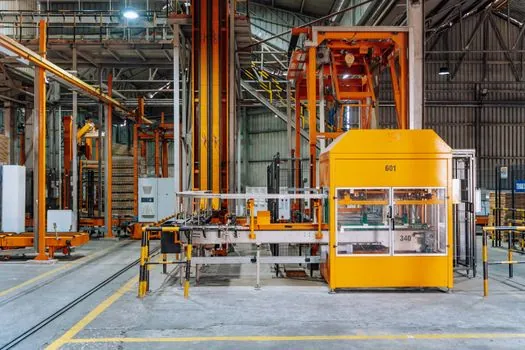
Request a quotation using the same commercial basis for every option: number of destination lanes, product dimensions, maximum weight, required rate, conveyor length and width, control scope and installation exclusions. Dorner notes that sorting can be based on weight, shape and line capacity, while merge systems can combine two, three, four or more infeed lines [S1].
For high-throughput operations with numerous destinations, induction, merges and sortation diverts should be treated as one engineered system [S3]. The configuration must track each item from induction to its assigned destination, so adding lanes can affect sensing, controls, transfer sequencing and floor space rather than simply repeating a standard conveyor [S3].
The closing recommendation is practical: use $2,500 per divert for the ProSort 1400 and $4,500–$6,600 for the ProSort MRT only as preliminary equipment benchmarks [S5]. For a conveyor sorting line, validate the shortlisted architecture against rated rate, load width, controls, structure and annual volume before approving a capital budget.
Track three procurement signals on the quote: the installed price per operating lane, the guaranteed sorting rate at the stated maximum load, and the annual cost per correctly routed unit after controls, maintenance and energy are added. If a supplier cannot provide those three figures on one duty basis, the alternatives are not yet comparable.