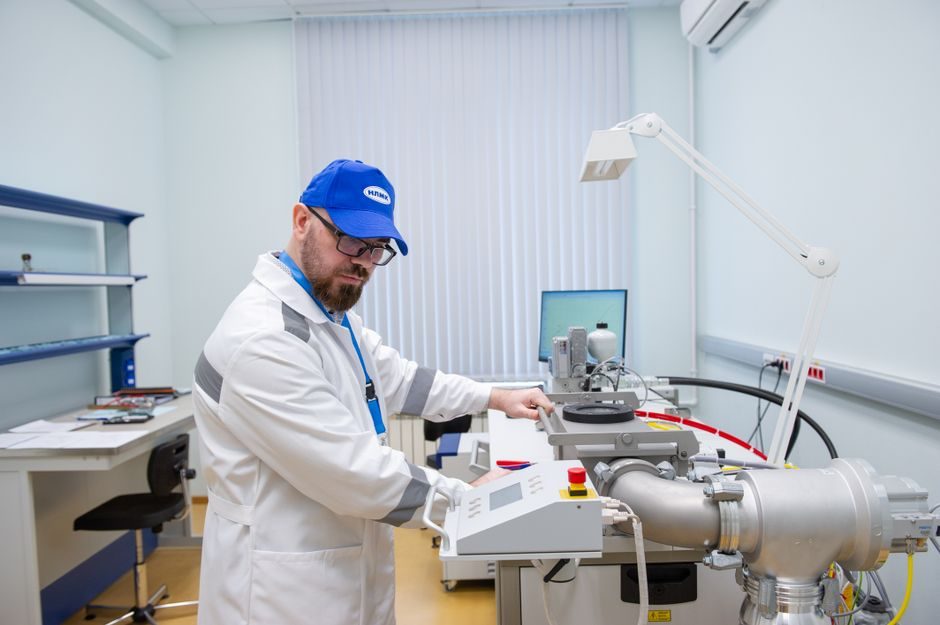
The 2024 worldwide Coriolis flowmeter market is large enough to attract a dedicated supplier-share study from Flow Research, and continues to rank among the fastest-growing flow technologies [S5].
Field-ready units now cover DN15 (½") through DN250 (10") line sizes, with documented product examples including the KROHNE OPTIMASS 2400 for liquids [S1] and the Endress+Hauser F 300 spanning liquids, gas and steam at DN250-10" [S2]. DirectIndustry's aggregated Coriolis category lists DN50 as the most common nominal size (18 entries) with DN80 and DN25 tied at 17, illustrating the heavy mid-range concentration of available models [S3].
Definition, scope and governing standards
ASME MFC-11-2006 "Measurement of Fluid Flow by Means of Coriolis Mass Flowmeters" is the American National Standard that defines the metrology, calibration and installation practice for Coriolis mass flowmeters [S4]. BS ISO 10790:2015 "Measurement of fluid flow in closed conduits — Guidance to the selection, installation and use of Coriolis flowmeters (mass flow, density and volume flow measurements)" is the parallel international guidance document covering selection, installation and use [S6].
These two documents together set the engineering baseline: any Coriolis flowmeter bought in 2026 should be specified against MFC-11 for the metrology claim and against ISO 10790 for the surrounding installation decisions. Compared with electromagnetic flowmeter or ultrasonic flowmeter entries, Coriolis is the only mainstream technology that measures mass flow directly and reports process density on the same 4-20 mA / HART channel.
Where Coriolis wins and where it does not
Coriolis is the right answer when the process needs three things at once: mass accuracy in the ±0.1% bracket, real-time inline density for product quality (Brix, API gravity, %solids), and the ability to meter liquids, slurries and dense-phase gas on a single calibrated body. DirectIndustry's Coriolis catalog confirms that "for liquids" dominates the technology filters with 82 manufacturer entries versus only 3 "for solids" tags, so liquid and gas applications remain the engineering core [S3].
Coriolis is the wrong answer when the line carries low-pressure steam at high velocity, when the budget caps out at a vortex flowmeter or a turbine flowmeter class installation, or when the pipe is so large (above the documented DN250-10" F 300 envelope [S2]) that no vendor has a standard tube. It is also a poor fit for clean, conductive water where a magmeter at a fraction of the cost delivers adequate accuracy.
Selection criteria: line size, pressure, temperature, wetted material
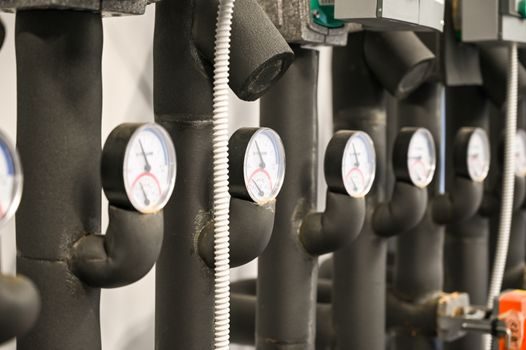
DN15-DN25 bodies fit skid-mount chemical and pharmaceutical feeds; DN50-DN100 is the most populated range in the manufacturer index (18 and 17 entries respectively) and is where most custody-transfer and batching skids land [S3]. DN150-DN250 sizes such as the E+H F 300 [S2] target refinery charge lines, LNG loading and large chemical headers.
Wetted material has to be specified to the process: 316L stainless is the default for food, pharma and water; Hastelloy, duplex or tantalum-lined tubes are required for hot, corrosive or acid service. End connections in the index are dominated by flange (17 entries) versus threaded (5), so the buyer should plan ANSI/EN flanges unless the skid is small-bore screwed. Process temperature and pressure envelopes must be cross-checked against the OEM curve; a -50 °C cryogenic LNG line and a 350 °C hot oil line use entirely different sensor constructions inside the same nominal DN50 body.
Calibration, accuracy and density performance
For custody transfer, the calibration certificate should be traceable to a national standard and should state zero stability, repeatability and the density accuracy separately from the mass flow accuracy. BS ISO 10790:2015 is the document buyers should reference when writing the calibration, density and installation clauses into the datasheet [S6], while ASME MFC-11-2006 governs the underlying metrology vocabulary and test methods [S4].
Inline density measurement typically reaches the 0.001-0.005 g/cm³ bracket on a well-tuned Coriolis tube; that resolution is what justifies the price premium over a vortex flowmeter in Brix or API applications, because the same instrument delivers both mass flow and concentration in one loop. Where density is not needed at all — saturated steam line metering, for example — a turbine flowmeter or vortex body gives equivalent mass accuracy at much lower installed cost.
Installation, output, and integration with the control system
ISO 10790:2015 places strong emphasis on straight-pipe runs, tube orientation, air entrainment and the effect of external vibration on zero stability [S6]. Mount the sensor on a rigid support, avoid tapping the line directly into the tube, and route the converter away from large VFD cabinets.
Output and integration are usually 4-20 mA HART for the primary variable, with a second channel for density and a pulse/frequency output for totalization or batch control. Where the plant runs Foundation Fieldbus or PROFIBUS PA, the I.S. version of the transmitter handles the digital segment, but the I.S. barrier and segment design must be specified against IEC 60079-x for the hazardous area and against IEC 61508 / SIL if a safety function rides on the same meter. Foundation Fieldbus and PROFIBUS PA are the digital segments; HART is the FSK protocol riding on a 4-20 mA loop — it is not itself a digital fieldbus and is not a substitute on FF/PA segments.
Failure modes, diagnostics and total cost of ownership
The three recurring failure modes are: (1) gas entrainment or two-phase flow causing erratic zero and density swings, (2) process tube erosion or corrosion in slurries and acid service, and (3) sensor electronics failure from thermal cycling or vibration. Modern Coriolis transmitters carry built-in diagnostics for tube health, drive gain, coating and two-phase detection, which can be mapped into a plant asset-management system. [S1]
Total cost of ownership has to weigh the higher purchase price against eliminated bypass piping (Coriolis is a true inline measurement), reduced maintenance on rotating seals, and the cost of a separate density meter. In a typical Brix or API-gravity line, the Coriolis body replaces two instruments, one analyzer and a sample line, which is where the payback argument lives — not in the unit price. The same density-driven case is what underpins continued supplier investment in the segment [S5].
Supplier landscape and a 2026 decision shortlist
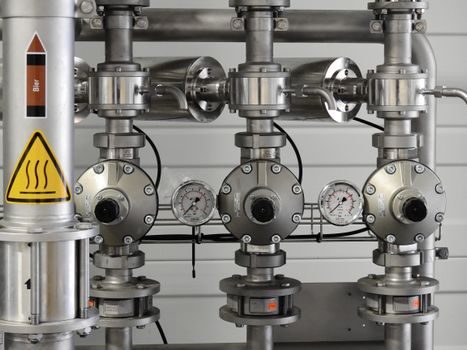
Endress+Hauser and KROHNE are both visible in the 2026 vendor index with documented product entries on DirectIndustry — the E+H F 300 at DN250-10" for liquids, gas and steam [S2], and the KROHNE OPTIMASS 2400 for liquid mass flow [S1]. The wider DirectIndustry index lists additional manufacturers across the same Coriolis category, with DN50-DN100 the most populated sizes [S3]. Add Value Flow Metering Co. is one of the regional suppliers also publishing Coriolis and density products.
For a 2026 shortlist, the decision path is: confirm the metrology clause against ASME MFC-11-2006 [S4], the selection and installation clauses against BS ISO 10790:2015 [S6], the line size against the DN15-DN250 envelopes documented for current products [S1][S2], and the vendor against the Pressure Transmitter Buying Guide 2026: Match Type, Output and Certification to Process logic so the Coriolis output, the temperature transmitter compensation and the control loop are specified as one stack. Trackable signals to watch next: any new MFC-11 or ISO 10790 revision drafts, the next Flow Research Coriolis market share update [S5], and fresh OEM releases extending the high-pressure or cryogenic envelope beyond the current DN250-10" ceiling.