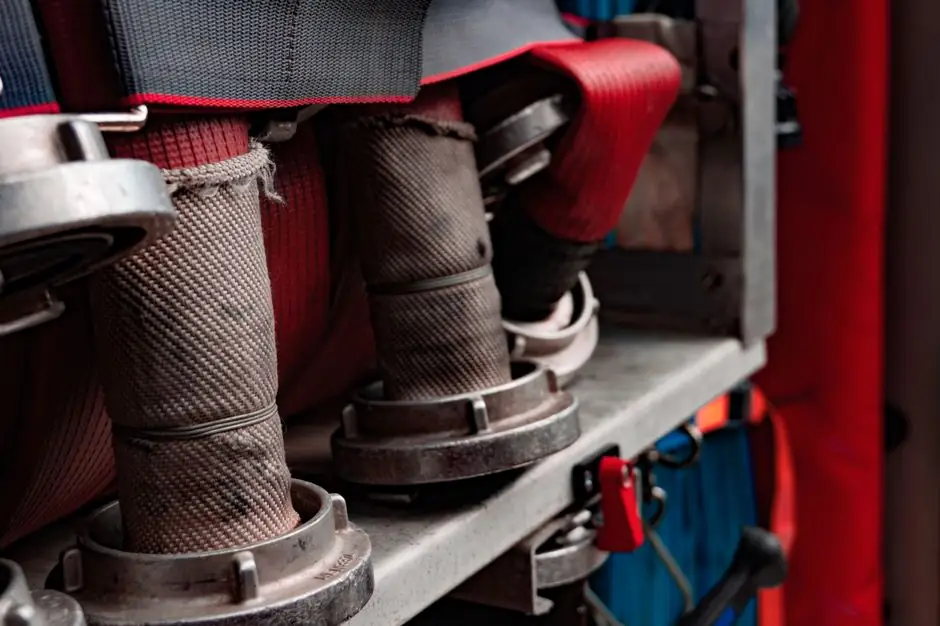
Use 316L stainless steel for corrosive-service fixed gas detector brackets because its alloy content resists chloride pitting and crevice corrosion better than aluminum [S4].
The bracket, fixings, and gas detector enclosure form one corrosion-control system: stainless steel hardware protects attachment points, while detector placement remains governed by gas density, leak location, and ventilation [S1][S5].
What Corrosive-Service Brackets Must Control
Corrosive installations can involve acids, caustic solutions, chlorides, solvents, high humidity, condensation, and elevated temperature [S4]. These agents can attack mounting points before they reach the detector enclosure, causing loss of section, cracked supports, failed seals, and eventual loss of the detector's ingress protection [S4].
316L stainless steel is the preferred baseline because chromium forms a passive oxide layer, while nickel and molybdenum improve resistance to pitting and crevice corrosion in chloride-rich conditions [S4]. Aluminum is widely used for gas detector construction, but it lacks the same corrosion-performance margin in aggressive service, making careful selection of fasteners and mounting hardware essential [S4].
A practical specification should therefore cover the bracket, bolts, screws, washers, and exposed fixing components as one assembly. The Honeywell Sensepoint XCD technical manual lists an "Accessories" section on page 11.
Material Comparison for Mounting Hardware
316L stainless steel provides the strongest case for chloride-bearing, marine, chemical-processing, and general corrosive areas where long service life matters more than minimum initial cost [S4]. Its mechanical strength, rigidity, impact resistance, and broad temperature capability make it suitable for industrial supports, although the research material does not provide a universal temperature rating for every 316L bracket [S4].
Aluminum offers lower weight and lower initial cost, and it remains common in gas detector housings, but chloride salts, acids, bases, condensation, and industrial pollutants can attack it [S4]. A powder-coated aluminum bracket should therefore be treated as a lower-corrosion-resistance option unless its coating system, fastener isolation, and service environment have been reviewed for the specific exposure [S4].
Selection Criteria Beyond the Alloy Grade
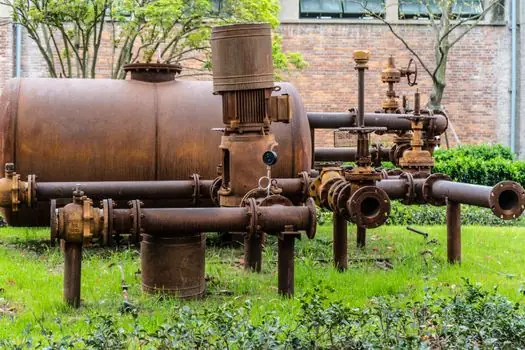
Corrosive service requires the entire mounting detail to be checked, including fastener material, exposed edges, welds, threads, crevices, and the interface between the detector housing and bracket. Corrosion can compromise seals and joints, permitting contaminants to enter and damaging internal wiring, electronics, or sensitive sensor components [S4].
Fasteners should be specified for the same exposure class as the bracket rather than as a separate commodity item. The research explicitly identifies careful material selection for fasteners and mounting hardware as essential in corrosive gas-alarm systems [S4]. For a 316L support, matching 316L fixings avoid creating a less-resistant fastener at the mechanical joint.
Bracket geometry also affects long-term performance. Smooth drainage paths, minimal crevices, rounded edges, and separation between dissimilar metals reduce opportunities for salt, condensate, and aggressive chemicals to remain in contact with the support. Product-level brackets must be checked for compatibility with the detector model and its approved installation drawing, as shown by the model-specific SENKO SI-100C bracket, SKU SI100AS07 [S3].
Detector Types and Intended Installations
The bracket is suitable for a fixed gas detector where the detector housing, sensing technology, certification, and location match the area classification and gas hazard. The Honeywell Sensepoint XCD technical manual lists installation, mounting and location, and mounting the transmitter sections.
Universal fixed gas detectors are marketed for continuous monitoring of corrosive and toxic gases, and a remote sensor mount can be useful where the detector itself is separated from the process area [S6][S8]. Where sampling lines or remote sensors are used, material compatibility extends beyond the visible wall bracket to tubing, seals, glands, and sensor interfaces.
This selection is not for portable instruments or temporary handheld monitors because neither relies on a permanent fixed bracket. It is also not a substitute for hazardous-area protection design.
Placement Still Governs Detection Performance
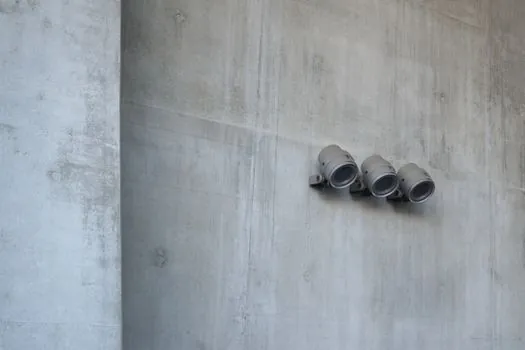
Corrosion-resistant hardware cannot correct an unsuitable mounting height. Hydrogen and methane should be installed on or within inches of the ceiling, while propane and other heavier combustible vapors belong about 6 inches above the floor; toxic gases are generally placed in the breathing zone 4 to 6 feet above the floor [S5].
For larger open areas, point detectors are commonly spaced about 30 to 40 feet apart, subject to the geometry of the release, airflow, and detector coverage [S5]. A bracket near a doorway, directly in a ventilation jet, or far from the likely leak can provide poor detection even when its material is fully suitable [S5][S7].
The bracket must also preserve access for installation, calibration, inspection, and replacement. The Sensepoint XCD manual separates mounting, sensor installation, electrical connection, commissioning, calibration, and maintenance into distinct procedures, so field serviceability is part of the mechanical design [S1].
Corrosion Failures and Inspection Controls
Early warning signs include rust staining, salt deposits, discoloration of fasteners, swelling or blistering of coatings, blocked drainage, and corrosion at welds or threads. Hidden failure can begin at the bracket-to-wall interface, under washdown deposits, or in the narrow gap between a housing and its mounting plate [S4].
Inspection should verify that fixings remain secure, bracket surfaces remain clean, drainage paths remain open, and seals show no damage. It should also confirm that corrosion has not affected the detector's enclosure or cable entry. Corrosion-related housing damage can compromise sensor protection, ingress resistance, and electrical operation, producing degraded readings or complete failure [S4].
Large open-area spacing figures of 30 to 40 feet do not replace a site-specific release and airflow assessment [S5]. Likewise, choosing 316L does not remove the need for periodic inspection, because chloride deposits and crevice conditions can still create local corrosion [S4].
Standards, Sourcing, and Procurement Record
For a fixed installation, the bracket and detector must fit the manufacturer's mechanical drawings and instructions. The Sensepoint XCD technical manual, Issue 16, provides mounting and location guidance, a mounting-bracket drawing, and a mounting-bolt assembly drawing, with revision history recording Issue 16 in July 2025 [S1].
For ATEX and IECEx installations, the detector's certification documentation and special conditions for safe use govern the assembly, not an informal material substitution [S1]. The manual also includes ATEX/IECEx sections and nameplate drawings, but the available material does not establish that a 316L bracket alone determines hazardous-area compliance [S1].
Procurement records should identify the exact alloy, fastener grade, dimensions, coating condition if any, compatible detector model, installation drawing revision, and inspection interval. MSA Safety has a mounting-hardware category within its fixed gas and flame detection products, while SENKO offers a bracket for installation of its SI-100C intrinsically safe fixed gas detector.
The trackable procurement check is simple: require documentary evidence of 316L material for the bracket and exposed fixings, match the support to the detector's approved installation drawing, and add a corrosion inspection item covering threads, crevices, seals, and wall interfaces. For zone classification and protection-concept decisions, the broader comparison in Ex d vs Ex ia gas detector heads provides a separate engineering check.