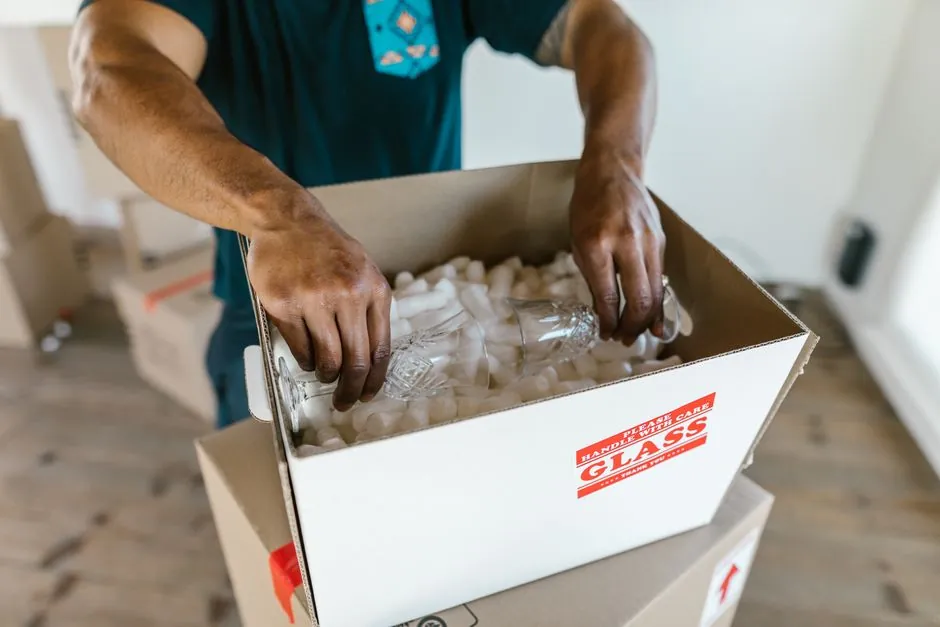
Global corrugated board packaging is projected to reach $205.97 billion in 2026, while the broader plastic packaging market is valued at $484.52 billion [S4][S5].
Demand spans paperboard, reusable plastic crates, rigid plastic packs, and glass containers, but the materials serve different transport, storage, and protection requirements [S1][S3][S4].
2026 Market Scale and Demand Signals
Corrugated board packaging was valued at $198.2 billion in 2025 and is projected to grow to $205.97 billion in 2026, reaching $280.15 billion by 2034 at a 3.92% compound annual growth rate [S5]. The plastic packaging market reached $484.52 billion in 2026 and is projected at $687.56 billion by 2035, with a 3.98% compound annual growth rate [S4].
Plastic corrugated packaging is a narrower segment, estimated at $3.20 billion in 2025 and forecast to reach $4.77 billion by 2033 at a 5.10% compound annual growth rate [S3].
The figures should not be combined as one market total because their scopes differ. The relevant conclusion is directional: corrugated demand remains large, while plastic corrugated packaging is forecast to grow faster than the broader plastic-packaging and corrugated-board markets [S3][S4][S5].
Material Selection by Packaging Function
Corrugated board packaging is intended for fragile, large, bulky, or high-value products during storage and transport, with layered board providing protection beyond ordinary cardboard [S5]. Plastic packaging serves similar protective functions, including damage control, contamination reduction, shelf-life support, and handling efficiency [S4]. Glass remains a distinct container format rather than a substitute for either corrugated structure.
Corrugated board comes in single-wall, double-wall, and triple-wall constructions. Products made of corrugated board are strengthened by layers of corrugated board, making them more durable than ordinary cardboard and providing high levels of protection for fragile, large, bulky, or high-value products during storage and transportation.
The decision is straightforward. Use corrugated board for economical, lightweight secondary protection and distribution boxes; use plastic corrugated structures for reusable, impact-resistant, stackable transport packaging; use glass when the package must provide rigid containment and compatibility with a defined filling and handling system [S3][S5].
Corrugated Plastic Leads on Reuse and Transit Packaging
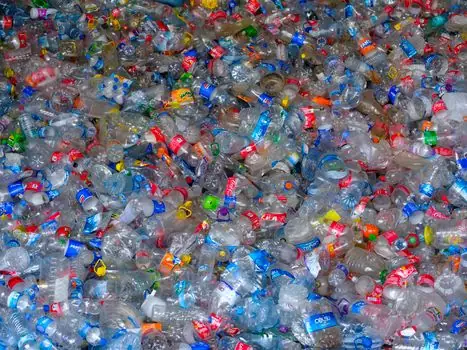
The global plastic corrugated packaging market is forecast to grow from USD 3.20 billion in 2025 to USD 4.77 billion by 2033, at a CAGR of 5.10% during the 2026–2033 forecast period.
Plastic corrugated packaging is therefore strongest where reuse, return cycles, and repeated handling matter. It is less compelling where a disposable shipper provides adequate performance at lower capital cost. Corrugated board, by comparison, benefits from lightweighting, freight savings, and broad use in e-commerce distribution, but the 3.92% forecast growth rate for the 2026–2034 period is below the 5.10% forecast for plastic corrugated packaging [S3][S5].
Glass Demand Requires a Different Capacity Lens
Glass demand must be assessed through container, flat, and specialty production rather than inferred from corrugated market growth. The relevant production signals are furnace operating economics, energy exposure, forming capacity, and customer mix, because these determine available output across glass manufacturing formats. [S3]
Glass capacity in 2026 provides the necessary segmentation for comparing glass supply and demand across container, flat, and specialty applications. That distinction matters because a broad statement about rising packaging demand does not establish whether glass bottle or jar supply can rise at the same rate.
For buyers, corrugated paperboard and plastic corrugated packaging should be evaluated against glass by use case rather than by headline market size. Corrugated board competes in secondary and transport protection, plastic corrugated structures compete in reusable transit systems, and glass competes in rigid primary containment. An accurate 2026 demand plan therefore assigns each material to a specific packaging function rather than treating the three as interchangeable.
2026 Options Compared by Decision Criteria
Corrugated board packaging combines a projected 2026 value of $205.97 billion with lightweight construction below 26 pounds per 1,000 square feet in the cited lightweighting trend [S5]. Its principal advantages are low material cost, broad box formats, and freight efficiency; its main constraint is dependence on paper supply and suitability for moisture-sensitive or heavily reused applications [S5].
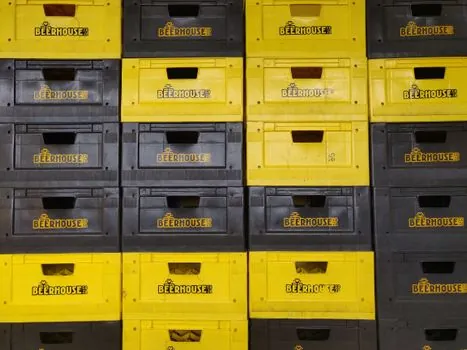
Plastic corrugated packaging combines reusable, impact-resistant, and stackable formats with a 5.10% forecast compound annual growth rate for 2026–2033 [S3]. Its advantages are repeated-use potential, durability, and performance in industrial logistics, while its constraints are higher material cost and recovery requirements that depend on collection and recycling infrastructure [S3].
Glass provides rigid primary containment and established filling-line compatibility, but its sourcing case depends on furnace capacity, energy economics, and segment-specific demand rather than the growth rate of corrugated packaging. The comparison is therefore material-specific: paperboard wins on freight-efficient disposable protection, plastic corrugated wins on reusable transit protection, and glass wins where rigid container formation is required [S3][S5].
Regulation, Affordability, and Supply Constraints
Packaging producers entered 2026 facing a more complex mix of sustainability regulation, consumer affordability pressure, tariffs, extended producer responsibility, and labeling developments [S1]. The 2026 outlook points to concentrated state-level EPR attention in the Northeast and expanding federal labeling discussion, while imported plastic scrap and tariff uncertainty were adding pressure to domestic postconsumer recycled resin markets [S1].
Supply conditions also differ by substrate. Corrugated board follows containerboard capacity and consolidation after a historic 10% capacity pullback, with muted consumer spending limiting the scale of any recovery [S1]. Plastic corrugated demand is exposed to resin availability, recycled-content economics, and reuse-system collection rates [S1][S3]. Glass supply is exposed to furnace availability and energy cost, requiring separate container, flat, and specialty capacity checks.
Regulatory exposure is a material-selection variable, not a compliance footnote. Buyers should document recycled-content obligations, labeling requirements, reuse targets, and end-of-life obligations for the geography and product category. The 2026 evidence does not support claiming that one material is uniformly compliant or economical across all markets [S1].
Planning the Packaging Buy
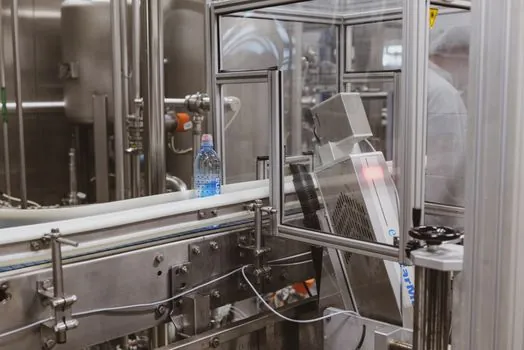
Use 2026 demand planning around three measurable signals: corrugated-board growth at 3.92% through 2034, plastic corrugated growth at 5.10% through 2033, and segment-specific glass furnace availability and order intake [S3][S5]. For procurement, these indicators should determine whether added volume comes from board cartons, reusable plastic transit systems, or rigid glass containers.
Track containerboard capacity after the 10% pullback, recycled-resin import exposure, and the cost of returns under each reuse cycle [S1][S3]. These variables provide a more defensible packaging plan than applying one inflation or demand assumption across paper, plastic, and glass.