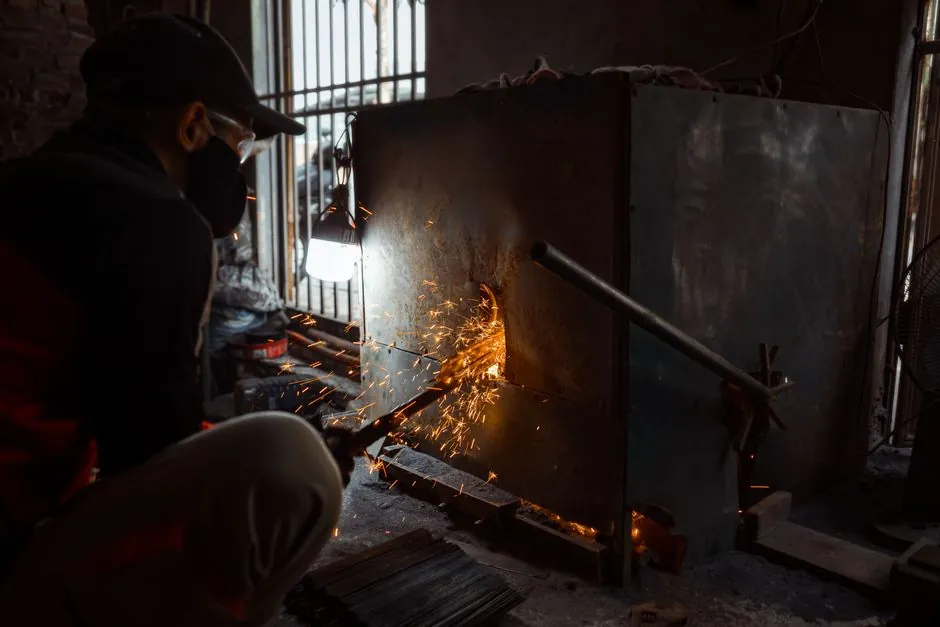
A fixed crucible stand, paired with lift-out or hand-ladle transfer, caps out near 1,000 kg aluminum charge for die-casting holding duty, while a tilting frame extends single-batch capacity to roughly 1,500 kg and lets a hydraulic actuator pour directly into a transport ladle [S3].
The two configurations are not interchangeable: a stand commits the operator to manual crucible or ladle handling, whereas a tilting base replaces that handling with a planned mechanical pour path controlled from a remote pendant [S1][S8].
Design Geometry and Pour Path
A stand-mounted crucible furnace keeps the cylindrical refractory base (item 6 in the Giesserei-Lexikon schematic) fixed inside the furnace shell, with a bottom tap opening only used in an emergency to drain metal into a pit after crucible failure [S3]. Metal removal is decoupled from the furnace: the crucible is either lifted out with tongs or skimmed with a hand ladle, so the pouring lip is a property of the crucible, not the furnace [S3][S5].
A tilting assembly pivots the entire furnace and crucible together about a frame-mounted trunnion; a hydraulic cylinder drives a controlled pour through an integrated spout or pouring lip, allowing complete drain in a single motion [S1][S8]. The GM-B Series specifies a remote pendant so the operator can stand clear of the stream path while the actuator moves through the planned pour trajectory [S1].
Capacity, Melt Rate, and Throughput
Foundry data sets a clear band: fixed crucible furnaces used as aluminum die-casting holders are generally built to 1,000 kg capacity, while tiltable units extend to about 1,500 kg for non-ferrous work, with larger sizes reserved for heavy metals [S3].
Melt rate per hour splits by heat source rather than by stand type, but it directly affects which mechanism is worth the cost: electric heating delivers around 250 kg Al/h, while fuel-fired models reach up to roughly 400 kg Al/h in StrikoWestofen figures cited by the encyclopedia [S3]. For reference, the related crucible furnace melt rate spec breakdown walks through the kW-per-kg math behind those numbers.
Safety, Ergonomics, and Operator Exposure
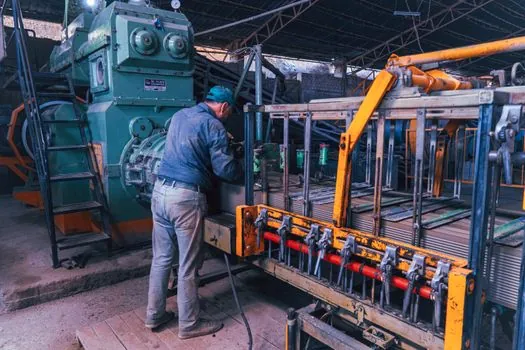
Lift-out transfer carries the highest manual handling risk: the operator carries a glowing crucible full of molten metal with tongs, and the metal cools during the carry, which hurts pour temperature and can harm casting quality if the trip is slow [S5]. Bale-out lowers that risk by keeping the crucible inside the furnace while a hand ladle moves only a small scoop at a time, but it is labor-intensive for large castings and can drag dross back into the ladle [S5].
A tilting base removes the manual lift entirely: the Stotek AMGT gas-fired unit is built around a hydraulic tilting frame described as ensuring easy and safe pouring of liquid metal, with full drain achievable by tilting to the end of the actuator stroke [S8]. The GM-B design language is identical: hydraulic tilt gives a controlled metal stream, limits unnecessary turbulence, and keeps the operator off the pour axis when the receiving ladle is correctly positioned [S1].
Energy and Process Stability
A stand-mounted furnace used strictly as a holder keeps the melt at constant temperature because the bath is not disturbed by pouring, which is why foundry practice charges these units with pre-melted metal and equips them with automatic temperature control rather than asking them to absorb cold ingot [S3]. Cold charge dropped into a hot bath causes a temperature drop that is detrimental to casting, especially in ingot and die-casting duty where the casting temperature window is tight [S3].
Fuel economy on the melting side is a property of the burner, not the stand: a recuperator on a separate tilting pre-melter recovers combustion air heat for fuel savings in a 25-38% range versus cold-air burners, per the same encyclopedia entry [S3]. On a stand furnace, the swivelable lid closes during holding to cut head dissipation from the bath surface, which is a small but real parasitic loss that tilting units replicate via their own lid geometry [S3].
Application Fit and Selection Matrix
Use a stand or bale-out furnace when the work is small-batch aluminum holding, when alloy changeover is frequent, and when multiple small molds are poured from one reservoir: portability of a single furnace across many molds is the dominant advantage, even with the manual-ladle cost [S5]. Fixed stands are the standard for die-casting cells arranged around a central reservoir because temperature stability matters more than pour speed [S3][S5].
Choose a tilting base when the pour target is a transport ladle, when one large mold needs a fast full-volume transfer, or when the operator headcount cannot cover a hand-ladle cycle: tilting gives speed, safety, and direct spout control, at the price of a heavier frame, hydraulic power, and a larger floor footprint [S1][S5][S8]. For higher-throughput continuous melts, induction is usually preferred over either crucible arrangement; tilting crucible work sits in the medium-throughput, high-flexibility band [S2].
Specifications to Lock In Before Ordering
Before specifying either mechanism, confirm charge weight (fixed 1,000 kg vs tiltable 1,500 kg for typical non-ferrous builds), heat source (electric at about 250 kg Al/h versus fuel-fired up to 400 kg Al/h), crucible material (graphite, silicon carbide, or cast iron/steel for magnesium and zinc), and tilt actuator type (hydraulic with remote pendant versus manual gear) [S3][S1].
Lock the receiving-ladle height, pour stream path, guarding, and pour volume into the same drawing as the furnace envelope, because hydraulic tilt is only safe when the receiving vessel is correctly positioned under the spout [S1]. For alloy work, document alloy range, charge weight, treatment and sampling practice, crucible compatibility, and cleaning sequence, since rapid alloy changeover cannot be assumed without an approved procedure [S1].
Limits, Failure Modes, and What Tilting Does Not Fix
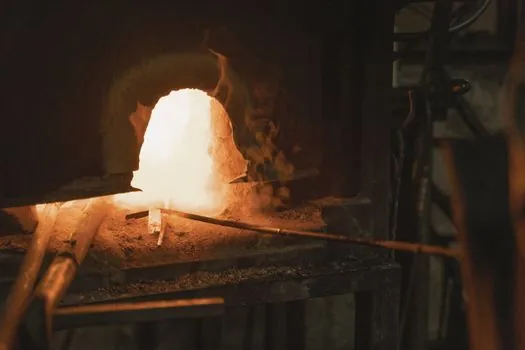
Tilting does not eliminate crucible failure risk; it only changes the response. A bottom tap opening in the furnace shell lets the operator drain metal into an emergency pit when a crucible cracks, which is a stand-design feature that tilting frames also retain for the same reason [S3].
Flue gas routing is independent of stand type but matters to bath quality: older designs vent exhaust over the crucible edge through a hood, and that contact path has been linked to higher workplace pollution and possible melt contamination, which is why most current builds route flue gas through a side channel instead [S3]. Also, tilting does not by itself improve melt rate; if the bottleneck is kilograms per hour, the right move is a different heat source, not a different frame.
Track these signals over the next buying cycle: hydraulic actuator service intervals on installed tilting crucibles, revised OSHA/EN guidance on remote-pendant operator distance for pour streams, and any shift in StrikoWestofen-class melt-rate benchmarks for electric versus fuel-fired 1,000-1,500 kg aluminum units. Also watch whether induction pricing closes the gap with hydraulic tilting crucible work in the 1,000-1,500 kg band, since induction is the named alternative for higher-throughput non-ferrous melts [S2].