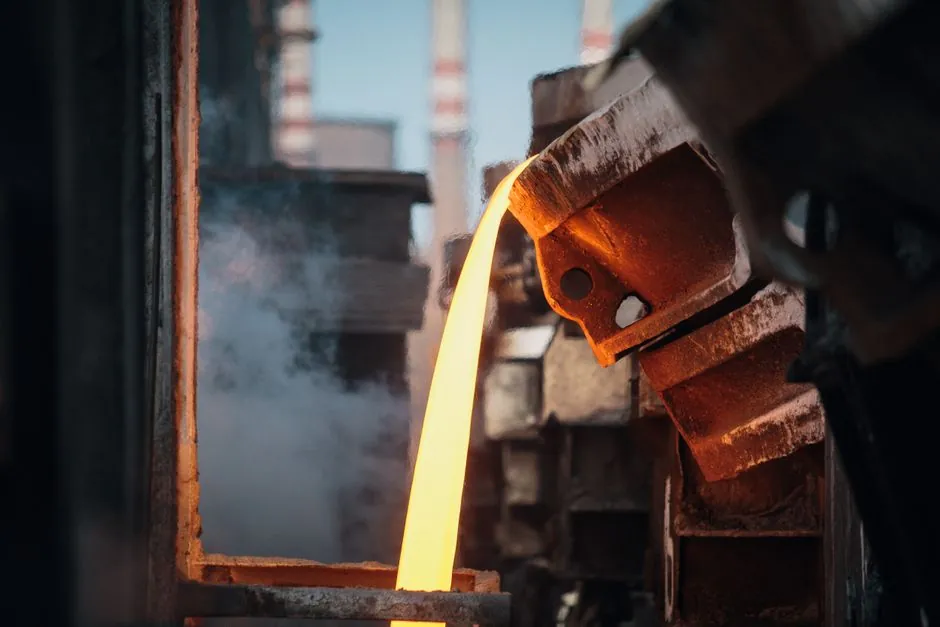
Capex per kilogram of nameplate melt capacity for a crucible furnace spans three orders of magnitude: hobby 1 kg electric kits list at $130–$180 per kg of aluminum, mid-size 80–1000 kg gas-fired aluminum/copper furnaces land at roughly $10–$60/kg, and 1 t industrial crucible units often print under $10/kg, a curve shaped by refractory mass, coil/inverter sizing and control depth [S3][S5].
The driver is straightforward: crucible furnaces [crucible-furnace.html] are sold as a refractory-lined shell, a heat source, and a control package. Each component scales sub-linearly with melt capacity, which is why per-kg cost falls as size grows, and why the same nominal "1 kg" label can carry a $23 graphite crucible consumable or a $399 turnkey gas furnace [S1][S8].
Price Tiers by Melt Capacity (2026 Listings)
Public 2026 retail and OEM data sort cleanly into four capacity bands, each with a distinct per-kg capex footprint [S1][S2][S3][S5][S7][S8].
Sub-3 kg hobby / jewelry band: 1 kg electric kits with 1350 W resistive elements and ceramic crucibles list at $145.58 (VEVOR 3 kg) and a 1 kg Gold Melting Furnace Kit at $164–$180, implying $130–$180/kg for aluminum-equivalent output; 1 kg replacement graphite crucibles themselves run $16.99–$46.60, a 0.5–3 kg brass- or aluminum-rated gas furnace kit (FB1S / FB2Mb) sits at $399 for a 10 kg brass / 4.4 kg aluminum capacity, or roughly $40–$90/kg of aluminum [S1][S3][S8][S9].
3–30 kg small-foundry band: gas-fired crucible furnaces for non-ferrous work in the 10–30 kg range, including 1–30 kg induction crucible configurations, are commonly quoted in the $1,000–$3,000 window by induction-melting OEMs, giving an effective $35–$150/kg on aluminum melt; the Indotherms 300 kg cast-iron crucible unit with 500 kg material loading and electric-resistance heating is the upper outlier in this class [S6][S7].
80–1000 kg industrial non-ferrous band: CDO Induction's gas-fired crucible furnace line covers 80–1000 kg aluminum and 100–1000 kg copper, with automatic ignition, flame detection, and custom controls; the matching 100 kg to 1 t aluminum melting-furnace capex band of $10,000–$50,000 implies $10–$50/kg of aluminum, or $10–$60/kg for copper-rated capacity [S2][S5].
1–20 t foundry band: 1–5 t units print at $50,000–$150,000 ($10–$30/kg), 5–20 t at $150,000–$300,000 ($7.50–$15/kg), and 20 t-plus industrial crucible installations reach $300,000–$600,000+ (around $15/kg and below); the 1 t "small capacity" lower bound of $10,000 from the same source confirms the $10/kg floor cited above [S5].
Cost Drivers Inside the Price Tag
Four line items move the per-kg number more than anything else: heating method, refractory, control package, and crucible consumable cost [S2][S5][S6].
Heating method: gas-fired crucible furnaces (LPG / natural gas) consistently price below equivalent-capacity electric-resistance or small induction units because the burner is cheaper than an inverter or coil assembly; induction then reclaims the premium through energy efficiency, typically mid-to-high in the price band per the HTGP breakdown [S5]. For natural-gas-specific operating-cost economics, see natural gas crucible furnace cost per kg of aluminum melted.
Control package: a manual gas valve with pilot light is essentially free; automatic ignition, flame detection, PID temperature control, and fault diagnostics, standard on the CDO 80–1000 kg line, easily add 20–40% to controller cost and 10–20% to total furnace cost in the mid-size band [S2].
Crucible consumable: a 1 kg graphite crucible at $16.99–$46.60, or a 30 kg silicon-carbide/graphite crucible at $200–$500 OEM-direct, is a recurring opex item, not capex, but it directly affects total cost of ownership; the graphite vs clay-graphite crucible life trade-off is usually a bigger TCO lever than the initial furnace choice for low-melt-rate operations [S1][S6].
Selection Criteria: Who It Is For vs Who It Is Not
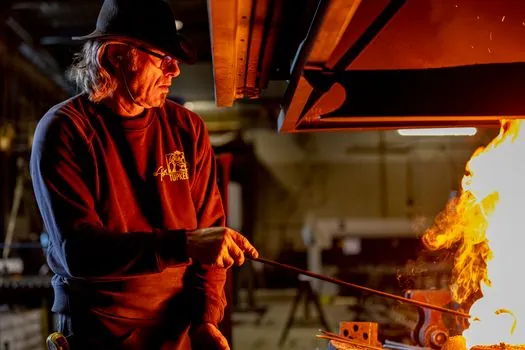
Capacity band, melt rate, alloy, and certification scope decide whether a crucible furnace is the right tool, and what per-kg cost is realistic [S2][S5][S7].
It IS for: small foundries, jewelry and precious-metal shops, universities, pilot lines, and batch non-ferrous melters (aluminum, brass, copper up to 1000 kg) needing low capex, simple refractory change-out, and alloy flexibility; gas-fired 80–1000 kg units from CDO Induction and the Indotherms 300 kg cast-iron crucible furnace target exactly this segment [S2][S7].
It is NOT for: continuous high-throughput steel melting (use induction or EAF), contamination-sensitive aerospace alloys requiring vacuum or controlled atmosphere, or operations where melt rate above ~1 t/h dominates, where the induction furnace and cupola furnace topologies are a better fit regardless of per-kg capex [S2][S5].
Threshold logic: below 30 kg melt, gas-fired crucible or resistive electric with replaceable graphite crucibles wins on capex per kg; 30–1000 kg is the gas crucible sweet spot; above 1 t, the per-kg saving of larger crucible units is partially offset by refractory cost, and induction starts to compete on energy economics [S5].
Comparison of Main Options on Decision Criteria
Four mainstream options line up against four decision criteria relevant to a 2026 buyer [S2][S5][S8].
1) Hobby 1–3 kg electric kit (VEVOR 1350 W, etc.): capex $130–$180/kg, melt rate ~1–2 kg per 20–30 min batch, refractory limited to ceramic-fiber with supplied crucible, automation none; best for jewelry and sub-1 kg pours.
2) 10–30 kg gas crucible kit (FB2Mb 10 kg class, $399): capex $40–$90/kg aluminum, melt rate up to 4.4 kg aluminum per heat, refractory 25 mm ceramic-wool stack, automation manual valve; portable, low-infrastructure, well suited to artisan brass and aluminum work [S8][S9].
3) 80–1000 kg industrial gas crucible (CDO Induction line): capex $10–$60/kg, melt rate hundreds of kg/h depending on burner sizing, refractory high-density castable, automation includes automatic ignition, flame detection, and custom controls; intended for production non-ferrous [S2].
4) 1–20 t crucible furnace (aluminum per HTGP banding): capex $7.50–$30/kg, melt rate ton-scale, refractory brick or monolithic castable, automation PID + auto-pour; the capex floor at 1 t is the $10,000 / $10/kg datapoint already cited [S5].
Limitations, Constraints, and Failure Modes
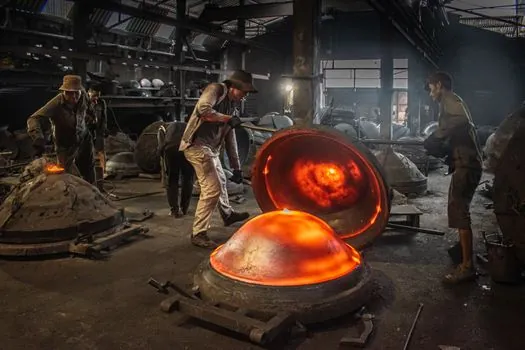
Capex per kg of nameplate capacity is not the same as cost per kg of metal actually poured, and the gap is the operation's hidden cost [S2][S5][S6].
Alloy restrictions: cast-iron crucibles (Indotherms 300 kg) are not compatible with aluminum; they are intended for brass and zinc-family alloys. Cross-alloy contamination is a real disqualifier and a common cause of failed crucible life, separate from the per-kg capex number [S7].
Fuel and energy exposure: gas-fired units tie cost to LPG/natural-gas price volatility, while electric units tie cost to kWh; a 1350 W VEVOR kit pulling 1.35 kW for a 3 kg aluminum melt is roughly 0.5–0.8 kWh/kg, which at industrial $0.10/kWh is $0.05–$0.08/kg of melt, a small opex number but the lever that swings total cost of ownership at scale [S3][S5].
Sourcing, Standards, and Trackable Signals
Spec sheets from CDO Induction, Indotherms, Devil-Forge, and VEVOR, plus the HTGP aluminum-furnace market breakdown, form the public 2026 sourcing base; no specific ISO or ASTM capex standard exists for crucible-furnace price, so buyers should anchor on refractory-spec (ceramic wool thickness, castable grade), burner/element rating, and stated melt capacity for the alloy of interest [S2][S3][S5][S7][S8].
Trackable signals worth watching into late 2026: natural-gas and LPG spot prices, which directly move opex for the 10–1000 kg gas-crucible segment, and graphite raw-material pricing, which moves the consumable crucible line that already ranges from $16.99 to $46.60 on a 1 kg unit [S1][S2].
