
A concrete curing compound is a liquid membrane sprayed or rolled onto fresh concrete to reduce moisture loss, while a concrete admixture is a chemical dosed into the mix water or aggregate to modify plastic or hardened properties — they are not interchangeable, and the wrong choice can void a strength warranty on a 30 MPa slab [S1][S2].
The selection hinges on the failure mode you are trying to control: surface-side moisture escape (curing compound) versus internal mix behaviour such as workability, set time, strength gain, or freeze protection (admixture). Specifiers on slabs, bridge decks, and canal linings often deploy both products on the same pour, with the admixture batched at the plant and the curing compound applied within minutes of final finishing [S2].
What Each Product Is, and Which Standard Governs It
A water-based or solvent-based concrete curing compound is tested to ASTM C309, which sets a moisture-retention requirement of not more than 0.55 kg/m² loss at 72 hours for Type 1 (clear) and Type 2 (white-pigmented) formulations; ASTM C1315 covers higher-performance liquid membrane-forming curing compounds with a tighter 0.40 kg/m² limit and additional durability claims. Integra Industries (NATA-certified, in business since 1989) markets products within this family, alongside SLABLOC edge-seal systems for slab perimeters [S1].
Admixtures fall under ASTM C494, with seven performance types: Type A water-reducers, Type B retarders, Type C accelerators, Type D water-reducers + retarders, Type E water-reducers + accelerators, Type F high-range water-reducers (HRWR, superplasticisers), and Type G high-range water-reducers + retarders. EN 934-2 is the European counterpart, and India's IS 9103 mirrors the same Type A–G taxonomy used by exporters such as Razon Engineering [S3].
Application Point in the Process
Curing compounds are applied at the surface, typically after bleed water disappears and finishing is complete, with coverage rates of 5 m²/L for solvent-based grades and 4–5 m²/L for water-based emulsions, per Razon's water-based product line literature [S3].
Admixtures are batched at the concrete batching plant, dosed in millilitres per kilogram of cementitious material, and their effect runs through the entire cross-section of the pour. A Type F polycarboxylate-ether HRWR at 0.8–1.2% by mass of cement can drop a 100 mm slump to 200+ mm without adding water, a path used to reach low w/c ratios in HPC mixes [S2].
Selection Criteria Compared Side by Side
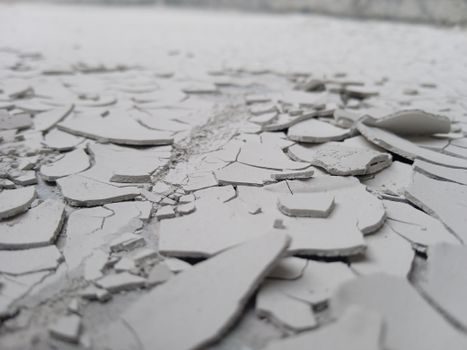
Across the four decision gates that drive most project specs, the two products line up as follows: [S1]
Objective: curing compound aims to retain mix water for the first 7 days; admixture aims to alter slump, set time, air content, or strength gain at the point of mixing. Standard: curing compound is ASTM C309/C1315 (or EN 15617-1 in Europe); admixture is ASTM C494 Types A–G (or EN 934-2 / IS 9103). Application stage: curing compound is surface-sprayed after finishing; admixture is liquid-dosed at the concrete batching plant. Failure mode addressed: curing compound targets surface drying shrinkage and plastic-shrinkage cracking; admixture targets workability loss, cold-weather retardation, sulphate resistance, or freeze-thaw air entrainment.
Where a slab specifier is unsure which product to add, the diagnostic question is whether the concern is at the surface (cure) or in the mix (admix). When both apply — for instance, a 40 MPa bridge deck in winter — Type C or E accelerator plus a Type 2 white-pigmented C309 compound is a common dual-spec [S1][S2].
Material-Grade Mapping to Project Conditions
For hot-weather pours above 32 °C ambient, a Type B or D retarder extends the working life of the mix, while a Type 2 white-pigmented C309 compound at 200 µm wet film reflects solar gain and slows surface drying — these address different physics, and skipping either raises the plastic-shrinkage cracking risk [S2].
For cold-weather pours below 5 °C, a Type C calcium-chloride or non-chloride accelerator protects early strength development, paired with a C309 Type 1 clear or C1315 high-solids membrane; chloride-based accelerators are barred in reinforced concrete where rebar contact is possible, a constraint spelled out in ACI 212.3R and reinforced by supplier guidance [S3].
For floors hardened against steel-wheeled forklift traffic, a sodium-silicate or lithium-silicate densifier is sometimes mistaken for a curing compound; it is a surface-applied reactive treatment, not a C309 membrane, and the two are not equivalent in moisture-retention performance. A concrete fiber addition is a separate category entirely — fibres change crack-width distribution, not curing retention [S2].
Real Use Cases and How the Two Combine
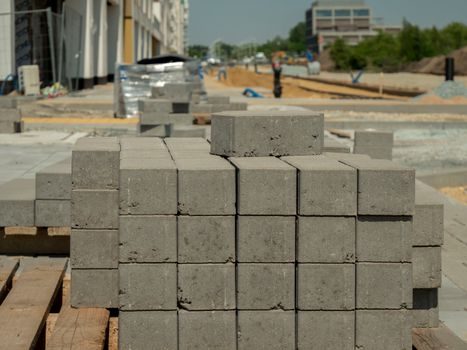
For canal linings and irrigation channels, wax-based C309 Type 2 emulsions are widely used because they degrade under UV within weeks and do not contaminate potable-water contact surfaces; this is the same reason integrators such as Integra's SLABLOC edge-seal system are specified on slab perimeters where differential drying would otherwise curl the edge [S1].
Limits, Failure Modes, and Common Spec Errors
Curing compounds cannot rescue a mix that was batched with too much water; they are a surface moisture-retention tool, not a strength corrective. They also fail on surfaces scheduled to receive a topping, bond a coating, or be polished — the membrane must be removed by sandblasting or chemical means before the next layer is applied, per Razon's technical literature [S3].
Admixtures fail by overdose: a Type F HRWR pushed past 1.5% by cement mass can segregate the mix and trap air at the form face, and a Type C accelerator dosed into a 60 °C hot-conveyed mix can flash-set in the truck chute. Plant operators and rebar-heavy projects also need to check that the admixture system does not introduce chlorides above the 0.2% by cement mass limit on reinforced work, a constraint documented for chloride-based accelerators [S2].
Sourcing, Standards, and What's Worth Tracking
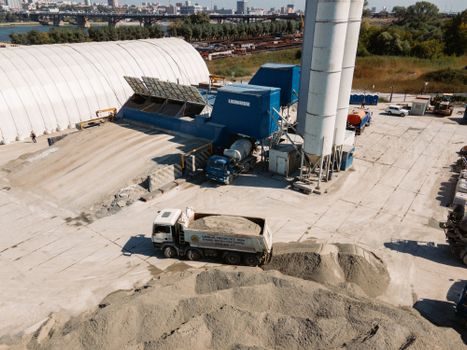
ASTM C309 and ASTM C494 are the two governing standards in most export projects; EN 934-2 covers the same scope in the EU, and IS 9103 covers India. Razon's product line, certified to relevant Indian Standard (BIS) specifications, and Integra's NATA-certified Australian line are the kind of supply-base entries that procurement teams cross-reference when a single product must satisfy multiple jurisdictions [S1][S3].
For specifiers weighing a curing compound against a topically-applied densifier, the deciding question is whether the project needs a removable moisture-retention membrane (C309/C1315) or a permanent surface densification reaction (sodium/lithium silicate) — and whether the surface will later host a bonded overlay. The next two signals to watch are ASTM C1315 Type II higher-solids revisions drifting into more state-DOT specifications, and the growth of bio-based and starch-emulsion curing compounds on LEED-targeted projects, both of which can be cross-checked at the next quarterly standard update [S1][S2].
For related coverage, see Crawler Crane vs Truck-Mounted Crane: Turning Radius Decision Cut.