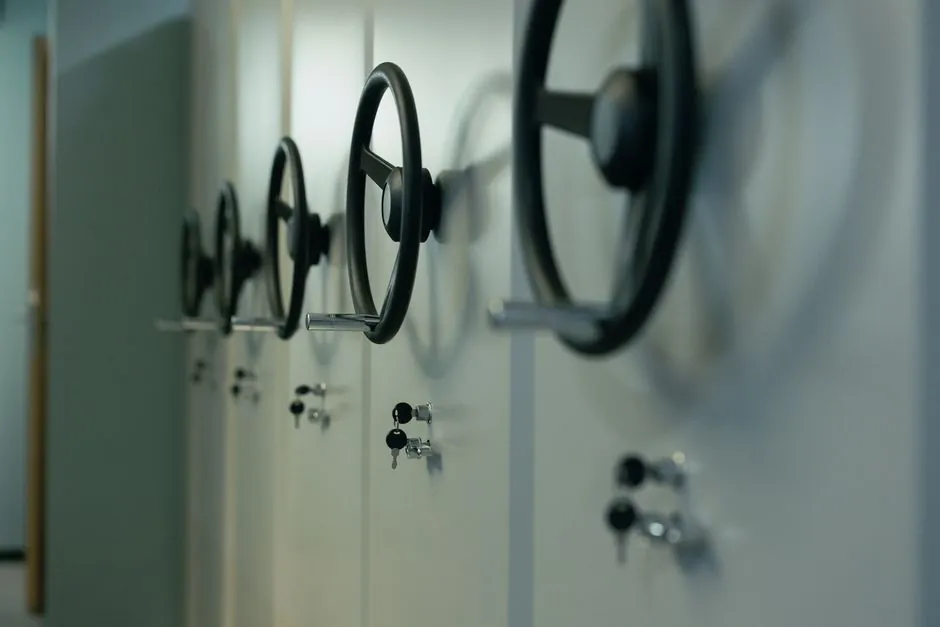
A data center door assembly is judged on five performance vectors simultaneously: thermal containment, air-leakage control, fire and smoke separation, physical security, and electronic access-control integration, per a June 2026 mission-critical facilities spec guide [S4].
The envelope is not a passive wrapper around a data hall. For rack densities above 15-20 kW, hot-aisle and cold-aisle containment built from aluminum extrusion series 40 (standard aisle frames) and 45 (heavy sliding doors) function as one mechanical system with the CRAC/CRAH cooling plant, and door U-value, airtightness class, and frame alloy directly move the cooling load [S5].
Five Performance Vectors That Drive Every Door Spec
The most recent enterprise-data-center specification guidance collapses door selection into three binding axes plus two supporting layers: physical security to EN 1627 RC3 or RC4, environmental containment to ASTM E283 with a minimum Sound Transmission Class (STC) 40, and life safety to UL 10C 90-minute fire rating, with low-voltage monitored Electronic Access Control (EAC) unifying the package and high-cycle hardware underneath [S4].
Cycle testing is the silent spec most projects under-call. Doors in server halls must meet ANSI/BHMA A156.1 and A156.115 Grade 1, which is a minimum of 1,000,000 operating cycles, paired with continuous gear hinges or heavy-weight ball-bearing hinges to prevent door sag that otherwise misaligns latches and silently breaks security [S4]. The same logic extends to interior aluminum containment: fire-rated compartments are upgraded to 6061-T6 alloy extrusions with wall thickness up to 6 mm and multi-point locking hardware rated for 500,000+ cycles [S5].
Security Class: EN 1627 RC3, RC4, and UL 752 for the Perimeter
EN 1627 RC3 is the baseline for white-space boundary doors in European data-center builds: it delays an opportunistic intruder armed with crowbars, screwdrivers, and hand drills for a minimum of 5 minutes of active attack; RC4 doubles that resistance to 10 minutes against battery-powered drills, grinders, saws, and hammers [S4].
For main exterior portals, loading docks, and security command centers, the spec writer should add UL 752 ballistic levels: Level 3 resists .44 Magnum handguns, Level 4 resists high-power hunting rifles and military assault rifles, and these ratings are written into the door schedule, not added as an afterthought [S4]. For the broader system window and door envelope, the same threat-tiering applies to glazed curtain-wall segments on the data-hall perimeter.
Thermal and Acoustic Containment at the Door Boundary
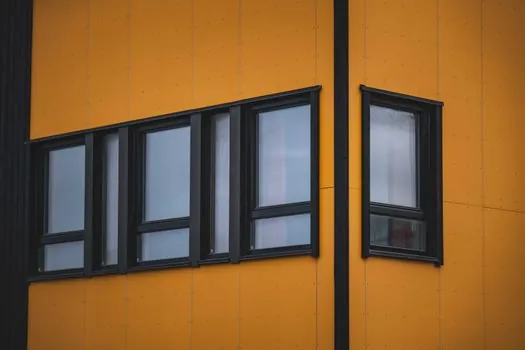
An acoustic and thermal door rated to STC 40 or higher, sealed to ASTM E283 with drop-down seals, controls air migration and noise between cold-aisle (low pressure, server racks) and hot-aisle (high pressure, server racks) zones, which is the single highest-leverage door decision in a hot/cold-aisle layout [S4].
For the aluminum envelope around the data hall, air, water, and structural performance of aluminum doors, windows, and frames is governed by ASTM E 283, E 330, and E 331 test methods [S5]. The same ASTM E 283 airtightness test and ASTM E 331 water-penetration test govern exterior window and curtain-wall assemblies adjacent to those doors, so specifiers should treat the two as a single submittal package. A field rule of thumb: if lab test pressure is 1.5x design and field performance lands at two-thirds of lab, the wall assembly must be designed for that field envelope or failure gets introduced at the frame-to-structure joint [S5].
Fire-Rated Glazing and Door Vision Panels
Fire-rated server-room windows are tested assemblies (glazing plus frame) certified to a fire-resistance rating of 20, 45, 60, 90, or 120 minutes, and the rating must match the wall assembly: a server-room wall rated at 60 minutes generally requires a 60-minute fire-rated window in that wall [S3]. Three performance criteria govern the rating: Integrity (E) prevents flame and hot-gas passage, Insulation (EI) limits non-exposed-face temperature rise, and Radiation control (EW) caps radiated heat at a defined threshold [S3].
Typical placements are internal partitions between the server room and an adjacent NOC or office corridor, control-room viewing panels that allow monitoring without breaching the fire-rated door, and vision panels inside fire-rated door leaves where glazing is required for line-of-sight [S3]. The AisleLok Sliding Doors Transom Window product line, sized from 4 ft to 8 ft (1,556 mm to 2,699 mm) to match 50U to 60U cabinet heights, uses a clear polycarbonate panel in an extruded aluminum support structure and accepts fire-rated glazing inserts, with standard finishes in black or white and custom colors on request [S2]. For exterior envelope aluminum window and door glazing, the same fire compartmentation logic is layered onto 5 + 12A + 5 mm or 5 + 12A + 5 + 12A + 5 mm insulating glass units, and laminated 6 + 1.52 PVB + 6 mm builds meet EN 12600 1B1 at 5 kJ/m² impact strength for hurricane and high-rise zones [S5].
Access Control, EAC, and Smart Integration
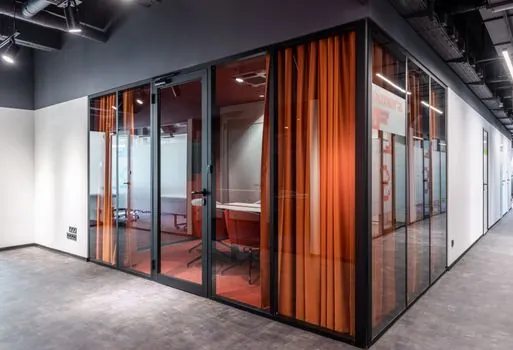
Smart access control in mission-critical facilities is the layer that ties the door to the building management system, the security operations center, and the fire-alarm panel, and it must be specified alongside the door, not after it, because a single unmonitored opening can compromise containment zones and trigger cooling inefficiencies [S4].
Operational goals behind the five performance requirements (24/7 uptime, controlled interior environment, high-cycle durability, zoned access, smoke and fire containment, and alarm integration) are identical across colocation, enterprise, and hyperscale models, but the relative weight changes: colocation emphasizes tenant-separation and high-cycle hardware due to equipment moves, enterprise tightens fire/smoke coordination with the host-occupied building, and hyperscale scales the same five vectors across a campus rather than redesigning them [S1]. Specifying the door window curtain wall transition at the data-hall boundary follows the same logic: the curtain-wall mullion, the perimeter window, and the security door share airtightness and fire-compartmentation lines on the same plan sheet.
Decision Map: Aluminum Envelope Versus Steel Security Door
For data-hall envelopes above 15-20 kW rack density, the comparison lands on four criteria. (1) Frame material: aluminum extrusion series 40-45 in 6061-T6 for fire-rated compartments, with thermal-break polyamide at λ ≤ 0.3 W/m·K and gap tolerance ±0.1 mm, versus steel stiffened door leaves for EN 1627 RC3/RC4 and UL 752 ballistic zones [S5][S4]. (2) Airtightness: aluminum sliding doors around 1.2 m³/(m·h) lab, steel acoustic-thermal doors sealed to ASTM E283 with drop-down seals for STC 40+ containment at the aisle boundary [S5][S4]. (3) Fire rating: aluminum frames and transom inserts tested to 20-120 minutes, steel door leaves to UL 10C 90-minute on white-space boundaries [S3][S4]. (4) Cycle life: 1,000,000 cycles on ANSI/BHMA Grade 1 hinges and 500,000+ cycles on fire-rated aluminum multi-point locks, both required for any door that is opened more than a handful of times per day [S4][S5].
Aluminum wins on weight, fabrication lead time, and thermal-break performance, and is the right pick for the data-hall envelope and aisle containment. Steel wins on forced-entry and ballistic resistance and is the right pick for perimeter portals, loading docks, and command centers. The two materials meet at the door schedule line where the aluminum curtain wall terminates and the steel security door begins, and that termination must share the same fire-compartmentation line and the same airtightness class.
Selection Criteria and Project-Fit Check

This spec map is for projects where doors are opening 100+ times per day, where hot/cold-aisle pressure differential is a measurable design parameter, and where the door schedule feeds a single monitored EAC and fire-alarm system. It is not a fit for low-density server closets under 5 kW per rack, where a standard commercial door with an STC 30 rating is sufficient, and it is over-spec for office-suite entries with no containment or fire-compartmentation role. [S4]
Three trackable signals for the next 6 to 12 months: any revision to the 2024 AAMA 101 voluntary performance spec for aluminum windows and glass doors, new test data on EPDM sealing-stack performance above 700 Pa water tightness on aluminum sliding doors, and updates to UL 10C or EN 1627 cycle and fire test thresholds for Grade 1 hardware. A complementary cross-reference for adjacent envelope work is the System Window and Door Selection for Cleanrooms: 2026 Spec Map, which shares airtightness and fire-compartmentation lines with the data-hall envelope and applies the same ASTM E 283/E 330/E 331 test discipline to pharmaceutical and semiconductor rooms.