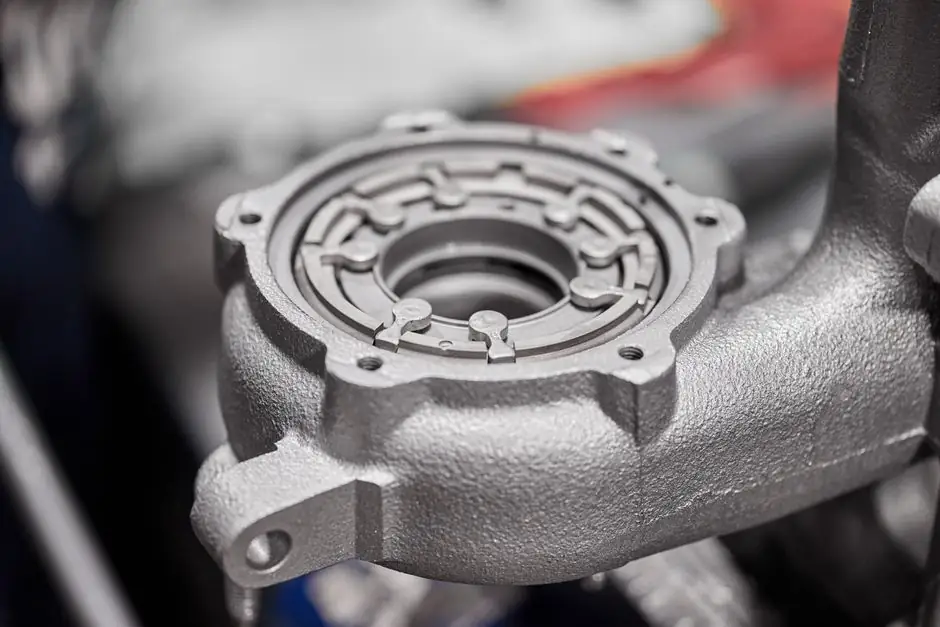
Defense AM material selection is now a procurement-grade decision: Ti-6Al-4V produced by laser powder bed fusion, Inconel 718 deposited via directed energy deposition, and 17-4PH stainless consolidated through metal binder jetting dominate flight-qualification pipelines, while Nylon 12 and Ultem carry the polymer work for UAVs and field-replaceable parts [S1][S2][S3].
The driver is no longer prototyping: legacy aerospace cast or forged components sit on 18-month lead times, and supply-chain exposure across a documented 200,000+ supplier base has pushed the DoD and NATO primes to qualify AM materials as primary, not backup, sources [S1][S6].
Process-to-Material Matching: LPBF, DED, and Binder Jetting
LPBF Ti-6Al-4V with layer thickness between 20 and 80 micrometers develops columnar grains aligned to the build direction, leaving longitudinal tensile strength at or above wrought but transverse tensile strength down 5-15% without HIP densification [S2]. The established closure cycle is hot isostatic pressing at 920°C and 100 MPa for two hours, which collapses sub-surface porosity and brings fatigue performance into the FAA Advisory Circular AC 33.15-3 envelope, the only AM-process-specific AC the FAA has issued for turbine engine design [S2].
DED with Inconel 718 runs at deposition rates measured in kilograms per hour rather than grams per hour, tolerating coarser grain structures and lower residual stress but demanding post-machining allowance and producing inferior surface finish, the trade-off the U.S. Air Force has accepted for C-130 Hercules and F-16 Fighting Falcon legacy-component sustainment [S2]. Metal binder jetting with 17-4PH stainless sinters at room-temperature binder deposition, eliminating laser-induced distortion, but the sintering shrinkage must be compensated digitally to hold net-shape tolerance on flight hardware [S2].
Defense Alloy Palette: Titanium, Nickel, Aluminum, and Stainless
Ti-6Al-4V remains the defense workhorse for fatigue-sensitive airframe and engine brackets where strength-to-weight drives survivability and payload, with HIP-closed LPBF material entering AC 33.15-3 workflows on turbine components [S2][S3]. Inconel 625 and 718 cover high-temperature zones above 600°C in exhaust and turbine sections, where DED deposition rates justify the surface-finish penalty for legacy parts no longer in production [S2][S3].
AlSi10Mg is specified for thermal-management housings and RF components where LPBF dimensional accuracy matters more than peak strength, while 17-4PH stainless in metal binder jetting serves high-volume small parts where sintering cost-per-part undercuts LPBF for batch production above roughly 1,000 units [S2]. For armor and ballistic structures, the published review identifies specialized AM-formulated alloys, composites, and ceramics optimized for impact loading rather than reusing aerospace grades, a different selection logic driven by Charpy and Izod performance rather than fatigue [S4].
Polymer AM for Drones, Field Parts, and Ballistic Housings
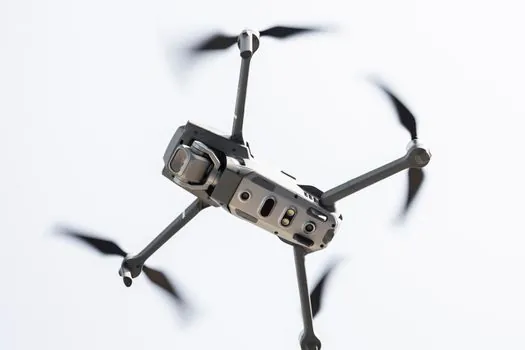
Nylon 12 (PA 12) is the default SLS powder for UAS airframes, sensor brackets, and ruggedized enclosures because it absorbs impact without brittle fracture and survives the -40°C to 85°C field envelope common to military electronics [S5]. Ultem (PEI) extends that envelope into higher-thermal applications, with continuous service temperature near 170°C, the reason it is specified for avionics ducting and under-hood UAV power-distribution parts where nylon would creep or distort [S5].
For soldier-carried equipment, published defense AM surveys list high-strength polymers and fiber-reinforced thermoplastics as the primary path for helmet pads, radio mounts, and custom-fit components, where the lead-time compression from 18 months to days matters more than the raw material cost premium [S1][S5]. Refer to the chemical material encyclopedia entry for the polymer-to-resin mapping behind PA 12 and PEI selection. Defense AM also extends into energetics and electronics, not just metals, per the DoD strategy document that names electronics, energetics, and chemical/biologic production as emerging AM frontiers [S6].
Selection Criteria: Fatigue, Ballistic, Thermal, and Lead Time
For fatigue-driven flight parts, the priority order is LPBF Ti-6Al-4V with mandatory HIP, then DED Inconel 718 for repair and large preforms, then binder-jetted 17-4PH for high-volume brackets where the AM-specific FAA pathway is less mature [S2]. For ballistic and armor structures, the published review emphasizes specialized AM-formulated alloys and bioinspired ceramic composites over reused aerospace grades, because Charpy and Izod data at low strain rates do not predict real ballistic solicitation [S4].
For thermal-management hardware, DED-deposited nickel superalloys win above 600°C; LPBF AlSi10Mg wins where geometry precision and heat dissipation both matter; for polymer parts in the field, Nylon 12 wins on cost and impact resistance while Ultem wins on continuous-use temperature [S2][S3][S5]. Selection also has to account for the DoD strategic constraint that AM should serve metals, ceramics, polymers, and emerging energetics and electronics rather than be locked to one material class [S6].
Comparison: Defense AM Material Options on Four Decision Criteria
On cost-per-part at low volume, LPBF Ti-6Al-4V and SLS Nylon 12 lead because no tooling amortizes across the build; binder-jetted 17-4PH and DED Inconel 718 only pull ahead above roughly 1,000 parts or when component size exceeds the LPBF build envelope [S2]. On peak service temperature, DED Inconel 718 and Ultem PEI lead above 600°C and 170°C respectively, while Nylon 12 caps near 85°C and LPBF AlSi10Mg falls between them [S2][S5].
On fatigue and damage tolerance, HIP-closed LPBF Ti-6Al-4V is the documented FAA AC 33.15-3 pathway for turbine hardware; DED Inconel 718 trades fatigue margin for deposition rate on legacy sustainment; binder-jetted 17-4PH is still building flight-qualification history [S2]. On lead-time compression versus traditional casting or forging, every AM modality listed compresses the 18-month legacy supply chain into days, which is the procurement argument that overrides material-cost premiums for obsolete parts [S1].
Who This Selection Is For, and Where It Fails
Defense AM material selection is for primes and tier 1 contractors holding flight-qualification programs, UAS manufacturers scaling from prototype to low-volume production, and government procurement agencies tasked with rebuilding domestic supply capacity for obsolete platforms [S1]. It is not yet a drop-in replacement for high-rate forging on parts above 50 kg, where DED deposition rate is still measured against traditional hammer forging rather than LPBF throughput, and where the published armor review flags unclear weapons-regulatory frameworks as a barrier to broader deployment [S4].
Failure modes are well documented: LPBF without HIP leaves 5-15% transverse tensile deficit; DED leaves near-net-shape surfaces that demand post-machining allowance; binder jetting leaves sintering shrinkage that must be compensated in the CAD step; armor AM parts validated on Charpy or Izod rigs are not automatically validated for real ballistic loading [S2][S4]. The DoD strategy document is explicit that AM should be used with traditional metals, ceramics, and polymers while expanding into electronics and energetics, a deliberate hedge against betting qualification on a single material class [S6].
Standards, Sourcing, and Trackable Signals
Material qualification rides on three named anchors in the research: FAA Advisory Circular AC 33.15-3 for laser powder bed fusion in turbine engine design, the documented HIP cycle of 920°C/100 MPa for two hours for fatigue-sensitive LPBF hardware, and the DoD Additive Manufacturing Strategy framing metals, ceramics, polymers, electronics, and energetics as concurrent AM frontiers [S2][S6]. Process physics drives microstructure: columnar grain growth in LPBF, coarser grains and lower residual stress in DED, and laser-free room-temperature binder deposition in metal binder jetting are not optional details, they are the primary determinants of fatigue life, fracture toughness, and damage tolerance in service [S2].
Trackable signals through the rest of 2026: published updates to AC 33.15-3 beyond turbine hardware into structural airframe brackets, expanded DED sustainment deployments across legacy fighter and transport fleets beyond the C-130 and F-16 baseline, and binder-jetted 17-4PH crossing the 1,000-part batch threshold that makes it cost-competitive with LPBF for high-volume defense brackets [S1][S2]. For a broader view of how metal powder selection ties into non-defense applications, the copper material and magnetic material encyclopedia entries cover adjacent alloy families used in motors and power electronics on the same platforms. For context on how complex procurement specs translate into the wider industrial buying cycle, see this flat belt selection for automotive production: a spec-first map, which uses the same spec-first logic on a different component class.