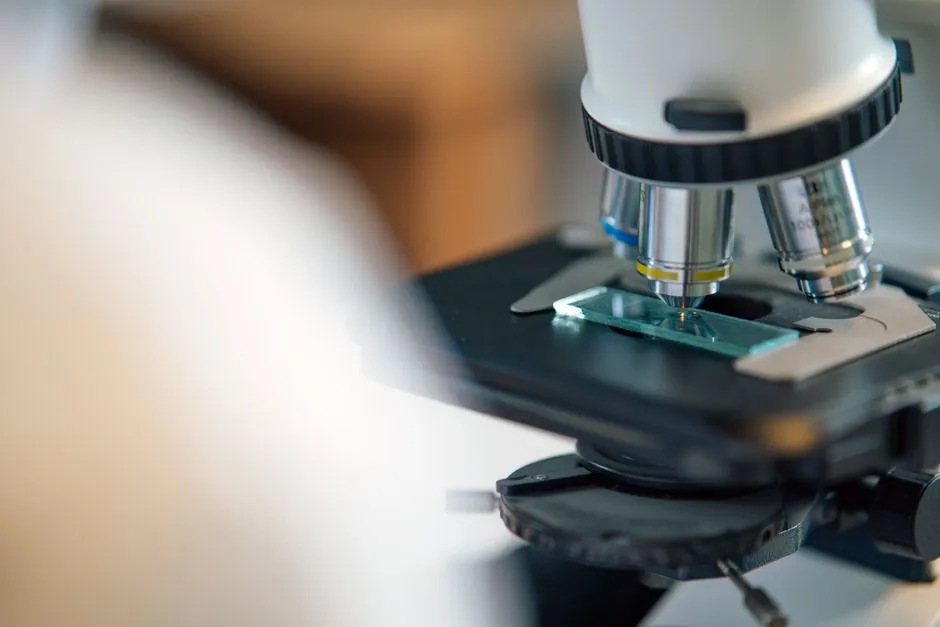
Precision glass molding (PGM) requires mold materials that hold form accuracy of ±2-3 µm and surface roughness below 5 nm while cycling glass at viscosities from 10^5 to 10^12 Pa·s above the transition temperature [S1][S3].
For polymer optics, the constraint shifts to insert machining and coating deposition, not hot-glass tooling, and antireflection coatings of 1.0-1.5% reflectivity over 450-650 nm are routinely specified on molded polymer substrates [S1][S4].
What optical glass selection actually controls in a mold build
Optical glass for mold-based production falls into two distinct process lanes: precision glass molding (PGM) for true glass optics, and optical injection molding (OIM) for polymer lenses, light guides, and diffusers. PGM is a single-step hot forming process where a glass preform is pressed between two mold inserts inside a vacuum or nitrogen atmosphere, replacing grinding, polishing, and lapping steps that historically produced spherical lenses at high cost [S3]. The material selection question therefore is not just "which glass" but "which glass-mold pair survives the thermal and viscosity window without distorting the part" [S3].
For volume polymer optics, the selection map moves upstream to the optical glass reference data, downstream to the mold steel, and finally to the AR coating stack applied after molding [S4]. OIM relies on transparent polymers such as PC, PMMA, COP, and COC; material purity directly governs transmission, and the mold insert is the negative of the final optic, meaning concave inserts produce convex surfaces [S4].
PGM glass transition and viscosity window: the binding constraint
A PGM process must run within the super-cooled region above the glass transition temperature, where viscosity can swing from 10^5 to 10^12 Pa·s across a narrow allowable temperature variation, and structural relaxation makes the atomic structure time- and history-dependent [S3]. The result is sensitivity: a few degrees of setpoint drift alters residual stress, density, and refractive index in the molded lens [S3]. The industry response is mold materials that tolerate that thermal swing without deformation, and process chains that treat the manufacturing chain as a coupled problem rather than three independent steps [S3].
For extreme specifications such as the 2 nm flatness across 30 cm required by a 10 nm-node lithography optical element, PGM competes with single-point diamond turning, which remains slow and expensive (aspheric elements can reach "some thousands of dollars" per piece at low volume) [S3]. This is why mold-based selection for lithography, space telescope, and microlens-array applications keeps converging on tungsten carbide, cemented carbide, and SiC mold inserts paired with low-Tg optical glasses or chalcogenide grades [S3].
Mold material options: tungsten carbide, SiC, and steel inserts
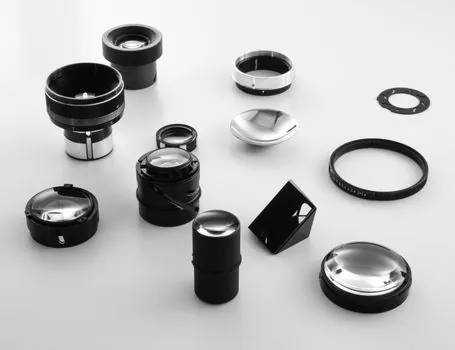
For polymer OIM, precision mold inserts are cut on multi-axis diamond lathes with air-bearing guides and spindles; form accuracies of ±2-3 µm (depending on diameter) and surface roughness below 5 nm are routinely reported on production optical tooling [S1]. These inserts are then set into a hardened steel mold base, which carries the ejector, cooling, and gating system, while the optical surface is generated only on the insert [S1]. The fast/slow tool extension supports microstructures and non-rotational features on the same insert, allowing aspheric, Fresnel, and freeform features without a second operation [S1].
For PGM, the same ±2-3 µm form accuracy must be held at molding temperature, which is why tungsten carbide, reaction-bonded silicon carbide, and CVD-SiC coated tool steel are the dominant insert choices; a generic casting mold or sand casting mold workflow is not applicable because the surface generation is single-point diamond turning on the insert before any glass is touched, and the insert is reused across thousands of cycles [S1][S3].
Polymer OIM material matrix: PC, PMMA, COP, COC
Optical injection molding parts are categorized by the feature they perform: aspherical lenses, plano-convex lenses, Fresnel lenses, light guides, light diffusers, and reflectors [S4]. The first decision is the polymer: polycarbonate (PC) for impact resistance and high index, PMMA for the best optical clarity and lowest birefringence at moderate cost, and cyclic olefin polymers (COP) and cyclic olefin copolymers (COC) for low water absorption and near-glass transparency in medical and analytical applications [S4].
Coating selection follows: single-layer MgF2 averages about 1.5% surface reflectivity from 450 to 650 nm, while multilayer MgF2 stacks drop reflectivity below 1% over the same band, and conductive, beam-splitting, antireflection, and reflective coatings can be specified across the polymer substrate range via physical vapor deposition at lower temperatures than glass-compatible coating processes tolerate [S4]. The lower coating temperature is the trade-off: polymer substrates accept a broader coating menu but at the cost of lower coating endurance than equivalent coatings on glass [S4].
Comparison: PGM vs polymer OIM on four decision criteria

Selection between PGM and polymer OIM is a four-axis problem: (1) refractive index and Abbe number, where PGM accesses the full glass map (n_d 1.45-2.0+ across families) and polymer OIM is bounded by PC, PMMA, COP, COC grades; (2) thermal and environmental stability, where molded glass handles 300-500 °C and high-UV service, polymer OIM is limited to roughly 120-150 °C continuous and is sensitive to humidity in the lower-index grades; (3) unit cost at volume, where PGM tooling runs higher but per-piece cost drops fast above 10,000 lenses, and polymer OIM tooling is lower but per-piece cost stays roughly flat across the volume curve; (4) achievable form accuracy, where PGM can target sub-100 nm surface figure on premium optics, and polymer OIM production inserts typically hold ±2-3 µm form and sub-5 nm roughness on the cavity [S1][S3][S4].
For street lighting, indoor lighting, and automotive lighting lenses, polymer OIM is the dominant choice because the optical specification (FWHM beam pattern, IP66 ingress, Zhaga modular dimensions such as the 280x40 mm linear form) is reachable in PC or PMMA at much lower mold cost than the equivalent glass tool [S2][S4]. For UV lithography, space telescope primary optics, and high-power laser microlens arrays, PGM remains the only credible path because no polymer holds the necessary flatness, thermal stability, and damage threshold [S3].
Use cases and limitations: where each path fails
PGM fails when the part geometry requires features the mold cannot release, when the glass chemistry is incompatible with the mold coating, or when the production volume is below the break-even point for tungsten carbide tooling. The transition-region viscosity swing of 10^5 to 10^12 Pa·s is the engineering fact that drives both mold material choice and process control strategy, and ignoring it is the most common root cause of molded-lens residual stress and refractive index drift [S3]. Polymer OIM fails when the application demands high service temperature, solvent resistance, or the lowest possible birefringence; PMMA birefringence is the limiting factor in polarization-sensitive optics, and PC yellowing under UV exposure limits outdoor lens life in uncovered lighting fixtures [S4].
For mold and die makers choosing which process lane to invest in, the rule of thumb: if the end product is an outdoor lighting lens, an automotive headlight optic, an LCD backlight light guide, or an AR/VR asphere, polymer OIM and standard P20 / H13 / S136 mold steel with diamond-turned inserts is the answer; if the end product is a lithography projection optic, a space telescope element, or a high-power laser microlens array, PGM with tungsten carbide or SiC inserts and matched low-Tg glass is the only viable route [S1][S3][S4].
Process chain and Industry 4.0 angle for PGM
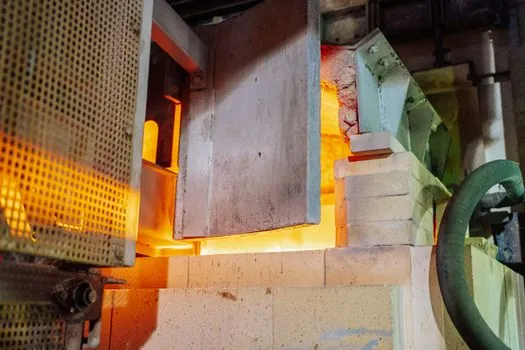
The literature frames PGM optimization as a manufacturing chain problem spanning mold material selection, property and deformation characterization of the optical glass, and process control; the goal is constitutive modeling that links mold temperature, soak time, and cooling rate to the final lens figure and refractive index distribution [S3]. The Industry 4.0 framing in the precision glass molding literature argues that this coupled modeling is what unlocks higher yield and tighter index control, and is positioned as a necessary step before PGM can be treated as a fully digital, sensor-closed process [S3].
For mold and die shops, the practical translation is a closed-loop thermocouple map on both mold halves, a controlled cool-down ramp matched to the glass structural relaxation curve, and incoming-glass batch certification against the supplier's transition temperature and viscosity curves; without those three, the same mold and the same nominal glass will produce different lenses lot to lot [S3].
Standards, measurement, and what to verify before quoting
Lens blank production for prescription ophthalmic lenses still uses a pour-and-cure route with about 22 hours of oven cure on cast resin between two glass molds, surfacing then cuts sphere, cylinder, and progressive curves before hard coating, AR coating, edging, and tinting [S5]. This is the lowest-volume workflow and is useful as a reference benchmark: even custom cast lenses go through a mold step, and the mold surface quality sets the ceiling for every downstream operation [S5].
Before quoting any optical mold, the data the buyer should put on the table are: target material (glass grade with Tg, or polymer grade with MFI and water absorption), required surface roughness Ra in nm, required form accuracy in µm or waves, coating menu and deposition temperature ceiling, expected annual volume, and ingress or environmental rating (IP66 is a common minimum for outdoor lighting lenses) [S1][S2][S4]. With that data, the mold builder can pick insert material (tungsten carbide / SiC / hardened steel), machining route (single-point diamond turning, multi-axis diamond lathe, or precision grinding + polishing), and the production workflow without guesswork [S1][S3].
The next trackable signal is the published release of optical-grade COP and COC grades with lower birefringence and higher heat resistance, which has been quietly redrawing the line between polymer OIM and PGM in mid-spec applications such as AR/VR pancake lenses and automotive headlamp projection modules; mold shops that standardize on diamond-turned inserts today keep the door open to either material lane without re-tooling the mold base [S1][S4].
This topic is covered further in Heat Exchanger Types and Industrial Applications: A Spec-Driven Selection Map.