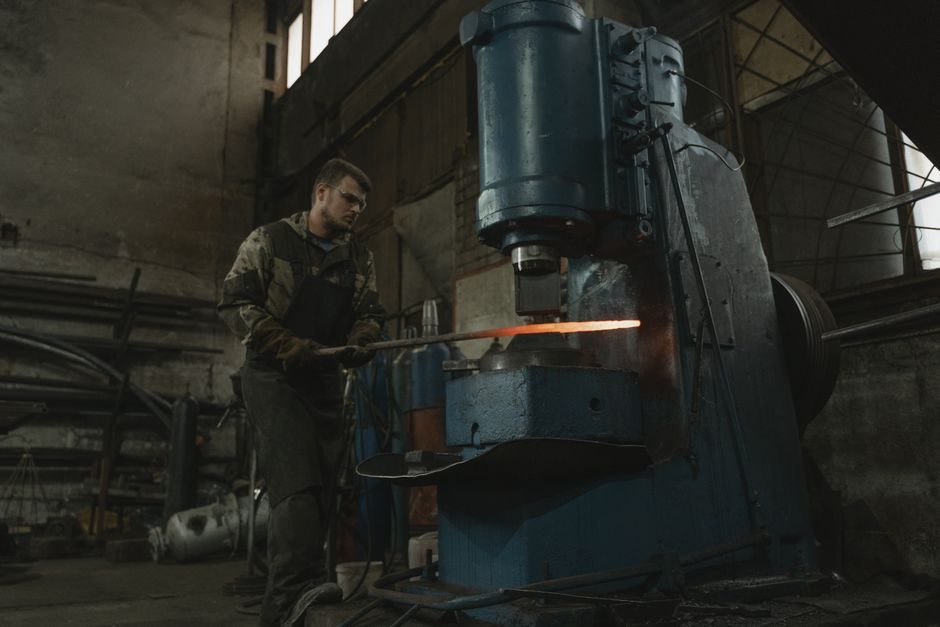
Demolition hammers are selected by single-blow impact energy, blow rate, and tool-shank interface, with operating weight as a downstream consequence of those three. Bosch groups its breaker line into three impact-energy bands on its 2026-06-27 product page: a sub-15 J compact class, a 16-25 J mid-class, and a 25-80 J heavy class [S3].
The whole breaker market uses two tool shanks — SDS-max (18 mm collar, common from ~1,500 W upward) and 28 mm/30 mm hex (predominant on the 1,500-2,000 W electric and pneumatic heavy breakers) — plus a smaller SDS-plus (10 mm) on 5-8 J chipping hammers. Matching the shank to the chisel/more point inventory on site is non-negotiable.
Impact Energy Bands and Where Each Band Is Used
Impact energy per stroke, expressed in Joules, is the single best predictor of breaking productivity and is the metric Bosch uses to slice its catalog [S3]. The Bosch GSH 5 CE and similar 5 kg-class chipping hammers sit at 2-8 J, suited to chasing channels in masonry, removing tile, and light plaster scarification. Mid-class breakers in the 11-16 J range (typical 10-13 kg, ~1,500 W input) are the wall and floor workhorses for residential structural openings, balcony demolition, and HVAC penetration work.
Floor and road work jumps to the 25-40 J class, exemplified by 17-25 kg SDS-max breakers with ~1,600-1,750 W input [S3]. Above that, 1,500-2,000 W heavy breakers delivering 60-80 J per blow are specified for foundation demolition, bridge deck breakout, and asphalt patch removal. A 1,500 W SDS-max machine at 25-30 J has roughly 3-4× the per-blow energy of a 1,000 W SDS-plus chipper, so productivity scales non-linearly with motor size.
Tool Shank and Chuck Selection
SDS-plus (10 mm) and SDS-max (18 mm) are Bosch-developed shank standards that share the same insertion geometry family but differ in cross-section and lock-pin position. SDS-max is mandatory above ~1,500 W in the Bosch catalog, and every Bosch demolition hammer above the 11 J class is SDS-max [S3].
Hex shanks (commonly 28 mm and 30 mm) appear on heavy pneumatic breakers and on a few electric 2,000 W-class units, plus on breaker tools supplied with adapter sleeves for SDS-max machines. The selection rule: standardize on SDS-max for any new electric breaker purchase unless the existing site inventory is hex, in which case hex adapters let a mixed fleet coexist. The GSH 11 VC and GSH 16-30 sit in the SDS-max category [S3], which is also the shank of choice for most OEM chisels and self-sharpening moil points stocked in 2026.
Power Source: Electric, Cordless, or Pneumatic
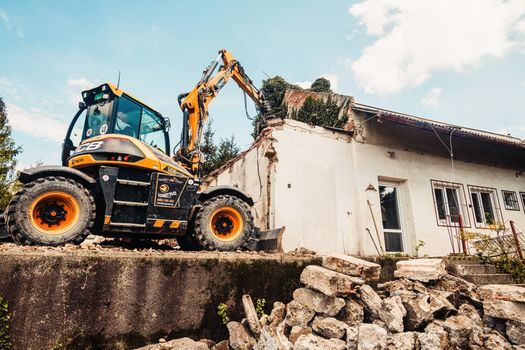
Mains-electric demolition hammers still dominate 1,500-2,000 W class work because no cordless pack can deliver 60-80 J per blow for a full shift. Within the Bosch 2026 catalog, the 1100-2000 W corded range covers every heavy-breaking class from 11 J to 80 J [S3].
40-60 V cordless breakers in the 5-15 J class are now a credible option for interior renovation where generators and trailing leads are a fire/loss risk, and for roof and balcony work. The trade is energy density: a 1,500 W corded 11 J SDS-max machine runs indefinitely; an equivalent-output cordless breaker typically needs 2-3 kWh of battery per 8-hour shift. Pneumatic breakers (60-85 J class) remain standard in quarry and pre-cast concrete yards for two reasons — they survive dust ingestion far better than any electric motor, and plant air is already paid for.
Selection Criteria Comparison Across the Three Classes
Side by side, the three impact bands split cleanly on five decision criteria. Use the comparison below to shortlist before you look at a price list. [S1]
Compact 2-8 J / 5-7 kg chipping hammers win on operator-fatigue hours and precision work but lose on per-hour concrete removal; mid-class 11-16 J / 10-13 kg SDS-max is the best productivity-to-handling ratio for a general contractor; heavy 25-80 J / 17-30 kg breakers win on production rate per shift and lose on finishing, vibration dose, and scaffolding loading. Vibration matters: tri-axial values for the heavy class commonly sit at 8-12 m/s² versus 4-7 m/s² for the mid-class, which means the heavy class pushes an operator into the 5 m/s² A(8) action limit roughly 2× faster at the same trigger time.
Material hardness shifts the right answer. C30/37 residential concrete breaks cleanly with a 16 J machine; C50/65 bridge deck or pre-cast typically wants 30 J or more to avoid stalling and to keep chisel life reasonable. A 1,000-1,500 W mid-class breaker on C50/65 will surface-fracture the paste but leave aggregate untouched.
Vibration, Dust, and Operator Safety Thresholds
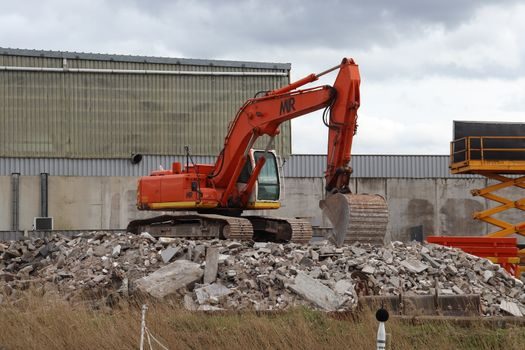
Hand-arm vibration is regulated under ISO 5349 and EU Directive 2002/44/EC, with a standard action value of 2.5 m/s² A(8) and a limit value of 5.0 m/s² A(8) over an 8-hour day. Mid-class breakers at 6 m/s² hit the limit value in roughly 5.5 hours of trigger time; heavy breakers at 10 m/s² hit it in about 2 hours. [S2]
Dust extraction is now a non-optional spec line for interior work. Most 2026 SDS-max breakers ship with a dust shroud interface matched to M-class extractors; a sealed shroud plus M-class H vacuum keeps respirable crystalline silica below the OSHA PEL of 0.05 mg/m³ on most concrete-breaking tasks. Without extraction, even short breaking cycles blow past that threshold within minutes.
Standards, Spares, and Total Cost Reality
Specifying a demolition hammer is partly a spares-and-service decision. A 1,500 W SDS-max machine typically uses 1,500-3,000 hours of carbon-brush life per set, 4-6 grease intervals in its grease-gun-lubricated gearbox, and a hammer-mechanism rebuild at 800-1,200 working hours. The Bosch 0612308061 platform on eReplacementParts.com documents the typical exploded BOM of brush caps, hammer springs, grease nipples, and chuck sleeves for a class-typical 1,500 W SDS-max breaker, and the same convention applies across the 11-16 J SDS-max class [S1].
Total cost of ownership is driven by chisel wear, not electricity. A budget moil point on a 60 J breaker may deform in 20-40 hours; a quality self-sharpening point on the same hammer runs 200+ hours. Multiply that by three or four points per crew, and the chisel line item dwarfs the purchase price over a year.
Buying Decision Rules of Thumb
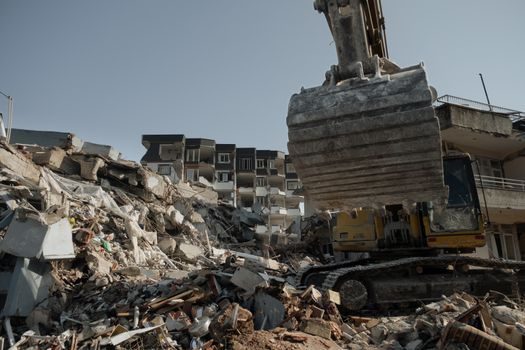
For a general contractor running mixed wall-and-floor demolition, the 1,500-1,600 W / 11-16 J SDS-max class is the lowest-risk purchase. For utility and road crews producing tonnage of broken concrete, jump to the 25-40 J / 17-25 kg class, and accept the vibration-management overhead. For quarry and pre-cast, pneumatic 60-85 J is still the only rational answer. For interior renovation and finishing, a 1,100-1,300 W / 5-8 J SDS-plus chipper with extraction cover is the right tool, and the cordless variants in this class are now mature enough to specify. [S3]
Trackable signals to watch: chisel pricing in 2026 Q3 (a leading indicator of carbide supply tightness), and any 60 V-class cordless launch above 20 J single-blow — that would be the first credible battery replacement for corded mid-class breakers.
For component-level specifications, see demolition hammer, linear guide, and rotary hammer.
For related coverage, see Terminal Block Price & Cost Guide: Bands, Levers and Sourcing Reality.