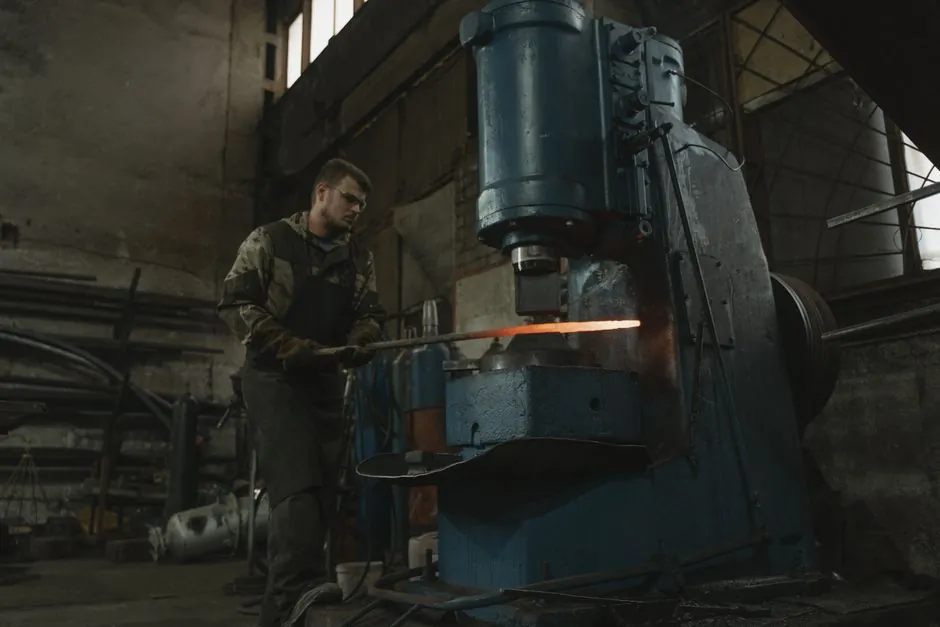
Die-casting molds are built from hardened steel because the process requires much higher heat and pressure [S3].
DME offers A-, B-, T-, AX-, X-, and Master Unit Die (MUD)-series mold bases as pre-engineered assemblies, plates, and components [S2].
Process Difference Determines the Base Architecture
Die casting pushes molten metal, usually aluminum or zinc, into a mold under pressure [S3]. Injection molding pushes melted plastic into a mold under pressure at a lower temperature than the metal used in die casting [S3].
That temperature and pressure difference drives the tooling decision. Die casting requires much higher heat and pressure, and its molds are built from hardened steel [S3]. Injection tooling can be built from aluminum or steel because plastic melts at a substantially lower temperature than metal [S3].
The distinction also extends beyond cavity inserts.
Steel Selection for Each Tooling Type
These commercial dimensions and grades establish a practical selection framework for plastic tooling, but the supplied data does not assign a specific die-casting steel grade to every functional plate.
Do not copy an injection base's No. 1, No. 3, or No. 7 configuration into a die-casting package without confirming the die block specification. Injection-mold base plates are structural components in a lower-temperature process, whereas die-casting die blocks also function as pressure-containing, heat-resistant cavities [S2][S3].
Criterion-by-Criterion Base Comparison
On molding temperature, die casting handles molten metal, including aluminum, zinc, and magnesium, while injection molding handles lower-melting polymers including PP, ABS, nylon, and polycarbonate [S3]. On cavity tooling, die casting requires hardened steel, while injection tooling may use aluminum or steel [S3]. These are the two decisive differences.
On architecture, DME's B-Series injection base combines the top clamp plate and A-plate into one A-clamping plate and uses a reinforced B-plate, producing a 5-plate stack [S2]. The A-Series uses a 7-plate stack containing the top clamp plate, A-plate, B-plate, support plate, ejector bar, ejector retainer plate, and a 3-piece housing [S2]. A casting mold base should instead be laid out around the greater heat load, pressure load, cooling arrangement, and thermal movement of die casting.
Die-casting molds cost more to build [S3]. Die-casting molds cost more to build and can produce stronger, heavier parts [S3]. The economic case for either base is tied to production volume and material value rather than plate price alone.
Architecture and Sizing
DME offers A-, B-, T-, AX-, X-, and Master Unit Die (MUD)-series mold bases as pre-engineered assemblies [S2].
Applications and Intended Users

Use a die-casting base when the product is aluminum, zinc, or magnesium and the business case supports the higher tooling burden [S3][S4]. Die casting is suitable for manufacturing geometrically complex parts [S4].
The base is not for high-pressure molten-metal service, and a die-casting die is not a substitute for an injection base. Although the operating cycles resemble one another, the thermal load and steel requirements differ enough that the assemblies should not be interchanged without a separate engineering review [S3][S5].
Failure Modes, Thermal Control, and Maintenance
Die-casting tooling can suffer from thermal fatigue, heat checking, corrosion, and dimensional drift when hot, high-pressure metal repeatedly contacts the die surface [S3][S4]. Entrapped gas can also become a casting defect when the die is not properly prepared and vented [S4]. These risks make cooling-system performance and die-surface maintenance central to base selection.
Injection tooling avoids molten-metal heat input but still requires control of melt temperature, packing pressure, cooling time, and ejector force [S3]. Incorrect alignment or insufficient plate stiffness can distort the parting line and transfer load into guide and ejector components. A robust base therefore needs a defined guide scheme, adequate support behind the cavity plate, and ejector travel compatible with the part [S2].
For die casting, compare cooling-channel design using the reference on copper alloy versus steel cooling channels, because thermal control affects the steel die's service life. For either process, record die temperature, cycle time, cavity pressure, and maintenance interventions because average cycle data alone cannot explain wear or alignment loss [S3][S4].
Procurement Checklist and Supplier Documentation

Request a plate-by-plate schedule rather than a generic grade statement. For an injection base, identify the series, dimensions, plate thicknesses, and steel type; DME's A-Series is a 7-plate design offered in No. 1, No. 3, and No. 7 steels with thicknesses from 7/8 in to 5-7/8 in [S2]. For a die-casting base, identify the die-block grade and condition separately from the support, clamp, guide, and ejector materials.
Require drawing-controlled plate thicknesses, guide locations, tie-bar or mounting arrangements, and machined interfaces. DME states that its pre-engineered assemblies, plates, and components provide interchangeability, metallurgical consistency, and cleaner cavity steels [S2]. Those benefits depend on the supplier's actual drawing and inspection definitions, not on a supplier name alone.
Verify die casting suitability through functional checks of clamping alignment, thermal growth compensation, cooling access, ejector motion, and the installed machine interface. For injection molds, confirm cavity size, insert location, cooling channels, guide layout, and ejector-system compatibility [S1][S2]. The clean sourcing decision is to compare complete, grade-controlled plate schedules rather than order both products as generic mold steel.
Track the next drawing release for confirmation of the molding process, material family, production volume, projected area, and selected plate schedule, then freeze the base only after those inputs are approved [S1][S3].