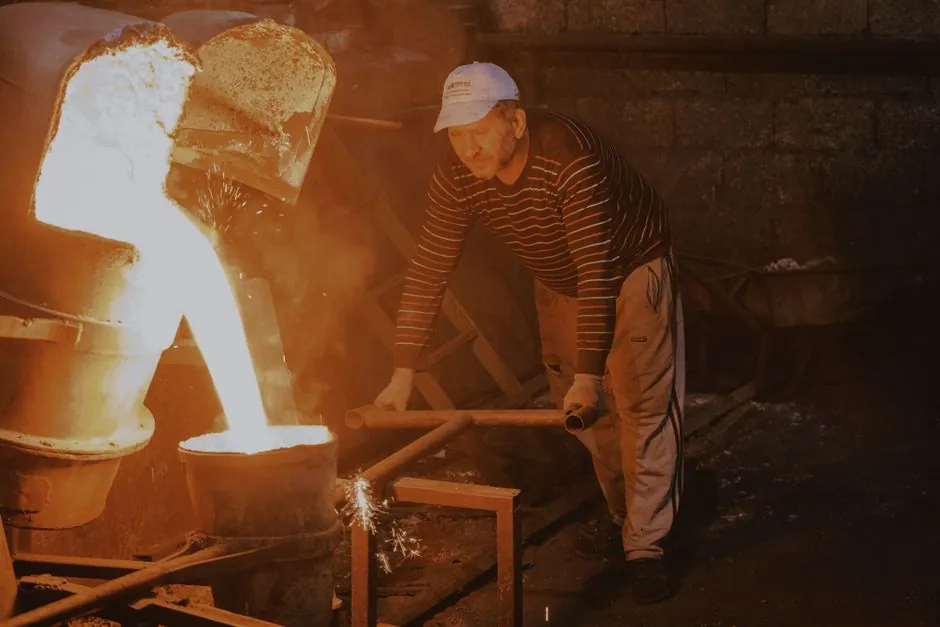
Die casting becomes the lowest unit-cost option once annual production crosses roughly 20,000 parts, with the cross-over against sand casting commonly cited around 1,000 pieces per month, per foundry guidance compiled in 2026 [S2][S5].
Sand casting remains the economic choice for runs under 1,000 parts per month thanks to pattern tooling in the $500 to $3,000 band, while investment casting fills the low-to-medium band with $6,000 to $30,000 wax-injection dies and ISO 8062 CT4 to CT7 tolerances, with a 2026 industry comparison putting sand casting's per-piece cost at "medium" against die casting's "low" above the 20,000 annual threshold [S4][S5].
Volume Thresholds: Where Each Process Wins
Sand casting owns low-volume and very large parts, with practical runs from a few ounces up to 200-plus-ton castings such as ship propellers above 10,000 kg, and minimum wall thickness around 3 mm for light alloys and 5 to 6 mm for ferrous metals [S4].
Investment casting fills the low-to-medium band, ideal for runs that justify a $6,000 to $30,000 wax die with a 4 to 12 week build, after which unit price can drop 60 to 80 percent moving from 10 to 100 pieces because near-net-shape output eliminates most secondary machining [S4][S1].
Die casting becomes the right answer once annual volumes land in the 20,000 to 1,000,000+ range, where a hardened steel die rated for 150,000 to over 1,000,000 shots amortizes the high upfront tooling across enough parts to drop per-piece cost below either sand or investment casting [S3][S5].
Cost and Tooling Math Behind the Crossover
Sand casting patterns from wood, polyurethane, or 3D-printed tooling run $500 to $3,000 and ship in 1 to 2 weeks; investment casting wax dies run $6,000 to $30,000 with 4 to 12 week lead times, while die casting dies are the most expensive of the three but turn parts out in seconds per shot [S4][S5].
The crossover math is straightforward: die casting tooling is "very high" cost with "poor" turnaround, but per-piece cost drops to "low" while sand casting per-piece cost stays "medium" even after amortization, a comparison Surecast Foundry published and which still reflects the 2026 market [S5].
Industry guidance notes that the right break-even calculation is "desired payback period" for tool cost versus the number of parts needed to recover that cost, the framework that puts die casting ahead above ~20,000 annual parts for most non-ferrous components [S3].
Tolerance, Surface Finish, and Material Boundaries
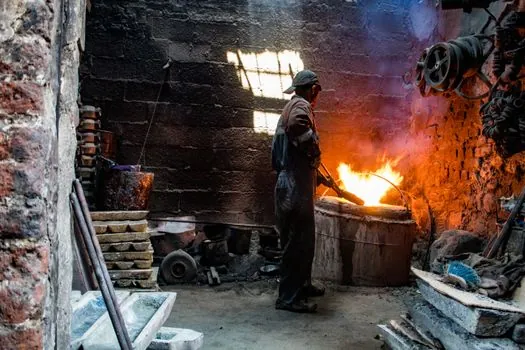
Die casting linear tolerance runs roughly ±0.050 mm up to 25 mm, ±0.075 mm up to 50 mm, ±0.100 mm up to 75 mm, and ±0.125 mm up to 100 mm, with about 0.025 mm added per extra 25 mm, beating investment casting's ±0.250 mm to ±0.500 mm over the same ranges [S3].
Surface finish tracks the same ranking: investment castings exit the ceramic shell at Ra 1.6 to 6.3 µm, sand castings land at Ra 12.5 to 50 µm, and high-pressure die castings sit at the "best" end, just below the investment casting finish, per the same 2026 vendor matrix [S4][S5].
Material choice is the hard boundary: die casting is restricted to non-ferrous metals (aluminum, zinc, magnesium) because higher-melting ferrous alloys destroy the die, while both investment and sand casting cover ferrous metals including stainless steel and high-temperature alloys [S1][S3].
Decision Matrix: Sand vs Investment vs Die Casting
Annual volume below 1,000 parts favors sand casting on tooling cost and part size flexibility, with no practical upper weight limit; investment casting wins the 1,000 to 20,000 part band on tolerance and finish; die casting wins above 20,000 parts per year on per-piece cost, cycle time, and repeatability [S2][S4][S5].
For ferrous alloys, sand and investment casting remain the only real options, since die casting cannot run iron or steel; for non-ferrous aluminum or zinc components under tight tolerances, the volume crossover for switching from sand to die casting lands near 20,000 annual parts, the same threshold where investment casting is no longer cost-competitive either [S1][S3][S5].
One process caveat: when die-cast part volumes drop into "service-level" territory (often well below 20,000/year for legacy or end-of-life parts), sand casting becomes the right fallback because the die-cast vendor cannot economically dedicate die time, and chemically bonded no-bake sand can hit ±0.056 in. versus ±0.103 in. for green sand on the same feature [S4][S5].
Selection Criteria and Common Failure Modes
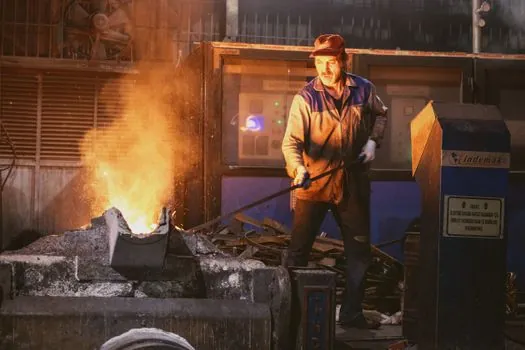
Pick sand casting when the part exceeds 1,000 lb, when tooling budget is under $3,000, or when the alloy is ferrous, but budget for CT10 to CT13 tolerance (roughly ±1 to ±3 mm) and Ra 12.5 to 50 µm finish, which usually means secondary machining [S4].
Pick investment casting for low-to-medium volume runs in stainless steel or complex geometry, with ISO 8062 CT4 to CT7 tolerance (roughly ±0.1 to ±0.3 mm) and Ra 1.6 to 6.3 µm finish, but accept a 4 to 12 week die build and per-piece cost above sand casting in this band [S1][S4].
Pick die casting for non-ferrous parts with annual volume above ~20,000, sub-millimeter wall thickness, ±0.005 in. tolerance, and draft angles of 0.5 to 2 degrees, but accept high die cost, the inability to cast ferrous alloys, and a typical size ceiling on small-to-medium parts; details on die casting and the die casting machine class itself are worth confirming with your die casting die builder before locking the design [S3][S5].
For low-volume prototyping in any of these processes, 3D-printed wax or sand patterns can now bypass conventional tooling entirely, a 2026 option that compresses lead time from weeks to days on runs of a few hundred parts [S4].
Sourcing and Standards Reference
Investment casting dimensional capability aligns with ISO 8062 casting tolerance grades CT4 through CT7, while sand casting sits at CT10 through CT13, giving a buyer a numerical way to compare published supplier capability [S4].
For aluminum and zinc work, the typical tolerance callout is ±0.005 in. for die casting and ±0.030 in. for sand casting, matching the comparison Surecast published and consistent with 2026 foundry practice [S5].
For low-volume sand work, chemically bonded no-bake systems such as the sand casting mold variants built on resin-bonded aggregate can hold roughly double the precision of green sand, useful when volumes are too small to justify die casting [S4][S5].
Track these signals going forward: any 2026 update to the rough 20,000-part annual crossover for non-ferrous die castings, and any published change in 3D-printed pattern lead times, both of which would shift where the die casting process pulls ahead of sand and investment casting.
Background reading: Acetylene vs Propane for Oxy-Fuel Cutting: Speed, Cost, and Spec Matchup.