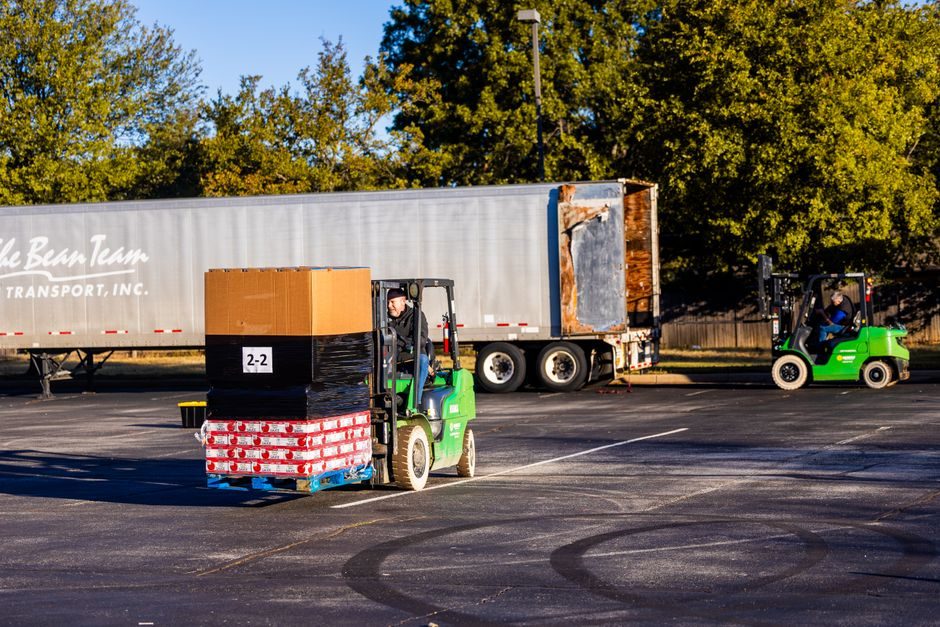
Spec a counterbalance diesel forklift in four passes: rated load at the standard 500 mm load centre, maximum fork height with mast type, engine emission tier matched to site jurisdiction, and tyre/road-surface pairing for the duty cycle [S1][S3].
Most 4-wheel ride-on diesel models cluster between 1,000 kg and 5,000 kg rated capacity, with mainstream mast heights of 3 m (2-stage) to 6 m (3-stage full free-lift) — Hanselifter's HDLS series is a representative 1.0–5.0 t / 0–6 m envelope [S1]. Two-stage masts handle standard pallet racking; 3-stage full free-lift masts are mandatory where overhead clearance is constrained.
Load Class and Load Centre: The First Filter
1.0–2.5 t trucks target light warehousing, single-pallet order picking and trailer loading; 3.0–4.0 t is the workhorse band for general manufacturing and timber/steel yards; 4.5–5.0 t covers brick, bagged cement and beverage-keg handling [S1][S4]. Rated capacity is always quoted at 500 mm load centre; capacity derates linearly as load centre moves outward, and derates further with mast tilt and sideshift engaged [S3].
Selection rule: pick the next-capacity class above your heaviest realistic load to retain a 20–25% stability margin — a 3.5 t-rated truck should not routinely carry 3.4 t, because dynamic cornering loads and mast extension can push the actual moment beyond the static rating [S3]. Engine/transmission choices (diesel vs LPG/petrol) and operator position (seated vs stand-on) are catalogue-filter options on the same capacity frame [S3].
Mast Type, Lift Height and Free-Lift Trade-Off
Hanselifter's HDLS series lists 0–6 m lifting height as the standard envelope, which covers ~3 m single-mast, 4–4.5 m 2-stage FFL, and 5.5–6 m 3-stage FFL installations [S1]. Closed mast height, free lift, and maximum extended height must all fit the building's doorway, ceiling and sprinkler clearance — the spec sheet publishes H1 / H2 / H3 / H4 in that order [S3].
Tilt angle of 6° forward / 12° backward is the conventional counterbalance envelope for a CPCD 2.0 t truck, single solid tyres, and standard fork carriage [S3]. Where load surfaces are uneven (yards, loading docks) or load is tall (textile bales, paper reels), widen the rear tilt margin and consider load backrest extension. Operator noise at the ear must stay below EN 12053 limits — 86–88 dB(A) is a typical diesel truck at rated fan speed [S3].
Engine, Emissions and Indoor/Outdoor Site Constraints
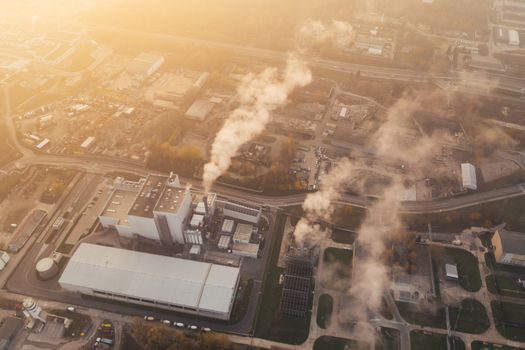
Internal-combustion forklifts come in diesel, petrol, LPG/gas and dual-fuel variants; for outdoor heavy-duty work, diesel dominates because of torque density, fuel availability and lower LPG bottle-swop downtime [S3]. Hanselifter publishes EURO III compliance with a NETT© exhaust purification system on its HDLS diesel range, with a fully enclosed cabin (heater + optional A/C) available for outdoor all-weather operation [S1].
For EU sites, the engine emission tier (EURO III / Stage V) and any site-level fume extraction determine whether a diesel truck can be used near open doors vs strictly outside. The major comparison axis here is diesel vs electric: diesel gives faster refuelling, higher sustained torque, and lower capital cost per kW; electric (lithium-ion) gives zero local emissions and lower indoor noise but requires charging infrastructure and battery capacity matching to the shift pattern — for a deeper indoor/outdoor decision matrix, see the forklift selection reference and a parallel heavy-duty use case in the rough terrain forklift guide [S1][S3].
Tyre Choice: Cushion, Solid Pneumatic and Air Pneumatic
Single solid tyres are the standard fit on a CPCD 2.0 t indoor truck — lowest rolling resistance, no punctures, but harsh ride and poor heat dissipation [S3]. Pneumatic (air-filled) tyres are mandatory for outdoor yards and rough concrete; solid pneumatic (resilient) splits the difference for mixed indoor/outdoor fleets where puncture risk is real but ride quality still matters.
Selection rule: cushion/solid for smooth indoor floors, pneumatic for outdoor yards and unpaved surfaces, resilient solid for mixed-duty fleets with debris exposure. Wrong-tyre selection is the most common cause of premature drive-axle bearing failure on diesel trucks — heat-soaked solid tyres on a long gradient generate more cumulative thermal stress on the hub than a pneumatic of the same load rating [S3].
Power, Drivetrain and Transmission Options
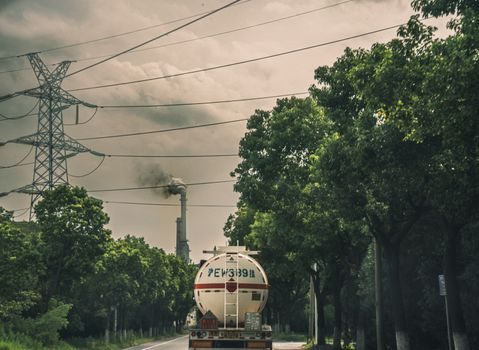
Diesel forklifts in the 1.0–5.0 t band ship with torque-converter + powershift transmissions as standard, with hydrostatic options on smaller 1.0–2.5 t trucks for precision inching around racking [S1]. Engine choices on the Chinese OEM supply side span Isuzu, Xinchai, Mitsubishi and Komatsu — Komatsu-powered diesel units are a distinct sub-category on factory-direct listings, and choosing the engine brand often drives service-network coverage more than any spec delta [S2].
Filter and consumable availability is the hidden total-cost driver: a Komatsu engine in a region without a Komatsu dealer will cost 2–3× in spares and downtime versus a locally supported Isuzu or Xinchai. Verify the engine model code on the truck's nameplate — not the marketing brochure — before signing the PO [S2].
Cabin, Ergonomics and All-Weather Operation
Hanselifter's HDLS cabin option includes heater with optional air conditioning, enlarged foot room, and a "functional, clearly designed" cockpit with grouped controls [S1]. Cabin fitment is the single biggest productivity lever on an outdoor diesel truck: operators will keep the cab closed in rain and cold, and the shift throughput difference vs an open-frame truck in winter is typically 15–25%.
For noise, EN 12053 declared sound level is the EU baseline — anything above 88 dB(A) at the operator's ear typically triggers mandatory hearing-protection signage and operator audiometric testing. If site noise is constrained, the 86 dB(A) end of the diesel range is achievable only with the cabin closed and well-sealed [S3].
Supplier Sourcing, MOQ and Lead Time (2026 Supply Side)
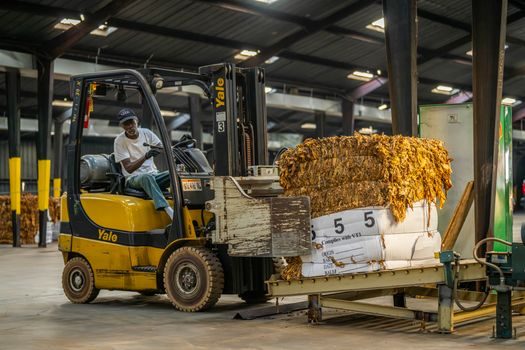
Wholesale diesel-forklift listings on Made-in-China show three core price bands: US$1,500–5,000 for small/telescopic electric units (not diesel), US$8,000–15,000 for 2.0–3.5 t entry diesel, and US$16,000–30,000 for 4.0–5.0 t heavy-duty diesel with cabin [S5]. Minimum order quantity is typically 1 unit on Alibaba/Okorder trade listings, with 1 unit/month supply capability on the Noblelift CPCD20 reference spec [S3].
Chinese OEM capacity is currently organised into K-series (1.5–5.0 t standard), T-series (2.5–3.5 t high-mast), H-series (3.0–3.5 t heavy), and Z-series (3.0 t specialised) lines — four parallel model families on the same Qingdao Yeaweyda platform alone [S4]. SNSC's portfolio explicitly bundles diesel-engine forklifts, LPG/gas forklifts, rough-terrain forklifts, electric reach trucks and telescopic handlers under one factory roof, which is useful when a single yard needs a mixed fleet [S6]. Comparable comparison axes — engine tier, mast class, tyre type, cabin fitment — apply across this whole supplier base, and the same load/torque reasoning used in adjacent heavy-equipment selection (e.g. the cycloidal reducer shock-load map) scales directly to forklift drive-axle sizing [S4][S6].
Trackable signals for the next procurement cycle: confirm EURO Stage V availability on the K-series 3.0–5.0 t range from each shortlisted supplier (Stage V replaces Stage IIIA for non-road mobile machinery in the EU), verify Komatsu vs Isuzu engine-bracket compatibility with your existing service contract, and request the EN 12053 declared noise figure on the data sheet rather than the marketing brochure. Capacity range 1.0–5.0 t and 0–6 m lift is now the de-facto mainstream band; buyers needing above 5.0 t should plan for a 6–10 week lead time against 2–4 weeks for the mainstream band [S1][S3][S4].
For component-level specifications, see linear guide.