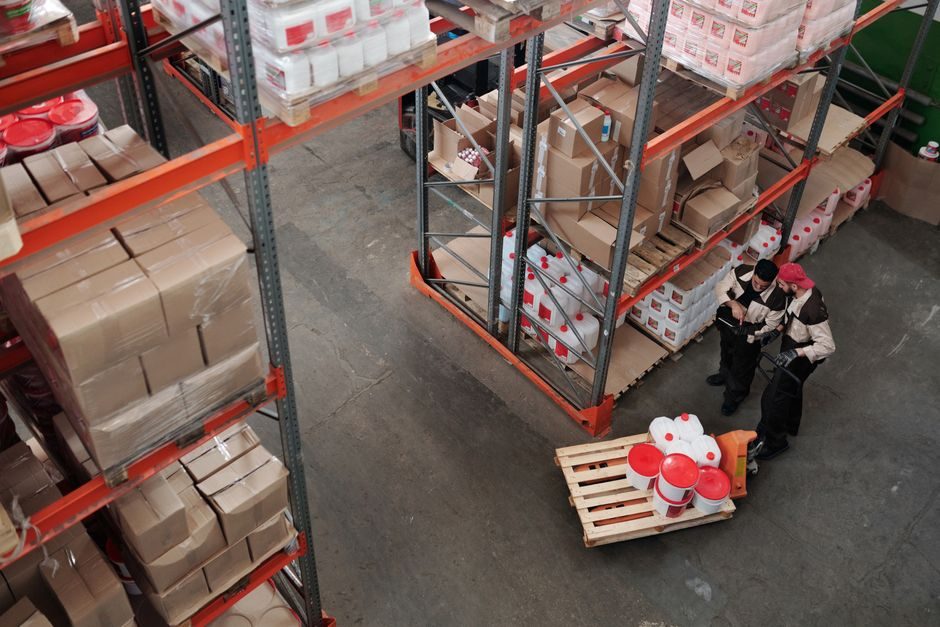
Electric counterbalanced forklifts from mainstream Chinese OEM lines span 1.6-10 t rated capacity, with FOB price bands of US$3,500-12,500 per unit for the common 2-5 t warehouse models, as quoted on Royal Forklift's Made-in-China catalogue page [S2].
For light-duty aisles the stacker class sits much lower — entry electric stackers run 1600-4500 mm lift height with 1.2-1.5 kW drive motors, targeting pallet-level work rather than full-pallet load transport [S4]. A new lithium-ion powered reach truck from Zowell is offered at 2 t capacity with up to 9 m mast lift, suited to high-rack warehouse operations [S3].
Capacity Classes and Chassis Architecture
Three-wheel and four-wheel counterbalanced electric chassis dominate the 1.6-5 t segment, with Royal listing combined electric/diesel/LPG variants in 1.6 t, 2 t, 3 t, 4 t, 5 t, 7 t and 10 t sizes on a single product page, indicating that the same frame is sold with battery, diesel or LPG powertrains for the same duty cycle [S2]. Three-wheel dual-driven-motor SKUs in the 1.6-10 t range carry the same CE/ISO markings as the four-wheel rough-terrain units listed on that page, but at FOB US$2,500-23,500/piece depending on mast and tyre package [S2].
Stand-on reach and double-deep reach chassis are a distinct product line, not just a mast option on a counterbalanced truck. Zowell lists a separate Electric Reach Truck category with 1.2-2 t models and 4.5-9 m lift, including a stand-on FRB variant at 2 t × 9 m and a seated FRB variant at the same capacity [S3]. Rough-terrain electric units also exist but are far less common than diesel equivalents — Royal's 3-5 t and 5 t 2WD/4WD articulated off-road line is quoted with Japanese engine options (diesel default), with no pure-electric variant in that off-road family [S2].
Battery Chemistry: Lead-Acid vs Lithium-Ion
Lithium-ion battery forklifts have moved from premium option to mainstream catalogue item. Allied Forklift in Malaysia has positioned itself as an EP Master Dealer in Malaysia since 2020, distributing lithium-ion MHE across Indonesia, Thailand, Myanmar, India and Hungary after 26 years in the materials-handling business (founded 1998) [S1]. Royal's lithium-battery 2 t / 2.5 t / 3 t / 4 t warehouse truck with cabin is priced at FOB US$3,500-12,500/piece, which on the lower end undercuts comparable diesel SKUs of the same capacity (US$3,500-12,500 for 2.5-5 t diesel) on the same supplier page [S2].
Lead-acid remains the default for entry-level 1-2 t electric stackers and pallet trucks because the battery pack and charger represent a smaller share of the unit cost, and the duty cycle (a few hours of intermittent pallet moves) does not stress the chemistry. Cahaya Forklift in Indonesia stocks both lead-acid and lithium swap packs, plus Curtis and Alltrax DC motor controllers, confirming that the spare-parts ecosystem still services both chemistries [S6].
Lift Height, Mast Type and Aisle Envelope
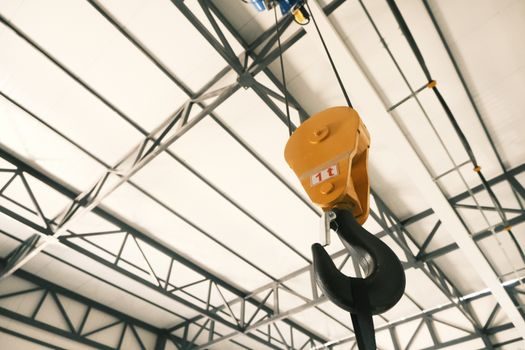
Mast selection is the second-largest cost driver after battery. Royal lists duplex, triplex and full-free-lift masts as options on its 2-8 t LPG/gasoline/diesel SKU, with a US$3,000-5,500/piece band that overlaps the lower end of its 2-5 t lithium-electric warehouse line [S2]. The full-free-lift mast is the relevant option where overhead clearance (doorways, sprinklers, ceiling fans) constrains the truck with a standard two-stage mast.
For warehouses with narrow aisles, the reach-truck geometry is not optional. Zowell's 2 t FRB reach truck is rated to 9 m mast lift, which is a step change from the 1600-4500 mm range of pedestrian electric stackers [S3][S4]. Aisle width for a reach truck is typically 2.6-2.9 m versus 3.5-4.0 m for a counterbalanced sit-down truck, so the building footprint, not the truck price, is usually the deciding factor. For double-deep racking, Zowell also lists a Double Deep Reach Truck in its main product menu, indicating that mast carriage and fork geometry — not just reach mechanism — are different for double-deep versus standard reach [S3].
Decision Matrix: Truck Type vs Duty Profile
Match truck to load, height and aisle before price-shopping. The table below lines the four common electric classes up against the three selection criteria that drive the rest of the spec: [S1]
• Pedestrian stacker (1-2 t, 1.6-4.5 m lift): suited to low-throughput pallet moves on flat floors, dock loading, retail back-of-house; not for long shifts or ramps [S4].
• Counterbalanced 3-wheel (1.6-2.5 t): suited to mixed indoor/outdoor yard work, 8-12 ft aisles, light racking; ground-up drive motor and tight turning radius, but lower travel speed than 4-wheel [S2].
• Counterbalanced 4-wheel (2-5 t, up to 7 t available): the warehouse workhorse, 4-6 m standard mast, optional full-free-lift; covers most general manufacturing and DC operations [S2].
• Reach truck (1.2-2 t, up to 9 m lift): required for narrow-aisle high-rack warehouses above 6 m, but limited to smooth indoor floors and trained operators [S3].
Rough-terrain electric remains a niche. Royal offers a 2WD/4WD 3.5-7 t rough-terrain family with custom logos and attachments, but every SKU on that page is diesel-powered — no pure-electric rough-terrain option is published in that range [S2]. A rough terrain forklift buy evaluating electric should expect either a hybrid diesel-electric drivetrain or accept the duty-cycle limits of a battery-only chassis on unprepared ground.
Total Cost of Ownership: Price Bands and Sourcing
FOB unit prices for a 2-5 t electric counterbalanced truck cluster in the US$3,500-12,500 band on Royal's listing, with 1-piece minimum order and TT or LC terms through Made-in-China's standard inquiry flow [S2]. Hand pallet jacks — useful for last-mile pallet moves in the same DC — sit at US$79-100/piece on the same supplier page, which is roughly 1-2% of the forklift SKU cost and a sensible add-on to a fleet tender [S2].
Goodsense, a Taizhou-based forklift manufacturer with 35+ years of operating history, runs a Made-in-China product catalogue alongside its own site (goodsenseforklift.com) and lists electric trucks as one of its categories — useful as a second-source benchmark when a single supplier quote looks thin [S5]. Tongyuan advertises global delivery with CE/ISO documentation and emphasises the zero-emission, low-noise indoor profile of its electric line — a procurement-spec check worth running even when the price is competitive [S7].
Standards, Spares and Serviceability
CE and ISO 9001/14001/14000/20000 are the baseline certifications Royal publishes on its Made-in-China profile [S2]. For buyers in regulated cold-chain, pharmaceutical or food plants, this is the minimum paperwork to demand from any Chinese OEM before a PO is released. ISO 3691-1 (safety of industrial trucks) is the relevant driver-safety standard, but confirm the exact revision year your buyer or insurer requires before locking the spec — the OEM page does not publish a revision date.
The spares ecosystem is the sleeper risk. Cahaya Forklift in Indonesia lists DC contactor kits, carbon brushes, Curtis and Alltrax controllers, inverters and Komatsu service kits, indicating that the dominant DC motor-control architecture (Curtis) is still field-serviceable in Southeast Asia [S6]. For lithium-ion packs, the equivalent service item is the BMS and charger firmware, which is less commoditised — confirm that the OEM publishes the BMS protocol and that a regional dealer stocks replacement modules before committing. For high-cycle warehouses, a linear guide or crossed roller guide failure inside the mast is a common repair event, and the OEM's lead time on those carriage parts will drive your downtime exposure. Buyers who already operate electric actuators on loading docks or stacker cranes should verify spare-part commonality before standardising on a new forklift brand.
Selection Workflow for a New Fleet Tender
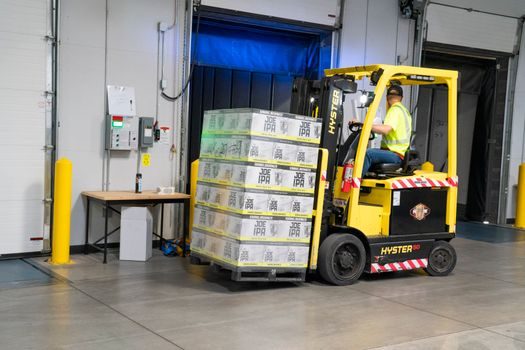
Run the spec-first, then price. Define the heaviest pallet (t), the highest rack position (m), the narrowest aisle (m), the floor condition (smooth/ramp/unpaved) and the shift pattern (single/two/three-shift) before contacting a supplier. With those five numbers, a 2 t counterbalanced 4-wheel at 4-5 m mast is the default for a general DC; a 2 t reach truck at 9 m mast is the right call above 6 m racking in a narrow-aisle warehouse; a 1.2-1.6 t pedestrian stacker covers the dock and pallet-level work without tying up a sit-down truck. [S2]
For a deeper look at the broader electric-truck portfolio including counterbalanced versus reach versus rough-terrain geometries, the forklift reference page maps the same taxonomy against duty cycles. Buyers running mixed indoor/outdoor fleets should also review the electric ball valve and electric actuator lines on the spec encyclopedia for shared BMS, controller and CAN-bus procurement logic — many of the same Asian suppliers that supply electric forklifts also supply the actuator and valve ecosystem, which simplifies vendor qualification.
For related coverage, see Industrial Buzzer Selection: Spec-First Buyer's Guide.