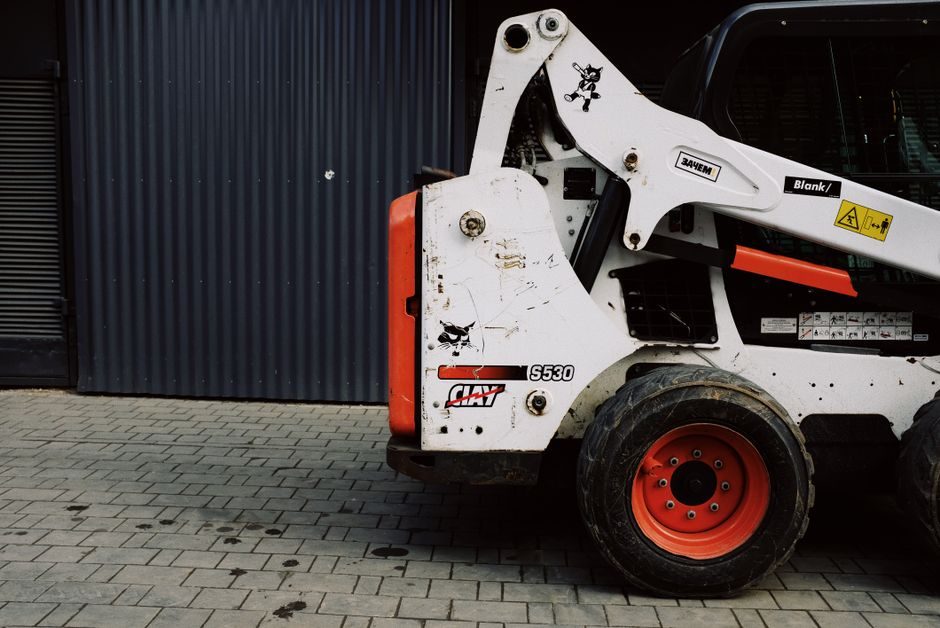
Compact track loaders (CTLs) sit in a 4,000-5,000 kg operating-weight band with 50-75 hp engines for landscaping and light construction, while mid-frame track loaders cross 200 hp and 20-ton class for land clearing and rough grading [S1][S5].
Two OEM moves from May-June 2026 frame the spec conversation: Takeuchi's TL10V-2 vertical-lift CTL at 54.6 kW / 4,460-4,605 kg with a redesigned cab and flotation-pad tracks [S1], and Caterpillar's 963 track loader at 202 hp flywheel [S5][S6]. Selecting between them, or against a skid steer loader alternative, comes down to four data-driven gates.
Operating Class and Engine Power Bands
Track-loader selection starts with operating weight and flywheel power, because these numbers fix transport permits, trailer class, and the bucket/attachment envelope you can run. The Takeuchi TL10V-2 posts 54.6 kW (74.24 hp) and 4,460-4,605 kg (9,832.6-10,152.3 lb) in its DirectIndustry datasheet [S1]. The Cat 963 posts 202 hp flywheel and is explicitly sold as a "land clearing, digging, grading" package in the OEM product page [S5].
For rental fleets and landscaping crews, the sub-5,000 kg / sub-75 hp band is the working sweet spot: it tows on a standard 7,000-9,000 lb trailer, fits through 36-inch gates, and runs most 1,500-2,000 lb ROC attachments without high-flow hydraulics. Above 150 hp the machine moves out of the "compact" bucket and into mid-frame, where the undercarriage is purpose-built steel-link track rather than rubber-belt and ROC climbs past 4,000 lb.
Lift Geometry: Vertical vs Radial
Vertical-lift linkages deliver higher pin height and full-rated lift capacity at mid- to upper-linkage travel, which matters for truck loading and pallet forks; radial-lift geometries trade that reach for higher break-out force at ground level, which is what grading and digging reward. The TL10V-2 is a vertical-lift unit, with Takeuchi's own catalogue line calling out the "vertical lift loader arrangement" as a defining characteristic [S1].
If your job cycle is 60% ground-engage / push-and-pull, radial-lift is mechanically simpler and lighter at the front, which transfers more weight to the rear of the track for traction. If the cycle is 40% or more load-and-carry onto trucks or hoppers, the vertical-lift geometry's retained capacity at the top of the arc is worth the price premium. Operators used to skid-steer controls can transition directly into vertical-lift CTLs because the joystick pattern is identical — a transition path Cat specifically markets for the 963 with its "joystick option provides familiar controls for operators experienced with skid steers/compact track loaders" [S6].
Undercarriage and Ground-Pressure Match
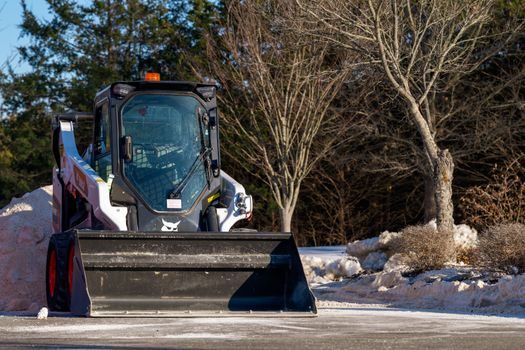
Track-loader ground pressure lives in the 3.5-5.0 psi range for rubber-belt compact units, dropping below 3 psi with wider flotation pads — a number worth knowing because it decides whether the machine sinks into soft topsoil or pads of turf work. The TL10V-2's "quiet track design with flotation pads reduces vibration, noise levels, and improves ride quality" is the OEM's direct acknowledgement that pad geometry drives both operator comfort and ground-pressure distribution [S1].
On finished turf, golf-course work, or snow-covered pavement, specify the widest available rubber belt with single-bar or multi-bar lug patterns matched to the surface. On demolition spoil, rock, or rebar-strewn slabs, switch to steel-embedded or steel-link track and budget for undercarriage wear parts as a separate line item — Cat's own track-selection guide treats undercarriage choice as a function of surface and duty, not a free option [S4]. If the site is mixed, plan for two undercarriage sets and rotate them; this is standard practice on rental fleets per the Finning UK used-equipment channel, which lists track loader inventory alongside compact track loaders as a distinct category [S3].
Hydraulics, Attachments and High-Flow
Standard-flow auxiliary hydraulics on compact track loaders typically deliver 17-23 gpm at 3,000-3,500 psi, enough for brooms, buckets, forks, and most augers. High-flow kits (30-40 gpm) unlock cold planers, hydraulic hammers, and large diameter mulchers. Attachment commonality is the hidden savings line: Cat alone lists buckets, brooms, bale spears, mulchers, hammers, rippers, snow products, stump grinders, trenchers, and tilt-rotate systems as in-house coupler-compatible tools for the skid-steer / compact track / track-loader family [S3].
Match the auxiliary circuit to the highest-demand attachment, not the average. A crew running a 30-inch cold planer for two weeks a year will size the machine for that attachment and rent around it the rest of the time. Buying a high-flow CTL and only using 23 gpm attachments is wasted capex plus 4-6 litres/hour of extra diesel. The Cat 963 is positioned for heavier implement work than a 4,400 kg CTL, and IVT International notes the machine is sold as a "land clearing, digging, grading" package rather than a turf-care tool [S5][S6].
Selection Criteria Matrix: CTL vs Skid Steer vs Mid-Frame Track Loader
The decision comes down to four axes: ground pressure, ROC at full height, transport weight, and per-hour owning cost. A rubber-track compact track loader wins on ground pressure (3.5-5.0 psi vs 6-9 psi for a wheeled skid steer) and ROC retention at the top of the lift arc, which makes it the default on finished surfaces, slopes, and soft ground. [S1]
A wheeled skid steer wins on hard-surface speed, lower purchase price, and lower tyre wear in scrap-handling yards. A mid-frame track loader (Cat 963 class, 200+ hp) wins on production rate per hour for grading, land clearing, and truck loading in rough terrain, but it needs a lowboy and a Class 8 prime mover to relocate. For most B2B buyers running mixed work, the path of least regret is a vertical-lift CTL in the 4,400-4,600 kg band with high-flow hydraulics, flotation-pad tracks, and a coupler compatible with the rental-fleet inventory — the TL10V-2 spec line is a workable template, and the wheel loader class should be benchmarked only when bucket capacity exceeds 2.0 m³.
Operating Cost, Residual Value and Sourcing Path
Compact track loaders in the 50-75 hp band retain 55-65% of list at 3,000 hours when service intervals are honoured; mid-frame track loaders retain less in percentage terms but more in absolute dollars because the entry ticket is higher. Finning's UK used-equipment portal lists compact track loaders, track loaders, and backhoe loaders as separate inventory classes with the same "Cat quality you'd expect — for less" framing, which is a useful reference for what hits the secondary market at year 3-5 [S3].
Source machines through OEM dealer channels for warranty and telematics; source through used-equipment dealers for capex flexibility. For a 2026 spec build, the qualifying checklist is: (1) current-tier engine emissions compliant for the jobsite region; (2) vertical-lift geometry if any load-and-carry cycle exceeds 30%; (3) rubber-track undercarriage sized to the softest ground on the rotation; (4) auxiliary hydraulic flow matched to the hardest attachment; (5) cab design with overhead-door entry if operators are over 95th-percentile male or are PPE-loaded. The TL10V-2's "completely redesigned and enlarged" cab with "smooth low effort overhead door" is a direct response to that ergonomics bar [S1].
Standards, Safety and Cab Ergonomics
Track-loader selection is not governed by a single product standard the way pressure instruments are; instead, the rules come from operator-protection standards (ROPS/FOPS cab certification), regional engine-emissions tiers (EPA Tier 4 Final, EU Stage V), and site-specific rules such as underground-loader fire-suppression for mining. Takeuchi's TL10V-2 listing states it "now meets the very latest emissions standards" without naming a regulation [S1], and the buyer must confirm which tier applies in the destination market before signing the PO.
For cab ergonomics, the practical reference points are: single-joystick control pattern (industry default, common to all major OEMs), joystick vs V-lever/foot-pedal interchangeability (Cat explicitly offers both on the 963 [S6]), and HVAC capacity for hot-climate sites. Slope-indication displays, as marketed on the 963 with "Indicate helps make operation easier by showing machine mainfall and cross slope right on the display" [S6], are now a safety baseline on mid-frame machines and are migrating down into the 75-hp CTL class through optional fitment.
Track-loader selection data points to watch through the rest of 2026: (a) EU Stage V Phase 2 enforcement dates and whether any CTL class below 56 kW is exempted, which would change the Takeuchi TL10V-2's 54.6 kW positioning [S1]; (b) whether Cat extends the 963's joystick / Indicate features down into the next-smaller track-loader class; (c) flotation-pad track SKU expansion at Takeuchi and competitors, since OEM-direct pad options are the most concrete signal of how seriously vendors are taking turf and snow applications.
For related coverage, see Cleanroom System Selection: ISO Class, Wall Panel and FFU Layout Spec Guide.