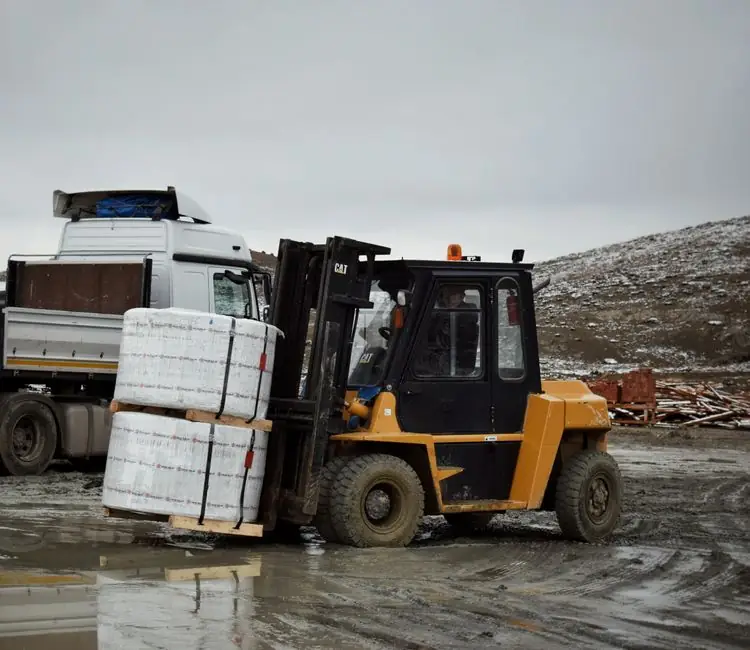
A diesel forklift converts fuel energy into hydraulic pressure and wheel torque through four linked subsystems: a compression-ignition engine, a mechanical transmission, a hydraulic lift circuit, and a counterweighted mast assembly [S3].
Unlike electric counterbalance trucks, diesel models run on diesel or LPG-fueled internal combustion engines and are positioned by suppliers as appropriate for outdoor and heavy-duty service, not for clean indoor air [S1][S4].
Compression-Ignition Engine as Prime Mover
The diesel engine serves as the primary component and power source, with operation defined by compressing air inside the cylinders, injecting diesel fuel into that compressed air, and igniting the mixture by heat of compression rather than spark plug [S3]. This combustion process converts chemical energy into mechanical power on the crankshaft, which then drives both the drive wheels and the hydraulic pump.
Because diesel engines rely on compression ignition, the air-fuel mixture is ignited by the heat generated from compressing air within the cylinders, a behavior that differs from gasoline engines which use spark plugs [S3]. The result is a high-torque output at low rpm, well matched to the heavy load and constant hydraulic demand of forklift duty cycles.
Power Transmission: Gears, Clutches, Driveshafts
The mechanical power generated by the diesel engine is transmitted to the wheels through a transmission system, with diesel forklifts typically using a combination of gears, clutches, and driveshafts to transmit power from the engine to the wheels [S3]. That package allows the truck to move forward, reverse, and steer while under load.
For procurement context, this mechanical driveline is the reason diesel forklifts are heavier and louder than electric equivalents; for a baseline spec of truck classes, capacity ratings, and mast types, see the forklift encyclopedia entry. Where the work moves off paved yards to construction pads or timber yards, the four-wheel-drive variant is covered separately in the rough terrain forklift reference.
Hydraulic Lift Circuit and Mast Mechanics
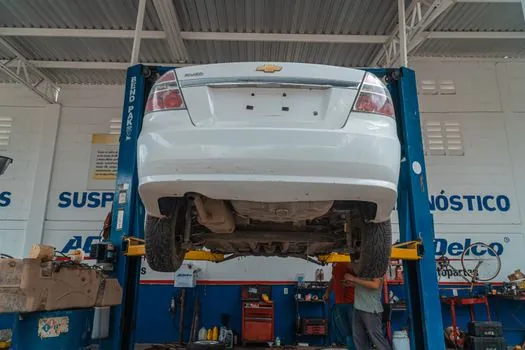
When the operator commands lift, the diesel engine drives a hydraulic pump that forces hydraulic fluid into lift cylinders, raising the pistons and pulling the carriage up the mast rails via chains, with the forks climbing the mast to support the load [S1]. The mast assembly contains rails, chains, and hydraulic cylinders that allow vertical movement, and the carriage is clamped on the mast rails, moving vertically during lifting [S1][S4].
Two engineering principles govern this lift. First, the hydraulic principle: hydraulic systems apply lifting force with pressurized fluid, and because lifting force is large relative to small piston movement, the forklift can raise heavy loads [S1]. Second, the counterbalance principle: the load acts as the front weight on a seesaw, while a cast-iron counterweight at the rear acts as the counter balance, preventing forward tip [S1][S4].
Steering, Brakes, and Operator Controls
Operator controls convert handle or lever inputs into hydraulic spool motion. On the mast side, the lift handle is fixed to a pump that draws fluid and forces it into the lift cylinders; pushing the handle forward signals the forklift to pump more fluid to raise the load, and pulling back discharges fluid to lower it [S4]. The hydraulic pistons and masts are linked, and the lifting forks attach to the main body of the truck via roller chain and pulleys with a defined fulcrum [S4].
Steering on most diesel counterbalance units is rear-axle articulated, since the drive line and counterweight dominate the rear, while service brakes act on the drive wheels through the same transmission housing. Diesel exhaust and noise make these units unsuitable for indoor air quality-controlled zones, and buyers should plan for ventilation, hearing protection, and stage-V or equivalent emission aftertreatment in regulated markets.
Diesel vs Electric vs LPG: Selection Criteria
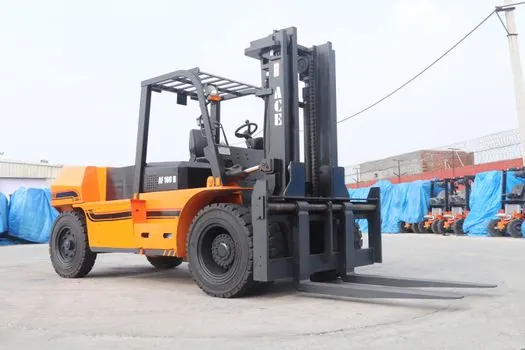
The choice between diesel, LPG, and electric power is set by four decision criteria: duty environment, load profile, runtime pattern, and refuel infrastructure. Diesel wins outdoors and on heavy loads because of torque density and fast refuel; LPG fits mixed indoor and outdoor fleets needing lower emissions; electric units dominate clean indoor warehouses with multi-shift opportunity charging. Rough terrain and unpaved yard work push selection toward diesel four-wheel-drive configurations catalogued under rough terrain forklift duty classes. [S1]
A baseline spec comparison: diesel offers high continuous power, mid fuel cost per kWh, and poor indoor air score; electric offers lower noise and zero on-site emissions but longer refuel (charge) cycles; LPG sits between, with lower particulate than diesel but requiring cylinder change-out. None of the three is universally superior, which is why most large fleets run a mixed power-source pool rather than a single fuel type.
Failure Modes, Maintenance, and Sourcing Signals
Common diesel forklift failure modes trace back to the four subsystems: engine (fuel injection wear, compression loss from soot), driveline (clutch slip, driveshaft U-joint failure), hydraulics (cylinder seal leak, pump cavitation), and mast (chain stretch, fork pin wear). Operators reading lift handle response as 'soft' or hearing a whine from the pump are seeing early hydraulic faults, while black smoke under load points to air-fuel ratio or injection issues. [S4]
For buyers in 2026, two trackable signals matter. First, emission tier transitions: confirm whether a new diesel unit meets the emission standard effective in the destination market, since indoor use of non-compliant units is increasingly restricted. Second, telematics readiness: most current OEM controllers expose CAN-bus fault codes, hours, and load event logs, which feed directly into fleet uptime KPIs and into adjacent specs such as cold chain equipment yard management or concrete pump truck heavy-machinery maintenance regimes, where shared diesel driveline logic applies.
Spec-level background on the components involved: pressure transmitter.