A road roller's five high-wear groups are the drum and its shell, the eccentric vibration unit, the hydrostatic drive train, scraper bars, and the water-spray system; together they account for the bulk of replacement-part spend on any soil compactor or tandem fleet [S1][S2].
Specifying a road roller has more in common with a small hydraulic plant than with a generic dump truck: the engine never drives the wheels directly, it drives a pump, and that pump feeds a motor in the drum or rear axle. That hydrostatic architecture is the reason a single model code such as XCMG 275100294 (sun gear, USD 14) or I227001458 (scraper, USD 35) maps cleanly across machines from the same drivetrain family [S1][S3].
Drum, drum shell, and the eccentric weight inside it
The drum is a hollow steel cylinder; published drum shell thickness on 21 single-drum soil compactors runs 20-40 mm, while the 20 tandem rollers on the same dataset sit at 12-19 mm, a difference driven by the harder abuse cycle on rock and hard-packed earth [S1].
Inside that shell sits an eccentric shaft with adjustable or fixed weights spun by a hydraulic vibration motor; this is the assembly that converts rotary motion into the vertical impulse the drum transmits to the ground. Wear items here are the eccentric bearings, the shaft seals, and the vibration motor itself, and the scraper bar that rides the drum surface is the most frequently replaced consumable, listed at USD 35 for the XCMG I227001458 pattern [S1][S3].
For a broader view of how a compacting drum interacts with the cut surface during rehabilitation work, see Cold Milling Machine Working Principle: Drum, Teeth, Traction, which covers the same impact-and-wear physics on a different machine class.
Engine, hydrostatic pumps, motors, and articulation
The diesel engine on a modern roller is a constant-speed power pack that drives one or two variable-displacement hydraulic pumps; those pumps feed drive motors in the drum and rear axle and a separate motor on the eccentric shaft. There is no gearbox and no clutch, so consumables in this loop are hydraulic oil, return and suction filters, charge-pressure hoses, and the pump/motor seal kits themselves [S1][S4].
Steering is handled by an articulation joint between the front and rear frames plus hydraulic cylinders; the pins and bushings in that joint are greased on a published schedule, and the hydraulic tank (XCMG 226801782, USD 300) is the reservoir that holds the ISO VG 46 or equivalent hydraulic oil the whole machine runs on [S3][S4].
Hydrostatic system care is the second of seven daily inspection items called out in published roller maintenance guidance, alongside engine and fluid checks, drum cleaning, vibration monitoring, tyre or drum wear review, lubrication points, and scheduled preventive service [S4].
Water-spray system, scraper bars, and rear tyres
Tandem rollers and pneumatic-tyre rollers (PTRs) carry a water tank, an electric or 12V diaphragm pump, spray bars across the drum or tyre axle, and individual nozzles that wet the surface so hot asphalt does not stick. The recurring consumables here are the nozzle inserts (mineral-laden water clogs them), the pump diaphragm, the tank filter, and the poly spray bars themselves [S1][S4].
Scraper bars sit at the front and rear of each drum and are the lowest-cost, highest-wear consumable: the XCMG catalogue lists a pattern at USD 35 with a 1-piece minimum order, and operators typically carry two or three per drum as field stock [S3].
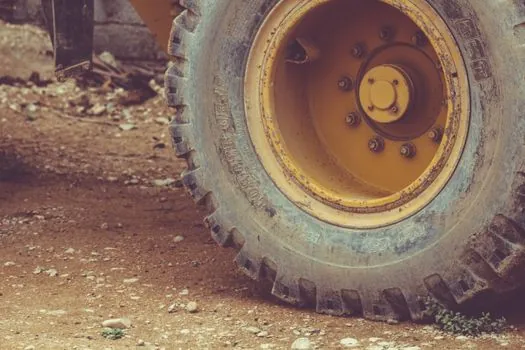
Pneumatic rollers do not have a steel drum; they run two rows of smooth rubber tyres whose contact pressure is set by ballast (water or sand) and tyre inflation. Tyre wear, sidewall damage from debris, and pressure checks are the consumable loop here rather than drum shell thickness [S1][S5].
Consumables, filters, fluids, and the daily-inspection list
A published road-roller maintenance checklist covers seven areas in this order: daily visual inspection for leaks, loose hardware, damaged hoses, warning lights, and unusual wear; engine and fluid checks (engine oil, coolant, fuel, hydraulic fluid); hydraulic system care (hoses, fittings, seals, fluid cleanliness); drum cleaning and scraper contact; vibration response and noise; tyre or drum wear; and lubrication points on the manufacturer schedule [S4].
Filter consumables map directly onto that checklist: engine oil filter, fuel pre-filter and main filter, hydraulic return filter, hydraulic tank breather, and the air-filter element on the diesel engine. For an overview of how compaction machines sit inside the wider construction-equipment family, see construction machinery and equipment, which covers the broader product category.
Coolant and hydraulic-oil sampling at 250-500 hour intervals is the cheapest predictive-maintenance tool on a roller, because vibration-motor and pump failures almost always show up as a rising particle count or a falling viscosity number before any audible warning [S4].
Drum vs tyre vs vibration: which wear group fails first
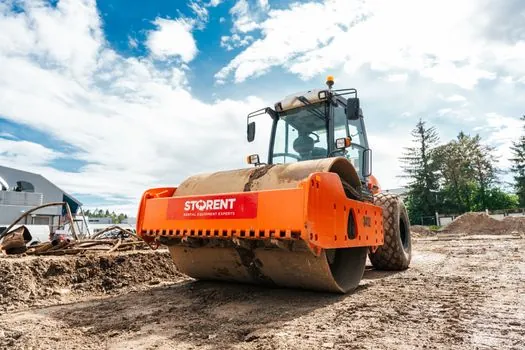
On a soil compactor, the vibration motor and eccentric bearings are the first major failure point, typically at 3,000-5,000 hours, because the impact load cycle is harsh. On a tandem roller, drum shell wear and scraper-bar replacement drive the cost curve, with shell thinning below the 12-19 mm design band being the rebuild trigger rather than a hard hour count [S1][S4].
For a PTR, the limiting wear item is the rubber-tyre set, since the contact patch and inflation pressure set both the compaction result and the surface finish. Vibratory efficiency is set by the eccentric weight and the drum mass, not by the engine size, which is why a 3-tonne vibratory tandem can match the compaction output of a much heavier static roller [S5].
Trackable signals to watch: drum shell thickness measured at four points with an ultrasonic gauge (replace below manufacturer minimum, not on a calendar), vibration-motor case-drain flow above the OEM threshold (rebuild, do not flush), and scraper-bar gap greater than 2-3 mm at the drum's lowest point (consumable replacement) [S1][S4].
Sourcing, model codes, and what to keep on the shelf
Chinese OEM catalogues publish pattern part numbers for the high-rotation consumables: XCMG 275100294 sun gear at USD 14, 231201757 half-shaft at USD 62, 228700187 spline bushing at USD 18, 209901242 right lobe cover at USD 30, 225703109 outlet pipe at USD 50, 228300591 cover at USD 11, and 226801782 hydraulic tank at USD 300, all with 1-piece minimum order and ocean, land, or air freight terms [S3].
UK and European spares suppliers stock the same wear groups as finished assemblies rather than bare part numbers, which is useful when a fleet mixes BOM patterns; ordering by assembly code removes a step in the parts-identification loop [S6].
Minimum field stock for a single soil compactor on a remote site: two scraper bars per drum, one full filter kit, two vibration-motor seal kits, one hydraulic return filter spare, and 20 L of hydraulic oil above the tank capacity, sized off the tank's published volume and the OEM drain-and-fill interval [S3][S4].
Selection criteria and who this guide is for

This guide is for fleet managers, parts buyers, and service engineers specifying or replenishing road-roller spares; it is not for first-time machine buyers, who need a type-selection step (single-drum, tandem, PTR, trench, sheepsfoot, or static) before a parts list makes sense [S5].
Decision criteria for a parts inventory split into three bands: high-wear consumables stocked 1:1 with fleet count (scraper bars, filters, nozzles), mid-life rotating group spares stocked 1 per 5 machines (vibration-motor seal kits, hydraulic pump seal kits, eccentric bearings), and capital spares ordered on demand (drum shells, hydrostatic pump and motor assemblies, full vibration motors) [S1][S3][S4].
For an in-depth look at the vibration mechanics that drive the eccentric-bearing wear curve, see the road roller and linear guide reference pages, which cover the kinematics inside the drum and the machine-frame articulation respectively.
Track the next XCMG or equivalent catalogue refresh for revised part numbers, and watch the maintenance-channel updates for any change in published drum shell thickness bands, since those bands are the rebuild trigger for tandem drums in particular.