Choose a diesel impact hammer or hydraulic hammer according to the pile-soil combination, project requirements, and need for quiet operation near sensitive areas.
Diesel and hydraulic impact hammers drive steel, timber, and precast concrete piles, but their energy delivery, site logistics, operating cost, and environmental profile differ materially.
Energy Delivery and Operating Principle
A diesel hammer uses a free-falling ram and an internal combustion cycle: fuel is injected during ram lift, the exhaust port closes as the ram falls, the compressed air and fuel mixture ignites near impact, and combustion drives the ram upward for the next blow [S2]. The system is self-contained and does not require an external electrical supply [S2].
A hydraulic impact hammer uses hydraulic pressure to accelerate a piston within a cylinder and deliver controlled impacts through the driving train [S3]. Its oil pressure, stroke, and blow sequence can be adjusted more readily, while the power pack, hoses, and hydraulic system become part of the operating and maintenance burden [S1][S6].
The useful comparison is not simply peak force. It is energy per blow, blow rate, energy transfer through the helmet and cushions, soil resistance, and allowable pile stress. A hammer must also satisfy the planned termination criterion without damaging the pile or reducing soil capacity [S4].
Decision Criteria: Energy, Control, Logistics, and Impact
This supports diesel selection where penetration speed and sustained high-energy input justify combustion, noise, and exhaust.
Hydraulic hammers offer greater control over driving force and are generally used for precise pile placement, softer ground, concrete breaking, and noise-sensitive work [S1]. They are not automatically inferior in hard ground, but a selected hydraulic model must demonstrate adequate rated energy, stroke, and blow rate for the pile-soil system rather than rely on a generic power claim.
Diesel impact hammers typically have a stroke of 3–10 ft (900–3000 mm) [S4]. For comparison, a historical hydraulic impact-hammer reference gives a maximum rated energy of 24,500 ft-lb; this is a historical benchmark, not a present-day model limit [S7].
Cost, Equipment, and Site Logistics
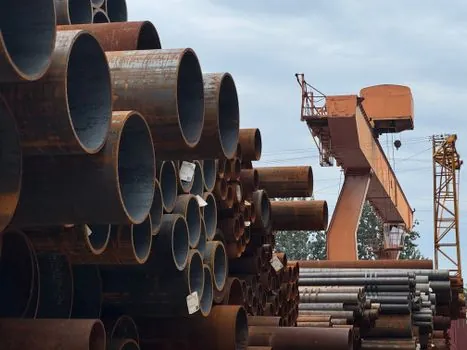
Their self-contained arrangement removes the need for a separate power supply, which can reduce support-equipment transport and setup requirements [S2].
Lightweight diesel models remain useful for smaller piles and remote access, where mobilizing a large hydraulic power pack and support equipment may be disproportionate [S2].
Hydraulic systems can carry a higher equipment cost because the power pack and fluid circuit must be transported, connected, maintained, and kept operational [S1]. That cost may be justified where adjustable energy, lower noise, reduced emissions, or the ability to switch to work such as concrete demolition provides measurable value [S1][S6].
Ground Conditions, Piles, and Sensitivity
They can also drive timber and precast concrete piles, but pile strength, head condition, cushions, and helmet alignment still govern whether the energy is safe [S2][S4].
Hydraulic hammers are the stronger fit for soft ground, controlled insertion, urban interiors, and locations where lower noise and vibration are priority constraints [S1]. They can also serve general demolition duties beyond pile driving, which can improve utilization across a mixed construction fleet [S1].
A diesel hammer is a poor default for a noise-sensitive urban site because it produces higher noise, exhaust, and ground vibration than a hydraulic hammer [S1]. A hydraulic hammer can still generate substantial noise and vibration, so equipment selection does not remove the need for site-specific assessment, monitoring, and mitigation [S3].
Driving-System Design and Acceptance Checks

Every installation must treat the hammer as part of a system comprising leads, hammer cushion, helmet, and, for concrete piles, a pile cushion [S4]. The helmet aligns the hammer and pile head, while the hammer and pile cushions protect components from excessive stress. Concrete-pile cushions are commonly assembled from several layers of plywood [S4].
Selection must be checked against anticipated driving resistance, ultimate pile capacity, expected driving stresses, and soil set-up [S4]. Wave equation analysis can model hammer-pile-soil interaction before driving, and a pile driving analyzer can monitor installation [S4]. The selected hammer should produce penetration rates inside the required band while avoiding structural pile damage and loss of soil capacity [S4].
For diesel operation, monitor hammer and pile condition during driving rather than relying only on elapsed production time [S2]. For hydraulic operation, include hose, valve, oil, and power-pack condition in preventive maintenance because the hydraulic circuit adds failure modes absent from a self-contained diesel unit [S1][S6].
Use-Case Recommendations and Boundaries
Specify a diesel hammer for large piles, dense or hard ground, marine or bridge foundations, and remote sites where a self-contained unit and sustained blow rate materially reduce support-equipment requirements [S1][S2]. Confirm available pile, timber, and concrete compatibility, transport mass, required energy, and exhaust-control provisions before purchase [S2].
Specify a hydraulic hammer for urban foundations, structural work near sensitive assets, precision placement, and soft ground where adjustable energy and lower noise justify the hydraulic support package [S1]. Hydraulic hammers can also break concrete, which may improve total fleet utilization [S1].
Do not choose either hammer solely by a headline energy number. The engineering sequence is to define the pile-soil resistance, check pile stress, model the hammer-pile interaction, select the cushions and helmet, and establish penetration-rate and refusal criteria before equipment rental or purchase [S4].
The next procurement check is a side-by-side bid based on rated energy per blow, stroke, blows per minute, hammer mass, power-pack requirements, permitted operating noise and vibration, expected penetration rate, and total support-equipment cost.
