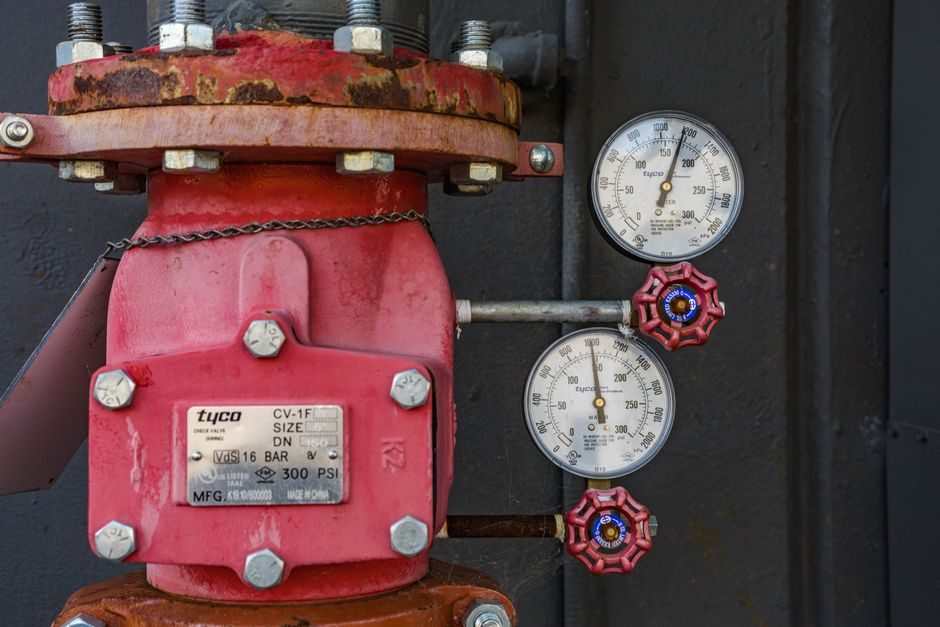
Across 308 active catalog entries from 112 manufacturers indexed in May 2026, differential pressure transmitters split into three working envelopes: HVAC/building-automation units under 10 kPa, low-pressure process units in the 100 mbar to 100 kPa band, and heavy process units above 100 kPa reaching 7 MPa [S2][S6].
Output protocols in the same catalog run from analog 4-20 mA and 0-10 V to digital HART, Modbus RTU over RS-485, and PCB-level 4.5 VDC, and supply voltage listings vary from 4.5 VDC on ceramic sensors up to 32 VDC on HVAC panel-mount units [S1][S3][S5][S6]. A first-pass shortlist therefore has to lock down four variables before any brand comparison: full-scale pressure, output protocol, process temperature window, and the protection class the installation will actually demand.
How Differential Pressure Transmitters Differ From Standard Pressure Transmitters
A differential pressure transmitter measures the difference between two process ports, not pressure referenced to atmosphere, which is what a pressure transmitter or absolute pressure transmitter is built for [S2][S6]. The 2026 catalog confirms this by tagging only dual-port devices as "differential" while single-port devices are filed under gauge or absolute categories [S1][S4][S6].
This dual-port design drives a different body geometry: HVAC units are wall- or panel-mounted with integral LCD and IP54 covers, while process units use NPT 1/4 process connections and stainless-steel housings rated to IP66, NEMA 4X or explosion-proof [S3][S4]. Buyers looking at a differential-pressure-transmitter for filter monitoring, flow-element dp sensing, or level-vessel bubbler work should treat the two ports as a hard requirement, not a feature.
Three Working Envelopes From 2026 Catalog Data
The Huba Control type 450 is a ceramic, PCB-mount differential pressure transmitter with a 4.5 VDC supply, 1.5 mbar minimum and 100 mbar maximum span, and a process temperature window of -10 °C to 80 °C, aimed at HVAC and clean air/gas work [S1]. The Dwyer 3100D series is a membrane, thermal, digital process transmitter on NPT 1/4 with stainless-steel construction, IP66 and NEMA 4X protection, and a process temperature window of -40 °C to 120 °C, with full scale reaching 2,068,000 Pa (around 300 psi) [S4].
Indumart's DTS360 series sits at the top of the range with a membrane process transmitter, 4-20 mA plus digital output, IP65/IP67 explosion-proof and intrinsically safe options, 0.075% standard accuracy (0.04% and 0.02% available as options), HART protocol communication, and pressure range from -2,000 Pa to 7,000,000 Pa (1,015 psi) over -25 °C to 80 °C [S6]. Between them, the HK Instruments DPI500-2R-D and the Lefoo LFM110 cover the building-automation band: 24 VDC/24 VAC/32 VDC supply, -500 to 2,500 Pa span, IP54, wall- or panel-mount, and Modbus RS-485 plus analog outputs [S3][S5].
Output Protocols And Why HART Does Not Run On Fieldbus

The 2026 catalog shows analog 4-20 mA, digital HART, Modbus RTU over RS-485, and PCB-level millivolt or 0-10 V outputs all in active production [S1][S3][S5][S6]. HART communication is overlaid on a 4-20 mA analog loop using FSK; it is not the same as Foundation Fieldbus or PROFIBUS PA, which are fully digital fieldbus protocols, and substituting a HART-only transmitter onto a PA segment will not work [S6].
The DTS360 specifies HART protocol communication on top of its 4-20 mA loop, while the LFM110 lists analog, Modbus and RS-485 in the same product record [S5][S6]. For new projects, the safe baseline is to match the transmitter's output to the existing control-system I/O card: 4-20 mA plus HART for legacy DCS upgrades, Modbus RTU over RS-485 for building-automation controllers, and PCB-level analog for OEM equipment where the transmitter is part of the device under construction [S1][S3][S5][S6].
Selection Criteria: Span, Temperature, Output, Protection
Lock the calibrated span first: the 2026 catalog shows minimum spans from 1.5 mbar on the Huba 450 up to 7 MPa on the DTS360, with most HVAC units sitting between -500 Pa and 10,000 Pa and most process units between 150 Pa and 2 MPa [S1][S3][S4][S5][S6]. A 10:1 turndown ratio, as listed on the OMEGA PX760 series with adjustable span and zero, is a useful rule of thumb for keeping one SKU on the shelf for several measurement tasks [S8].
Process temperature windows in the 2026 catalog range from -40 °C on the Dwyer 3100D to 120 °C on the same unit, with most HVAC units capped at 50-80 °C and the Liren LRDG series aimed at high-reliability, anti-interference use in dangerous and explosive fields [S4][S5][S9]. Protection class is a separate axis: IP54 for indoor HVAC panels, IP65/IP67 for washdown, NEMA 4X for corrosive outdoor, and explosion-proof or intrinsically safe ratings for hazardous-area zones; the OMEGA PX760 carries CESI-ATEX approval as intrinsically safe for hazardous atmospheres [S3][S4][S6][S8].
Comparison: Building-Automation vs Industrial-Process vs OEM/PCB
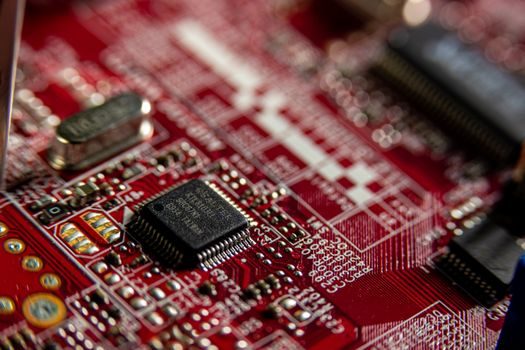
Building-automation units (HK Instruments DPI500-2R-D, Lefoo LFM110) ship in compact wall- or panel-mount housings with IP54, 24 VDC or 24 VAC supplies, integrated LCD, and Modbus RS-485 or analog outputs across spans of -500 to 2,500 Pa or -10,000 to 10,000 Pa, with process temperatures typically capped at 50-60 °C [S3][S5].
Industrial-process units (Dwyer 3100D, Indumart DTS360, OMEGA PX760) use NPT 1/4 or flange process connections, stainless-steel construction, IP65/IP66/NEMA 4X, optional explosion-proof or ATEX intrinsically safe approval, 4-20 mA plus HART outputs, and spans from 150 Pa up to 7 MPa, with process temperatures from -40 °C to 120 °C and accuracies as tight as 0.02% on the DTS360 [S4][S6][S8]. OEM/PCB units (Huba 450) drop to 4.5 VDC supply, mbar-level spans, and a compact PCB-mount form factor intended to be integrated into the OEM's own enclosure [S1].
Use Cases That Map Cleanly Onto 2026 Models
Cleanroom and HVAC filter monitoring is the Huba 450 and HK Instruments DPI500-2R-D territory: low spans, air or natural gas media, IP54 housings, and PCB or panel-mount integration [S1][S3]. Building-pressure cascade control and variable-air-volume box work fits the Lefoo LFM110 with its -10,000 to 10,000 Pa span and Modbus RS-485 output [S5].
Flow measurement across orifice plates, Venturi tubes, and other differential pressure primary elements belongs on process units like the Dwyer 3100D, Indumart DTS360, and OMEGA PX760, where 4-20 mA plus HART, explosion-proof or ATEX options, and stainless-steel NPT connections are standard [S4][S6][S8]. The Liren LRDG series targets applications flagged as dangerous and explosive fields and places, with the catalog calling out high reliability and anti-interference performance for those zones [S9]. For side-by-side evaluation of mechanical and electronic pressure readouts, the Pressure Gauge vs Differential Pressure Transmitter: 2026 Selection Criteria walkthrough lines up the local-indication and transmitter paths on the same spec sheet.
Limitations, Failure Modes, And Sourcing Signals
Catalog sourcing in 2026 is broad but uneven: Directindustry's May 2026 index lists 112 manufacturers and 308 products under the differential-pressure-transmitter heading, with the level transmitter and absolute-pressure families filed separately [S2]. Pricing data on Made-in-China in June 2026 shows 0-10 V digital water-pressure transmitters listed at US$35-45 per piece MOQ 2 from Supmea, and a digital wind-pressure transmitter with LCD at US$15-100 per piece MOQ 1, confirming that the same physical sensor is sold under multiple model codes and brand labels [S7].
Two common spec traps showed up repeatedly in the 2026 listings: pressure range expressed in Pa without a stated reference condition, and "intrinsically safe" claimed without a named certification body, both of which need to be challenged on the data sheet before purchase [S3][S6][S8]. Lifecycle signals to track: the OMEGA PX760 record itself flags a replacement with a HART model, and OMEGA points buyers to the PX5200 as a substitute while engineering closes the transition [S8]. Field verification of 4-20 mA loop integrity, HART communication, and zero/span adjustment should be done with a pressure calibrator whose own traceability chain is documented, since a transmitter datasheet accuracy of 0.02% is wasted if the reference standard is two classes looser [S6].