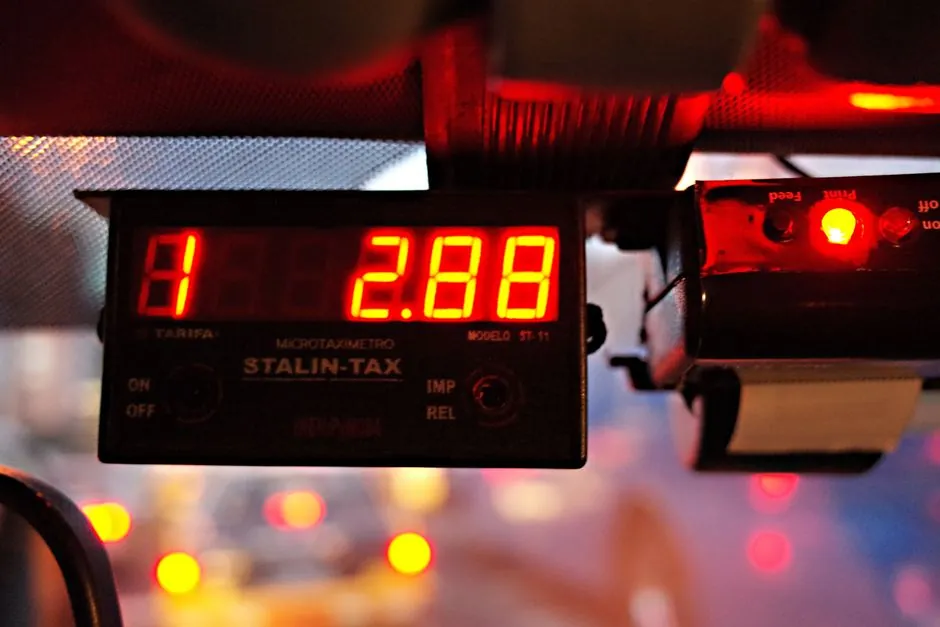
A digital panel meter should be evaluated over 3–5 years because total cost of ownership includes hardware, software, installation and operations over that period [S4].
The calculation applies to analog-input panel meters, digital process displays, network-enabled instruments and multi-panel installations, with the selected architecture determining whether most expenditure falls in capital cost or life-cycle support.
Digital Panel Meter TCO Scope and Market Context
The global digital panel meter market was valued at $2.51007 billion in 2021 and $3.0445 billion in 2025, with a forecast of $4.47896 billion by 2033, equivalent to a 4.944% CAGR [S1].
A separate forecast places the 2026 market at $4.14 billion and the 2034 market at $5.83 billion, producing a 4.39% CAGR [S2]. The differing estimates establish that procurement should use manufacturer quotations and installed project costs rather than market forecasts as purchase inputs.
A panel-meter TCO model should separate year-zero acquisition from operating and lifecycle expenditure.
Initial Hardware, Software and Installation Costs
Total cost of ownership includes hardware, software, installation and operations over 3–5 years [S4].
The meter itself is only one part of the installed package. The comparison should include a basic local display, a configurable digital panel meter with digital input and output, and a networked panel meter connected to supervisory software.
For a panel-meter purchasing model, evaluate the following criteria across the three options:
These are portfolio-level allocation ranges rather than guaranteed meter prices.
Lower quoted purchase prices can still produce a higher TCO when they require extra programming, panel preparation, field wiring, network infrastructure or specialist commissioning. Obtain installation quotations separately from equipment quotations and state whether taxes, freight, certificates, labels and commissioning are included.
Energy, Maintenance and Spare Parts
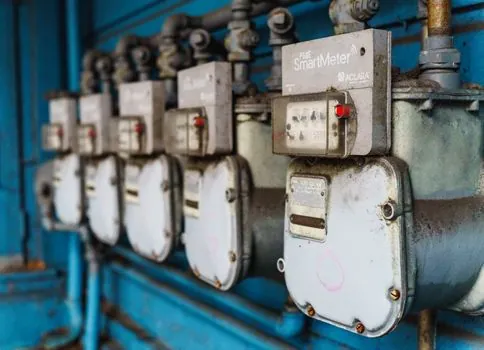
A published signage maintenance reserve of roughly 10% of hardware cost per year provides a useful placeholder for preliminary budgeting, though it is not specific to panel meters [S4]. For an industrial meter, replace that placeholder with the meter's actual service interval, contact resistance trend, calibration requirement and expected spare-unit stock.
Total-cost calculations should separate variable energy, scheduled maintenance, failure replacement and labor. Energy is driven by display brightness, control electronics, communications activity and power-supply losses, while maintenance is driven by calibration, terminal inspection, contact wear, enclosure integrity and diagnostic workload.
Where a digital panel meter forms part of a wider instrumentation architecture, its operating cost can be compared with the value of better process visibility. The digital panel meter reference is useful for separating local indication, process control, logging and network communication functions before duplicate hardware is specified.
Downtime, Replacement and Lifecycle Exposure
Replacement, upgrades and decommissioning account for 5–15% of 5-year TCO in the broader display analysis [S4], making service life and obsolescence material rather than residual details.
Compare at least 3-year, 5-year and 10-year scenarios if the metering asset is embedded in a longer control-system refresh. A short study may favor a low-cost meter with limited communications, while a long study changes the balance because software licenses, configuration labor, replacement stock and upgrade work accumulate.
Downtime cost is the product of the value of the monitored process, the number of affected operators or machines, and the restoration time. It should include diagnosis, parts handling, calibration, restart verification and any secondary inspection required to restore confidence in the measurement.
The purchase comparison should also test 1–2 alternatives against 4 criteria: purchase and installation cost, five-year operating cost, expected unscheduled downtime and residual value at the end of the study. Without a stated downtime assumption, the ranking is not auditable.
Who Benefits from a Networked Meter Architecture
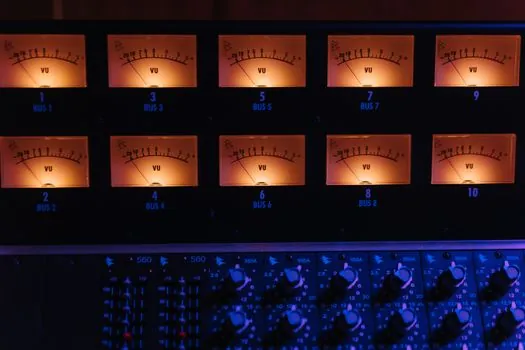
A networked panel meter is appropriate when several assets must be viewed consistently, alarms must be distributed, or process values need to be retained outside the local panel. [S1]
A standalone digital panel meter is the better fit for single-machine indication, low data-retention requirements and installations where network ownership, cybersecurity or configuration support would outweigh the operating benefit.
The decision is not simply digital versus analog. Local process indication needs a meter with suitable input range, display resolution and electrical protection, while centralized data acquisition adds communications hardware, software, configuration labor and potential network-security obligations.
Panel design should also reserve space for paperless recorder functionality only where regulatory or operating requirements justify a separate recorder. If the meter already performs the required measurement, logging and export functions, adding another device may create integration and maintenance cost without a defined control benefit.
Certification, Compliance and Sourcing Risk
Panel-meter sourcing risk rises when a low-cost quotation omits the required input type, output protocol, environmental rating, electrical approval, display readability or calibration traceability.
The procurement specification should identify the measured variable, input range, engineering units, display digits, accuracy requirement, power supply, output signals, communication protocol, enclosure rating, operating temperature and mounting arrangement.
Project-specific compliance requirements then determine which approvals and documentation must be verified. Do not infer certification from a generic product family name or a market report, and require supporting documentation before an approved vendor enters the cost model.
For automated process control, the meter may hand measurements to a PID controller, but panel indication does not replace control-system validation. Confirm signal compatibility, update behavior and alarm handling as separate engineering line items.
Building an Auditable 5-Year Meter TCO

The model should use one evaluation period, one discount-rate assumption and one currency basis, with every cost assigned to purchase, installation, energy, maintenance, spares, downtime, replacement or decommissioning. [S5]
Build the comparison with vendor quotations for hardware and software, labor rates for installation and service, power consumption for energy, service documentation for maintenance, and the process risk model for downtime. Keep one-page procurement comparisons separate from the full cash-flow model.
A strong operating case may be reviewed using the same method applied to PID Controller TCO: Compare 10- and 20-Year Costs, because display hardware and process-control electronics can have different refresh cycles and failure consequences.
The next trackable signal is a completed five-year cash-flow model containing at least 3 meter configurations, 2 installation quotations for each configuration, documented energy assumptions and a stated downtime scenario. Without those inputs, the market forecasts cited here are context, not a defensible budget.