
A divided blast cupola supplies combustion air at multiple shaft levels, and a documented 42-inch installation improved melting capacity from 3 t/h to 6 t/h after blower, motor, and charge-sizing changes [S4].
The comparison covers combustion staging, coke consumption, melt rate, spout temperature, emissions, controls, and capital effort for gray-iron foundry applications [S1][S2][S3][S5].
Design Principle and Performance Boundary
Divided blast operation changes the air pattern inside the furnace shaft rather than simply adding more tuyer nozzles at one elevation. The air at several levels supports more complete combustion and better heat utilization than a conventional single-level cold-blast arrangement [S2].
The distinction matters because a conventional cupola generates much of its required energy in situ: coke burns in the shaft, molten iron drains downward, and hot gases transfer heat counter-currently to the descending charge [S5]. A conventional cold-blast cupola uses counter-current heat transfer to melt the charge, while in-situ coke combustion generates CO2 and heat and partly reduces CO2 again, consuming energy and coke [S5].
Divided blast is an air-distribution strategy, not a substitute for deciding whether hot-blast recuperation is technically and economically justified.
Criterion-Based Furnace Comparison
On combustion control, divided blast wins because multiple air levels support more complete combustion, while a conventional cupola concentrates the primary blast at one tuyer zone [S2]. On thermal efficiency, hot blast is stronger than cold blast because the recuperator raises blast temperature to about 400–600°C; divided blast is strongest when combined with a controlled blast system rather than treated as a standalone guarantee [S5].
On production rate, a 42-inch divided blast cupola recorded a 3 t/h baseline that was improved to 6 t/h by increasing blower speed, fitting a higher-horsepower motor, and reducing charge size to one-third of the previous size [S4]. On fuel use, divided blast is associated with lower coke consumption, while the 1984 Bureau of Mines gas-assisted trial demonstrated that partial replacement of foundry coke with natural gas also changed melting rate, energy input, iron chemistry, and scrubber solids [S1].
On capital and operating complexity, conventional cupolas retain the advantage of simple construction, low maintenance, and easy operation, whereas conversion to divided blast creates major design and construction problems and requires appropriate instrumentation [S3][S4][S5].
Where Divided Blast Fits the Foundry
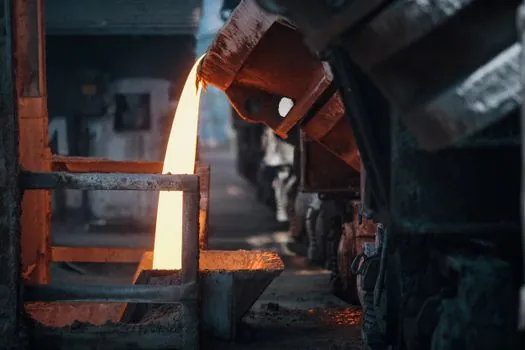
Divided blast is appropriate for gray-iron foundries that need higher melting throughput, lower coke consumption, or more complete combustion, and that can accommodate multiple air-control stages. The strongest documented case is a 42-inch internal-diameter divided blast cupola whose production constraint was addressed through blower rpm, motor power, and charge sizing [S4].
It is also relevant where a modern air system and instrumented blast control are available. Foundry practice treats selection of the air system and controlled delivery of blast volume and pressure as central to cupola operation, and recommends a divided blast arrangement with proper instrumentation for energy reduction and emission control [S4].
The design is not the best first choice for a small installation that values a simple cold-blast furnace, low capital cost, and tolerance for broad spout-iron chemistry. Even today's state-of-the-art cupola furnaces have low investment costs compared with other units [S5]. For a broader process comparison, see Cupola vs Blast Furnace: Melting Rate and Process Fit.
Combustion, Melt Rate, and Coke Consumption
Multiple blast levels can change where coke burns, how gases contact the descending burden, and how much carbon leaves as CO instead of CO2. In a conventional cupola, CO2 can be reduced back to CO through the reaction CO2 + C ↔ 2CO, which consumes additional coke and energy [S5]. Divided blast is intended to improve the usable heat release and reduce the amount of fuel carried away in the exhaust stream [S2][S4].
The 42-inch divided blast case demonstrates that nameplate design alone does not determine capacity. Raising blower rpm, increasing motor horsepower, and reducing charge size to one-third of the original size increased the observed melting rate from 3 to 6 t/h for that installation [S4]. The figure describes a documented corrective-action case, not a universal design multiplier.
Coke reduction must be verified against charge composition, coke quality, ash content, burden permeability, and blast control. A low-ash coke and suitable standard-grade pig iron were associated with a divided blast operating practice using proper instrumentation [S4]. Rusty scrap, unsuitable charge sizing, or an undersized blower can negate the expected combustion benefit even when the furnace has divided tuyere rows.
Temperature, Chemistry, and Charge Quality

Hot-blast operation changes that trade-off by preheating the blast to approximately 400–600°C, supporting higher and more consistent spout temperatures, broader use of scrap steel, and a narrower spread in final iron composition [S5]. For a divided blast conversion, the blast system and recuperator therefore need to be evaluated as one process rather than as isolated mechanical modifications.
Charge quality remains a process constraint. A 236-inch divided blast cupola produced silicon that was too low; the corrective actions included higher-purity limestone, adding 0.5% soda bricks with lime, and eliminating rusty scrap [S4]. That example separates furnace aeration from metallurgical control: more effective combustion cannot compensate automatically for oxide-bearing charge or unsuitable slag chemistry.
Instrumentation, Construction, and Failure Modes
Conversion from conventional to divided blast creates major design and constructional problems, so nozzle rows, air passages, blowers, motors, control valves, refractory penetrations, and operating instrumentation must be engineered as one package [S3]. Merely drilling additional tuyer holes without matching airflow capacity can worsen charge descending, melt distribution, and temperature control.
Three failure modes deserve specific design attention. First, blower or motor undersizing can hold the furnace below its intended melt rate, as the 42-inch case demonstrated before its capacity rose from 3 to 6 t/h [S4]. Second, oversized charges can restrict flow and negate staged combustion, which is why the documented remedy included reducing charge size to one-third of the previous size [S4]. Third, poor charge chemistry can lower silicon content even when combustion equipment functions as designed [S4].
Cold-blast cupolas also lose a large share of energy in the exhaust as CO because the gases are extracted above the throat without thermal recovery [S5]. A divided blast project should therefore include exhaust temperature and composition measurement, blast-volume and pressure control, and a defined location for gas extraction. If recuperation is installed, the 400–600°C blast-temperature range provides a practical hot-blast design benchmark [S5].
Environmental Control and Sourcing Requirements
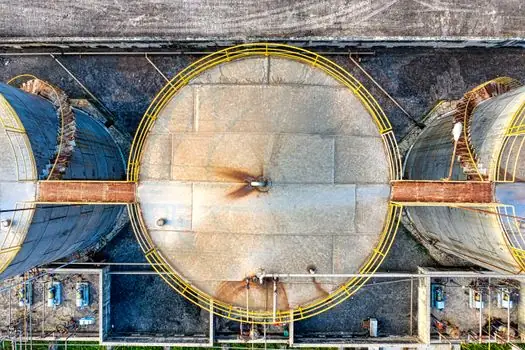
Coke-fired cupolas can generate large flue-gas volumes containing SO2, CO2, CO, and H2S, so pollution-control equipment and energy-saving modifications may be required to comply with applicable environmental rules [S4]. Divided blast can reduce fuel use and emissions, but the flue-gas treatment train remains part of the operating specification rather than an optional accessory.
For a cold-blast installation, secondary air above the melting zone, oxygen injection, washers, and fabric filters are identified energy and pollution-control options [S5]. The 1984 gas-assisted cupola trial included measurement of scrubber-water chemistry and suspended solids, demonstrating that changing the fuel system requires evaluation of the downstream gas-cleaning equipment [S1].
Primary engineering references remain the 1984 Bureau of Mines Report of Investigations 8891 on a gas-assisted cupola, the foundry literature on cupola design, operation, and control, the 2010 Indian Foundry Journal technical paper, and the Foundry Lexicon description of cold- and hot-blast cupolas [S1][S3][S4][S5]. No universal efficiency or coke-rate percentage should be transferred between installations without charge, scale, and operating-boundary data.
The next procurement step is a side-by-side mass and energy model using the existing blast pressure, blower power, coke rate, melt rate, charge top size, and spout-temperature target; this establishes whether divided blast is justified for the actual furnace, not only for the published 42-inch example.
