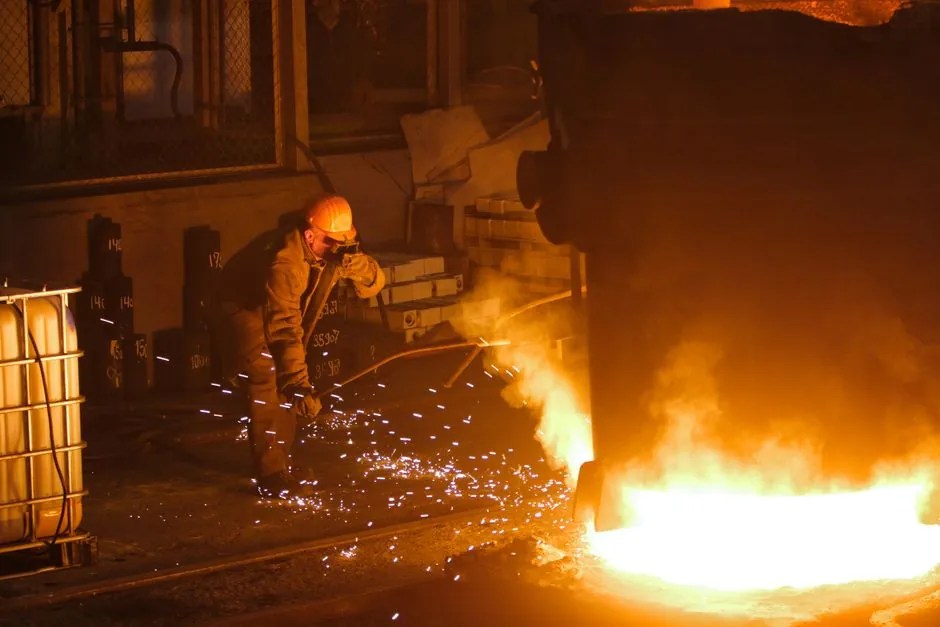
A cold-blast cupola melts approximately 2–10 t/h, whereas a blast furnace is intended for continuous, very large-scale pig iron production rather than foundry batch melting [S2][S5].
The comparison must separate furnace size from process duty: a cupola remelts foundry iron with coke, scrap and limestone, while a blast furnace reduces iron ore, pellets and coke continuously for primary steelmaking [S2][S5].
What the published melting-rate data actually show
The clearest published rate in the research is the approximately 2–10 t/h output associated with small cold-blast cupolas, a configuration in which combustion air is not recovered for blast preheating [S2].
Cupola output is not a fixed catalog rating. The furnace diameter can range from 0.5 to 4.0 m, or 1.5 to 13 ft, and the operating rate also depends on coke quality, blast volume, charge practice and furnace condition [S2][S4].
A blast furnace is the larger system. Its working volume, iron burden and ancillary infrastructure are built around continuous primary ironmaking, so a small cupola rate cannot be compared directly with the blast furnace's total output without a defined basis such as hot metal per hour or annual production [S3][S5].
For procurement, treat 2–10 t/h as a documented cold-blast cupola band, not as a universal limit for every cupola. The same source separately classifies the blast furnace as a very large-scale unit for integrated steel complexes [S2][S5].
Why the furnaces perform different jobs
A cupola generates heat inside the furnace through coke combustion, then transfers that heat to descending metal charge by counterflow; a blast furnace follows the same broad shaft-furnace principle but uses an iron ore burden in a continuous primary-steelmaking route [S2][S3].
The cupola furnace is charged with coke, pig iron or scrap steel, and limestone slag formers. Tuyeres introduce the blast into the coke bed, where coke burns, iron melts, and the metal drains downward [S2].
Blast furnaces are not intended for small foundries or custom melt schedules. Their scale requires ore, pellets, coke and major supporting equipment, and they normally feed primary steelmaking rather than produce a finished cast-iron pour directly [S5].
Cupolas suit foundries making cast iron, Ni-resist iron and some bronzes. Their operating campaign is based on layered charging of metal, coke and additives, followed by melting and tapping through openings at the bottom of the shaft [S2][S4].
Melting rate, temperature and fuel performance
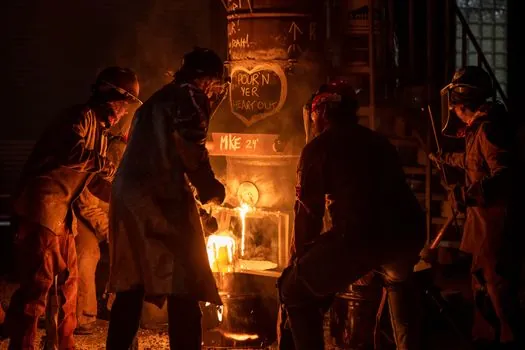
Cold-blast cupola efficiency is approximately 60%, but that operating mode is an uneconomical superheating unit and normally supports blast temperatures far below the 400–600°C range available through recuperative hot-blast preheating [S2].
Increasing coke charge and blast volume can help cold-blast cupolas reach higher spout iron temperatures, but the same operating adjustment reduces melting rate. Hot-blast cupolas improve thermal efficiency, permit more scrap steel, and provide a higher and more consistent spout temperature [S2].
Cupola performance can also be expressed through TPK, defined as tons of hot metal per hour for each 1,000 standard cubic feet of Equivalent Blast Rate. Published operating bands are 2.3–2.8 TPK for low performance and 2.8–3.3 TPK for medium performance [S1].
The low TPK band is associated with unlined or poorly operated shells, cold blast, short stacks or poor charging practice. This metric is more diagnostic than furnace diameter because it ties output to the air and oxygen delivered through the tuyeres, combustion-zone performance, sensible heat loss, coke reactions and slag generation [S1].
Decision criteria: cupola or blast furnace
The cupola wins where a foundry needs coke-fired iron melting, relatively low equipment cost, simple operation and the ability to process heterogeneous foundry scrap. A blast furnace wins where the requirement is continuous primary pig iron production from ore at integrated-steelmaking scale [S2][S5].
On charge flexibility, a cupola can process contaminated, oily, painted, mixed or zinc-coated scrap that can damage electric furnace linings or reduce melting efficiency. Electric furnaces are not the comparison here, but that charge tolerance helps explain why coke-fired cupolas retain a role in gray iron production [S1].
On melt control, cupola analysis is less precise than electric melting because coke chemistry, slag volume, charge layering and blast conditions affect composition. A blast furnace offers much greater process scale, but its product is primary pig iron with a different carbon and silicon target from most foundry cast iron [S3][S5].
On operating continuity, the cupola operates in campaigns and can be run intermittently when castings are ready. A blast furnace is a continuous primary-steelmaking asset, so stopping and restarting it for small foundry demand is not the intended operating model [S5][S6].
Where a cupola is the wrong choice
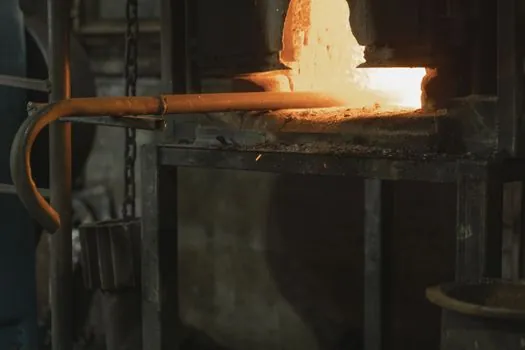
A cupola is not appropriate where the requirement is precise small-lot chemistry control, primary steelmaking from ore, or a small footprint. An induction furnace offers precise temperature control and can handle varied scrap at small to medium scale, although it has low refining capacity and requires a suitable incoming charge [S5].
Cold-blast operation also constrains product quality. It has difficulty achieving high spout temperatures without sacrificing melt rate, and the wider chemical tolerances needed for accurate analysis make it less attractive where narrow composition targets are contractual requirements [S2].
The blast furnace also introduces infrastructure and feedstock constraints absent from a cupola decision. It requires a continuous ore burden and is normally integrated with downstream steelmaking, making it unsuitable for a foundry that only needs batches of remelted cast iron [S5].
For direct operating adjustments, oxygen enrichment of the cupola blast provides a focused treatment of the trade between melt rate, tapping temperature and oxygen use.
Slag, sourcing and specification checks
Cupola and blast furnace slags are chemically similar and both are formed in coke-fired shaft furnaces, but blast furnace slag has broad established use in road construction, concrete and cement, while cupola slag utilization is minimal [S3].
The slag comparison covers air-cooled and water-granulated forms and evaluates chemical composition, basicity, hydraulicity, melting temperature, microstructure and surface characteristics. These properties explain why similar appearance does not translate into equal commercial utility [S3].
For a cupola procurement specification, request melting rate in t/h, TPK against EBR, hot-blast temperature, coke rate, permitted charge materials, superheat target, spout analysis tolerance and campaign schedule. The documented cold-blast reference point is 2–10 t/h and 400–600°C applies to hot-blast preheating, not to all cupola types [S2].
The closing process check is simple: confirm whether the required output is a foundry campaign or continuous primary ironmaking, then select a cupola or a blast furnace against that duty. A rising TPK value toward or above 3.3, stable spout temperature and consistent spout chemistry are trackable signals of better cupola performance, while the 2.3–2.8 band flags operating losses worth investigating [S1].