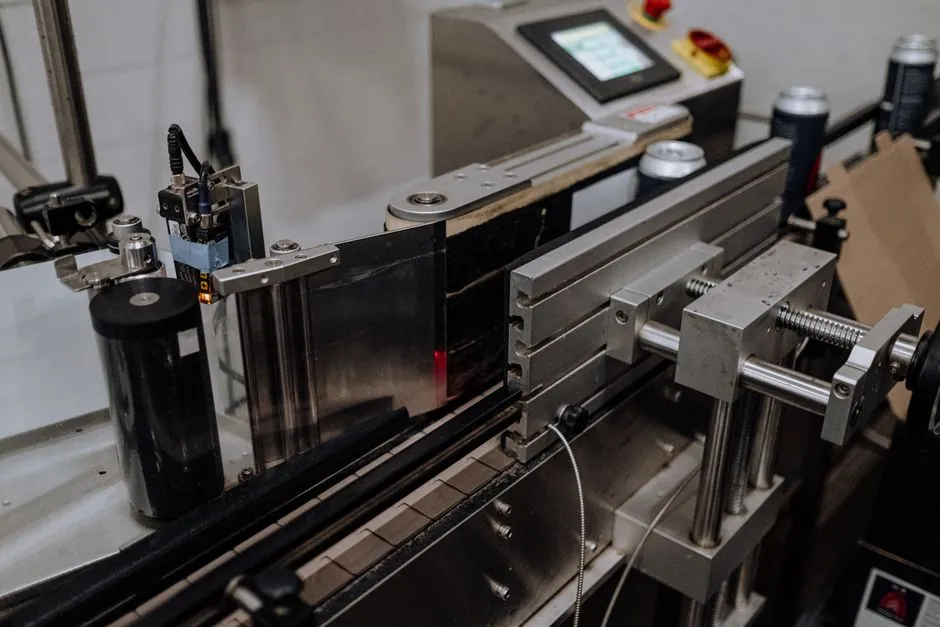
A coding machine does not automatically require a vision system, but regulated or high-rework lines need independent inspection when a missing, misplaced, illegible, or incorrect code can compromise product acceptance.
The right specification depends on four distinct checks: presence, position, content, and formal print quality, each requiring a defined failure response and representative challenge samples [S2].
When a coding machine needs independent inspection
A coding machine applies the mark, but it cannot prove that every mark is correctly positioned, legible, and matched to the active production job. Vision inspection provides an independent barrier against rare printing errors by checking defined product characteristics, recording results, and triggering an alarm or reject mechanism [S3].
Independent inspection is justified when a defective code can create safety exposure, disrupt traceability, trigger customer rejection, or cause substantial rework. Packaged foods are one example because a wrong label can conflict with ingredient or allergen information, while other production environments depend on lot, batch, expiry, serial, and shipping data [S5].
The requirement should be tied to risk rather than to the presence of a camera. A controlled coding machine with stable print conditions may rely on printer feedback and operator checks, whereas a line with changing substrates, formats, jobs, or ink conditions benefits from automated inspection [S1][S2].
Presence, position, content, and grade are different checks
Presence inspection confirms that an expected mark or region with sufficient contrast exists, but it does not establish that the characters or data are correct [S2]. This is a material limitation because a readable-looking mark may still carry the wrong batch or expiry date.
Position and format inspection can confirm that the mark falls within an approved area and may enforce size, orientation, or pattern rules. A correctly positioned but incorrect code can still pass unless its content is checked [S2]. This makes camera placement, working distance, field of view, and expected print region core acceptance criteria rather than installation details.
Content inspection uses OCR or optical character verification to compare characters with an expected string or pattern. Fonts, glare, distortion, background, and uncertain characters can affect recognition, so the rule set must match the actual printed format [S2]. The machine vision system must therefore be tested against the production package, not only a clean test card.
Formal verification is a fourth function. A barcode or 2D-code reader confirms that a symbol can be decoded, while a suitable verifier assesses specified quality attributes and may report a grade using the applicable method [S2][S3]. Successful decoding by one device does not establish that every print-quality requirement has been met [S3].
Compare inspection tools by measured capability
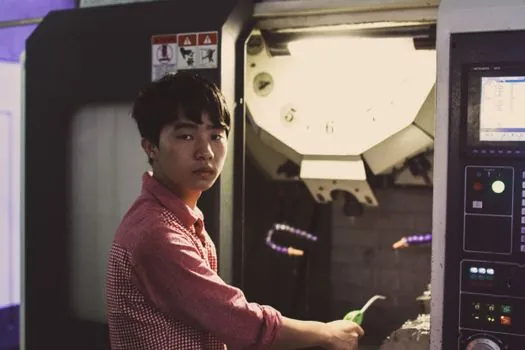
Camera inspection, code reading, and formal verification should be selected against four criteria: defect scope, content validation, print-quality grading, and operating constraints. The best tool is the one that closes the specified failure mode, not the one with the broadest feature list. [S2]
This comparison also shows why a high-resolution camera alone cannot guarantee print quality. Resolution is only one variable; field of view, lens, working distance, illumination, reflections, product motion, and trigger timing determine the usable image [S3].
Build the optical and motion-control setup around defects
Inspection begins with a usable image. Control camera position, lens, focus, exposure, lighting, glare, background, and trigger timing for every relevant package and print color. Transparent, reflective, curved, or moving packs may require a dedicated optical arrangement [S2][S3].
Product tracking must connect the captured image to the correct item. The system needs to follow product movement through conveyor travel, gaps, accumulation, and stops, because an inspection result without reliable product identity cannot support a dependable reject [S2].
Reject delay must match the distance between the inspection point and the reject mechanism. Define reject actuation, reject confirmation, bin-full monitoring, line-stop behavior, and manual-removal handling. A failed containment action must become visible rather than being silently assumed successful [S2].
High-speed cameras can inspect every printed code for clarity, position, and readability, but that architecture only works when triggering and tracking keep the image aligned with the moving package [S8]. For coding cells inside a carton erecting machine or case packing machine, the reject must also preserve the relationship between the coded case and its downstream handling sequence.
Use real defect samples to validate the system
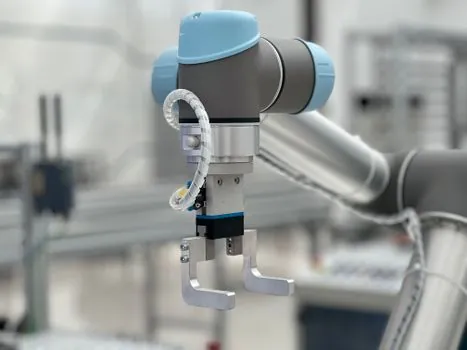
Validation must use representative samples at actual production speed, because acceptable image quality and capture timing can differ between a stationary sample and a moving pack [S3]. Challenge samples should represent real defects, and the inspection design should distinguish presence, position and format, content, and print-quality grading checks [S2].
Barcode and 2D-code inspection requires a separate decision about the appropriate inspection tool and its limitations [S2]. The controls design should include relevant fault states [S2].
Measure false accepts, false rejects, and unreadable-code rates, then confirm result storage, retrieval, and operator responsibilities [S3]. For each approved format, retain the camera position, lens, lighting, exposure, region of interest, expected data, tolerances, and reject delay, because a format change can alter more than the printer job [S2].
Separate print inspection from code verification
A general vision measuring machine can inspect appearance, position, and OCR content, while a dedicated code reader focuses on decoding barcode symbols. A verifier remains the appropriate instrument when formal measured quality attributes or a quality grade are required [S2][S3].
The term “100% inspection” describes the population presented to the camera, not a guarantee that every defect will be detected. Machine-vision printing systems can perform 100% inspection, but that terminology does not remove the need to define detection rules, challenge the system, and measure false accepts and false rejects [S6].
For regulatory or customer-controlled symbols, specify the required verification method and acceptance criteria before selecting hardware. Do not assume that an inline camera, scanner, or printer feedback can generate a formal grade unless the device and operating configuration are designed for that task [S2][S3].
Specify the acceptance decision before purchasing equipment
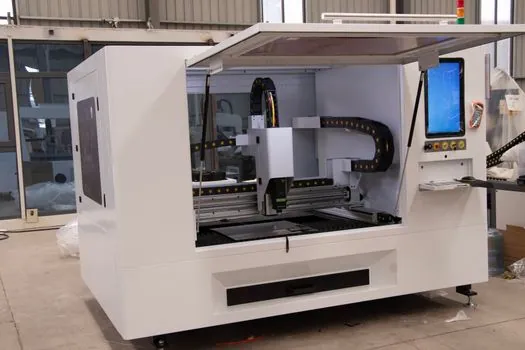
The practical answer is conditional: a coding machine needs a vision system when independent confirmation of print presence, position, content, or quality is required by the risk and acceptance plan. If none of those defects can pass into the market or downstream workflow, independent inspection may add cost without closing a material failure mode [S1][S2].
Specify the defect, expected data, pass/fail rule, optical configuration, production speed, product-tracking method, and containment response. Then validate the complete loop with real defect samples and measure false accepts, false rejects, and unreadable codes at line speed [S2][S3].
Two trackable signals determine whether inspection is performing as intended: the number and type of rejects recorded per production run, and the measured false-accept and false-reject performance against the approved challenge set. These are more meaningful procurement indicators than camera resolution alone [S2][S3].